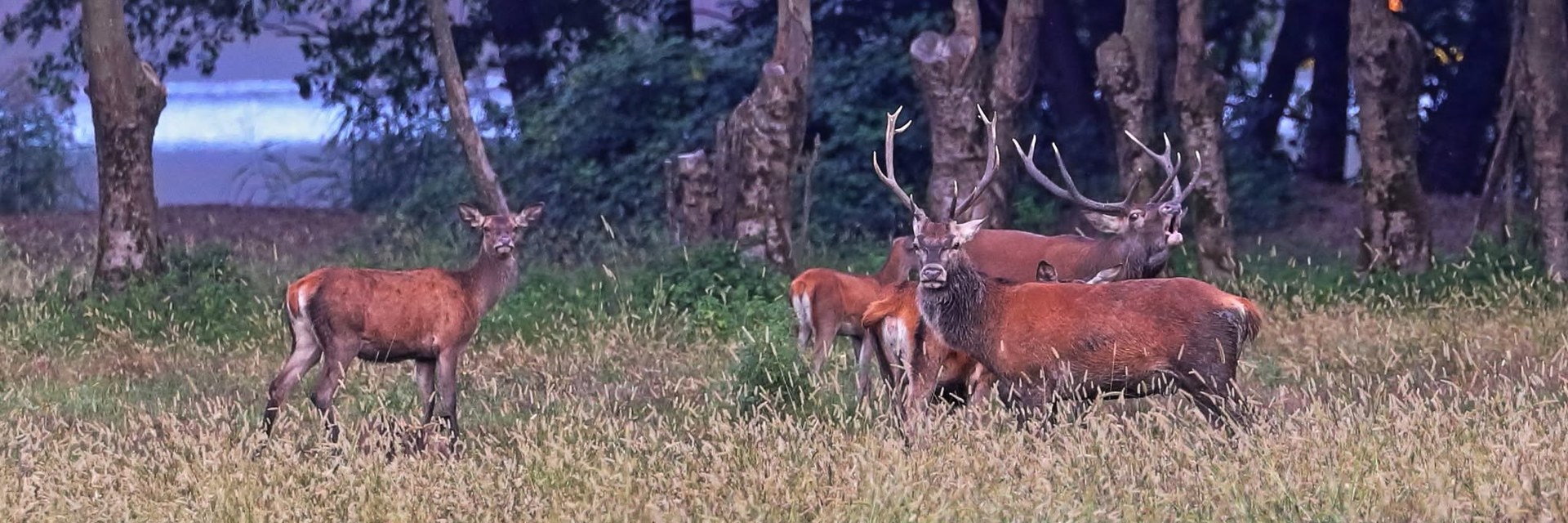
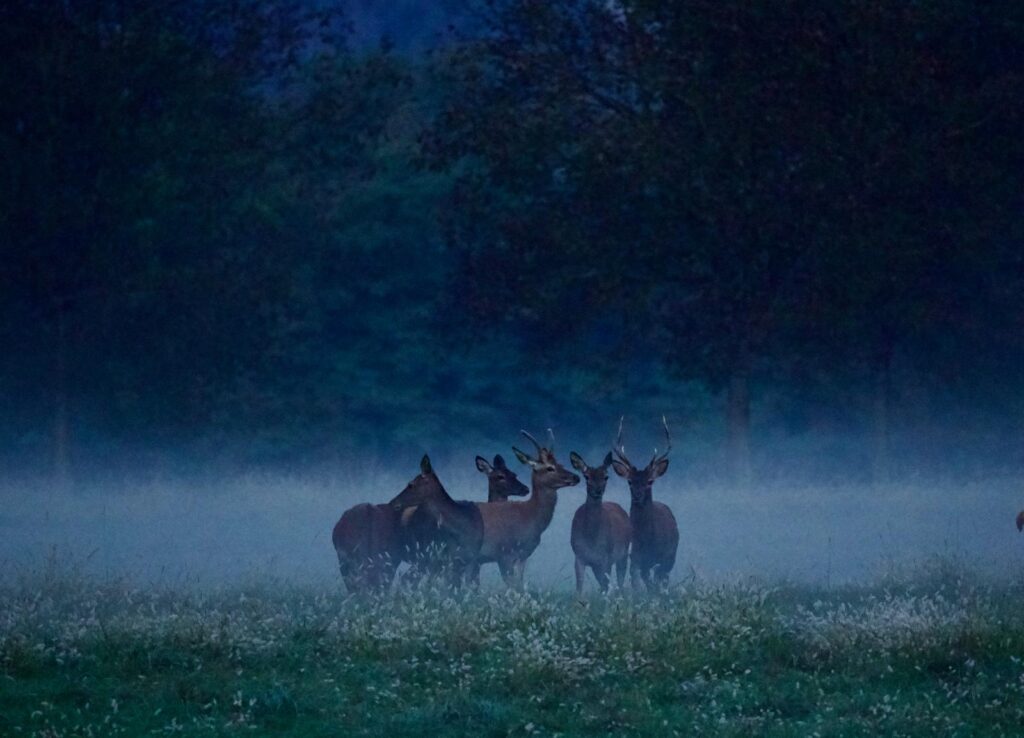
For eleven months of the year, the deer of Lake Piano are discreet presences: they can be glimpsed in the early morning or at dusk at the edge of the clearings, and then disappear into the woods. Then, towards mid-September, the Valley floor changes voice. From the woods that descend from Mount Galbiga a deep, hoarse sound rises, bouncing off the water and reaching the houses of Piano Porlezza and Carlazzo: it is the roar, the call with which male deer announce the mating season. For about four weeks the Piano Lake Nature Reserve It becomes one of the most accessible places in all of Lombardy where you can listen to it and, with patience and a good pair of binoculars, see it.
This guide explains what happens, when to go, how to participate in guided tours of the Reserve, and—most importantly—how to behave so as not to turn a natural spectacle into a nuisance.
What is roaring and why do deer do it?
The European deer (Cervus elaphus) is the largest wild ungulate in our Prealps. For most of the year, males and females live separately: females in groups with their young, adult males mostly alone, and juveniles and sub-adults in small herds. In autumn, with the shortening of the days (the photoperiod), the males' testosterone levels rise and everything changes. The antlers, which grew during the spring under a velvety skin, are now hard and clean. The neck thickens and is covered with darker, longer hair, a dewlap; the appetite almost disappears: an adult male can lose up to 25% of his body weight during the weeks of the rut, so focused is he on a single thing.
The bellowing serves two purposes simultaneously. To females, it's a declaration of strength and presence: a deep, prolonged call signals a large, healthy animal. To other males, it's a distant warning, part of a set of rituals whose primary function is precisely to avoid conflict. Only in the most heated phases, between dominant males, do two contenders study each other, walking parallel, and then, if neither retreats, they lower their heads and interlock their antlers. The sound of the clashes, dry as beaten wood, can be heard from afar. The victor keeps the group of females with him—the’harem —and will continue to crave it, to control it and to repel rivals as long as his strength allows.
It's not a postcard scene: it's effort, tension, and risk. And that's precisely what makes the bellowing one of the most intense moments to observe in nature.
Why Lake Piano?
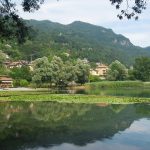
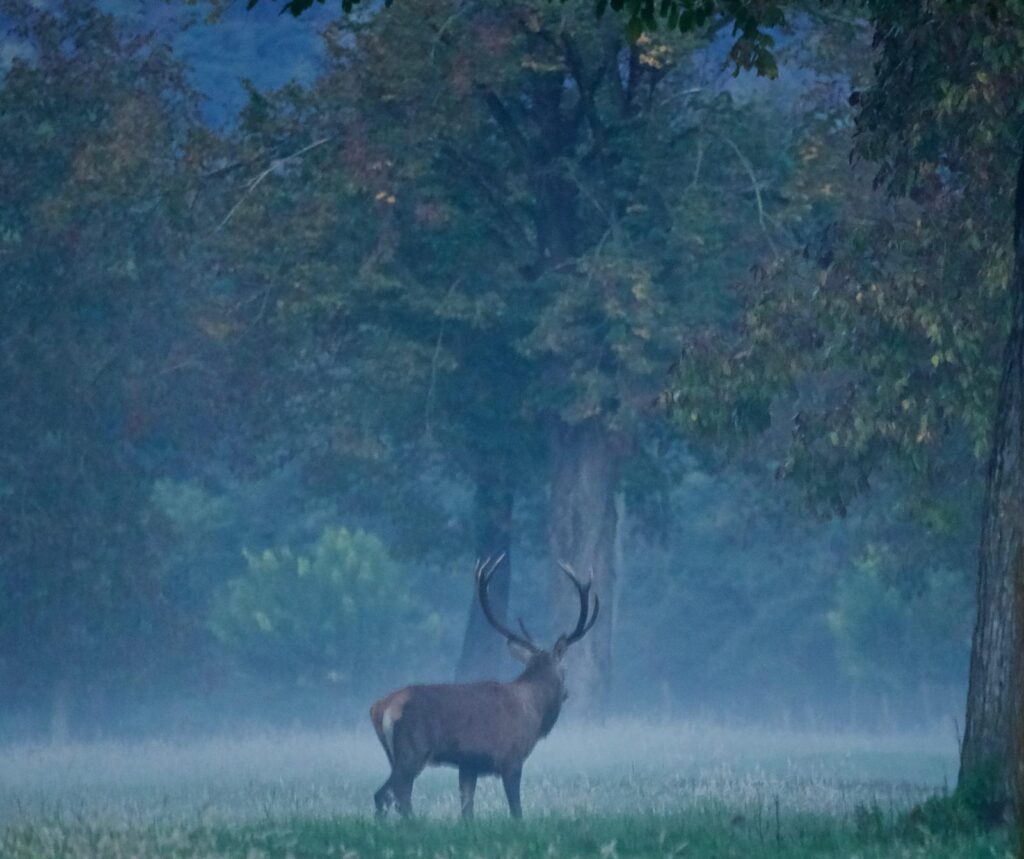
The Lago di Piano Nature Reserve protects 176 hectares of valley floor between Porlezza and Carlazzo, 85 of which are occupied by the lake. The rest is a mosaic of reed beds, wet meadows, hygrophilous woods and clearings that rise towards the slopes of the Mount Galbiga. It is precisely this combination that explains why the bellowing is so visible here: the males spend the summer in the tall woods and, when the breeding season arrives, they descend to the open clearings of the Reserve, where large herds of females permanently reside.
The result is an unusual observation for the Prealps: not on a ridge at 1,800 meters after a three-hour climb, but at 280 meters, a few minutes' walk from the Reserve House, with the lake acting as a resonating chamber. On the coldest, clearest evenings, the sound travels across the water and seems to come from every direction.
The deer at Lake Piano are not just an attraction: they are the subject of study and management. The population has been monitored for years by the management body, the Mountain Community of the Lario and Ceresio Valleys, and the roar counts—that is, the census of males roaring on a given night—have even been the subject of university theses at the University of Insubria. The deer, like any wild organism living in a protected area, is a protected species that, in such a small reserve, must be maintained in balance with the forest and other habitats: one more reason to respect the visiting rules.
When to Go: The 2026 Roaring Calendar
The official window indicated by the Reserve goes from September 15 to October 15, 2026. In practice, activity increases in the second half of September, reaches its peak between the end of September and the first days of October, and gradually dies down by the middle of the month.
Times matter as much as dates. Deer bellow above all at evening twilight and in the hours before dawn, with activity that can continue throughout the night. During the day, especially if the temperature is high, they retreat into the woods and remain silent. The best conditions are cool, clear, windless evenings: the cold stimulates the animals, and the still air carries the sound far away. Heavy rain and strong winds significantly reduce activity.
| Period | What to expect |
|---|---|
| September 1–14 | Initial calls are sporadic, males still missing. Observation is difficult. |
| September 15–25 | Activity is increasing, with males arriving in the clearings. A good time, less crowded. |
| September 26 – October 5 | Peak: constant roaring, harems formed, possible clashes. The best time. |
| October 6–15 | Activity is still good but declining. Males are visibly tired. |
| After October 15th | Rare calls. The Reserve returns to its autumnal quiet. |
Guided tours of the Reserve
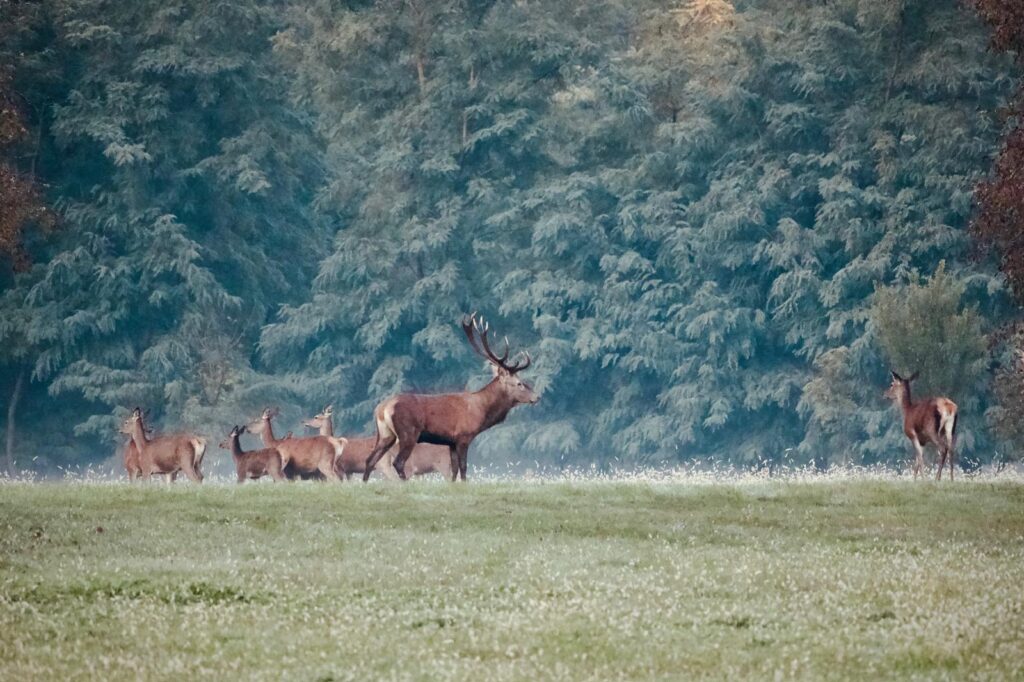
The best — and most respectful — way to experience the roar at Lake Piano is with the Reserve Guides, who will accompany small groups in the evening hours from September 15 to October 15, 2026. The guides know the best vantage points from which to see the deer without disturbing them. They can read the tracks left by the males (scrapes in the ground, bark scratches on tree trunks, puddles where they roll), and explain what they're hearing and observing. With a bit of luck, you can see numerous deer at dusk and, on the right evenings, clashes between males.
Reservation required:
- E-mail: riservalagopiano@cmvallilarioceresio.it
- Telephone: 0344 74961 (Reserve House)
- Headquarters: Reserve House, Via Statale 1561/d, Piano – Carlazzo (CO)
Participation fees 2026 (from the official program of the Reserve):
| Formula | Cost |
|---|---|
| Groups of up to 5 people | €60.00 total |
| Groups of more than 5 people | €12.00 per person |
| Children 6–12 years old | €6.00 (with a minimum group spend of €60.00) |
The outing lasts a maximum of four hours; the maximum number of participants per evening is 20. Personalized requests can be arranged by phone with the park rangers. The group format makes the experience very affordable for families and small groups: five people pay €12 each for an evening with a dedicated guide.
Book well in advance: weekend evenings between late September and early October sell out weeks in advance, while during the week and on less central dates it is easier to find a spot.
Visit the Reserve independently
If you prefer to go alone, keep in mind a rule that at Lago di Piano is not a recommendation but an obligation: Independent access is permitted exclusively along the main visitor path, indicated by the signs. Leaving the trail to enter the habitats and approach the animals is prohibited by the protected area regulations and is subject to fines. It's not just bureaucracy: a disturbed deer in the height of the breeding season stops roaring and leaves the clearing, costing it energy. More importantly, disturbance can frighten entire herds and alter their dynamics, with potentially serious consequences for both animals and people: many collisions between deer and vehicles on the roads in the valley floor have this very origin.
From the main trail, at the right times, you can still hear everything. Stop, turn off your flashlight, and wait. The perception of the roar is primarily acoustic: the eye comes later, and often from a distance. 8x42 or 10x30 binoculars are the accessory that makes the difference.
The rules of the good observer
- Absolute silence. No conversations, no phone notifications, slow steps.
- Distance. Stay where you are: if an animal stares at you, raises its head, or stops barking, you are already too close.
- No light towards animals. Flashlights and torches should be avoided. When navigating the trail, use a low light, preferably red, aimed at the ground.
- No recall. Imitating the roar or using recordings to “make deer respond” is a serious nuisance, as well as prohibited.
- Dogs. The Reserve's regulations govern the presence of dogs: check with the Reserve Office beforehand. During the rutting season, the easiest option is to leave them at home.
- Dress for autumn. Late September evenings in the valley are cold and damp. Warm layers, closed shoes, and something to sit on.
- No drones. Prohibited in protected areas and devastating for wildlife.
The bellowing in the Ceresio Valleys
Lake Piano is the most convenient listening spot, but not the only one. The woods in the valleys surrounding the Lake Ceresio They host deer populations that in autumn make themselves felt wherever there are beech forests and clearings at high altitude. Valsolda, where the Nature Reserve of the same name protects a steep and wild slope above the lake, the bellowing can be heard from the paths that climb up from the villages. Even in Cavargna Valley and in Rezzo Valley, on late September evenings, it is not uncommon to stop on a mule track and hear the males answering each other from one side to the other.
Compared to Lake Piano, the experience in the valley is less predictable and requires independence in the mountains, including sunsets. For those approaching the bellowing for the first time, the Reserve remains the recommended starting point.
The roar in pictures
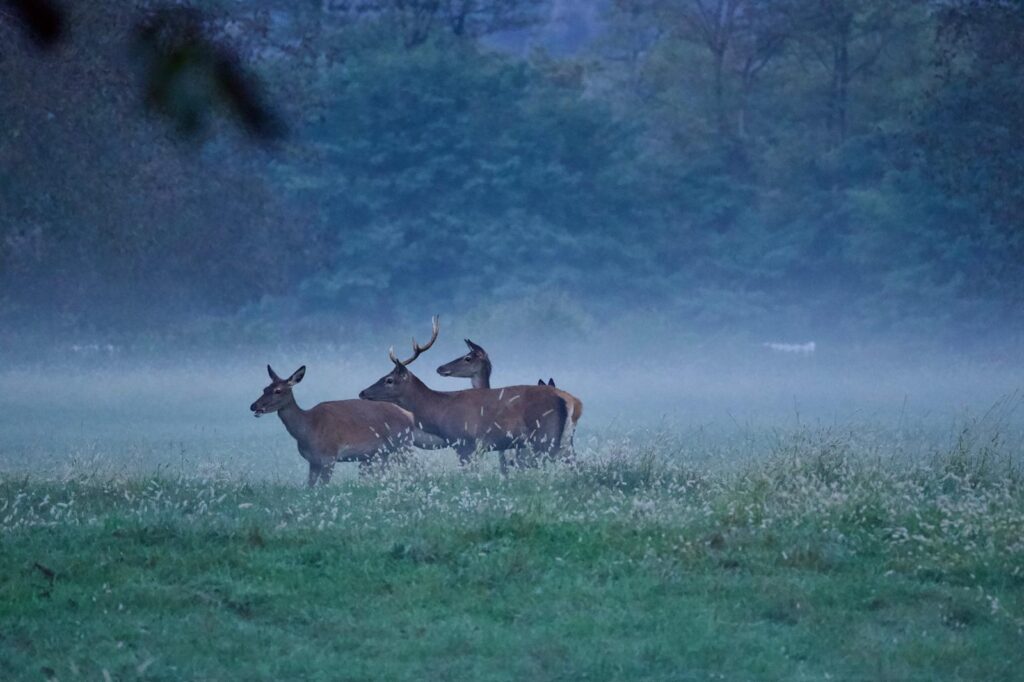
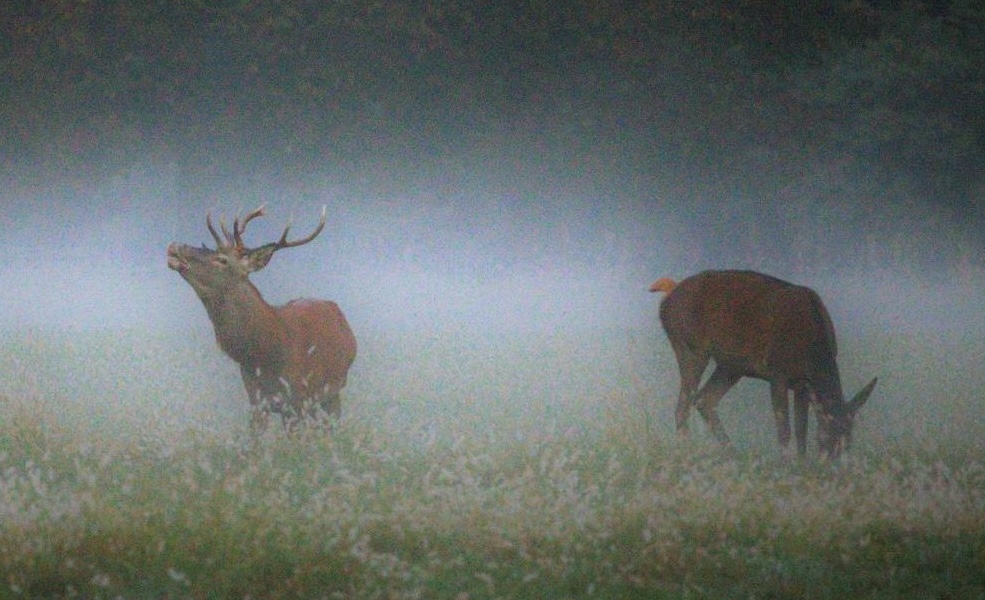
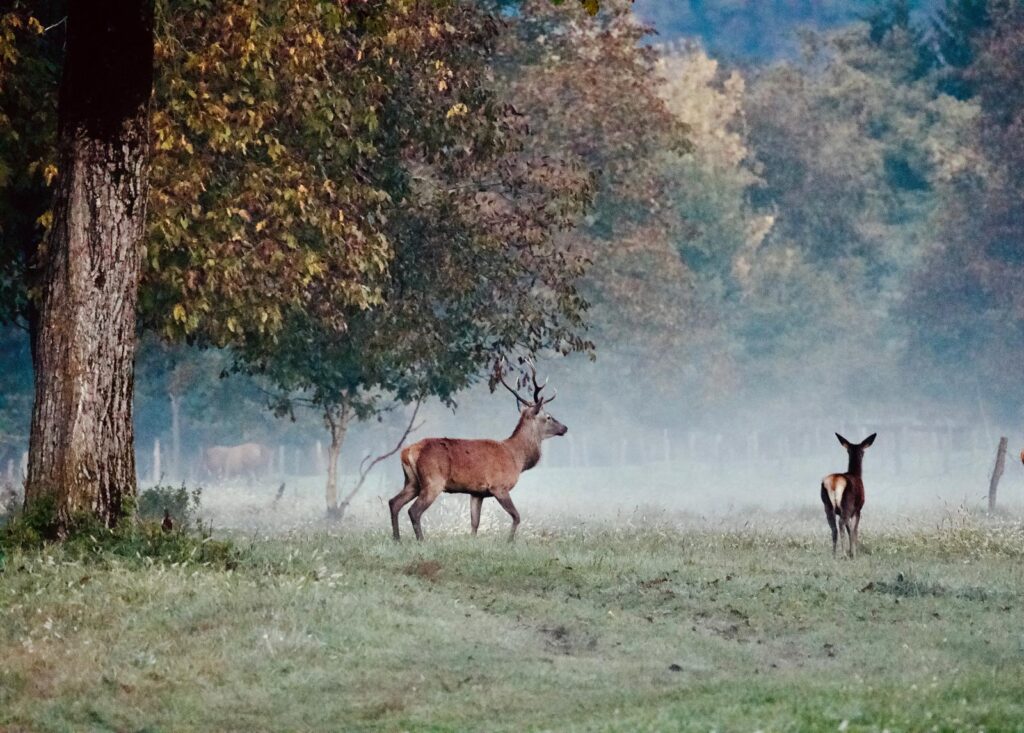
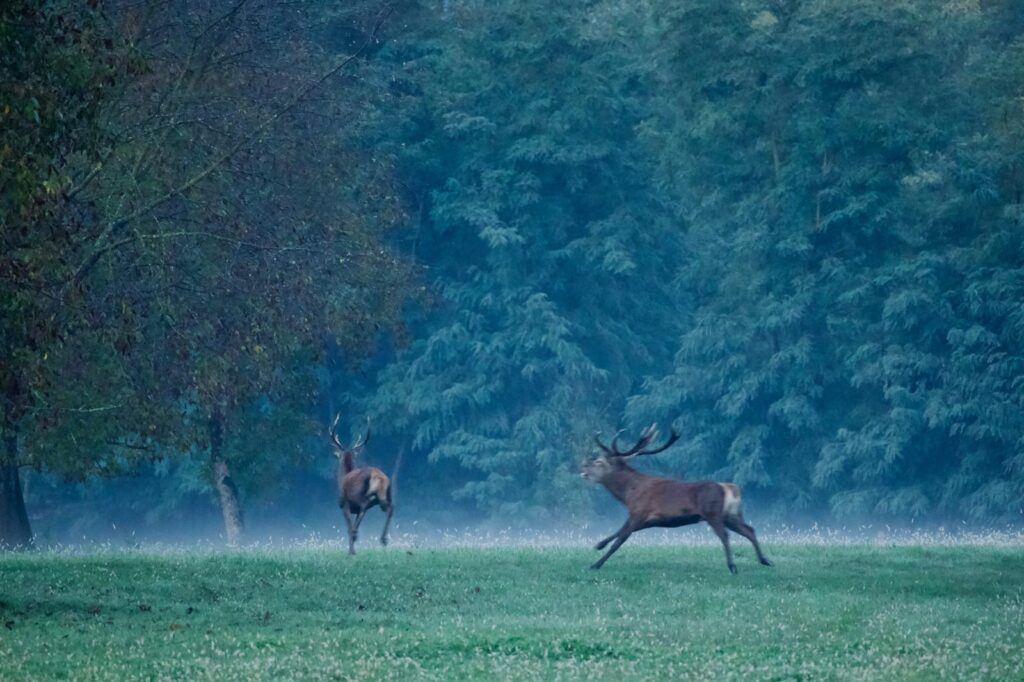
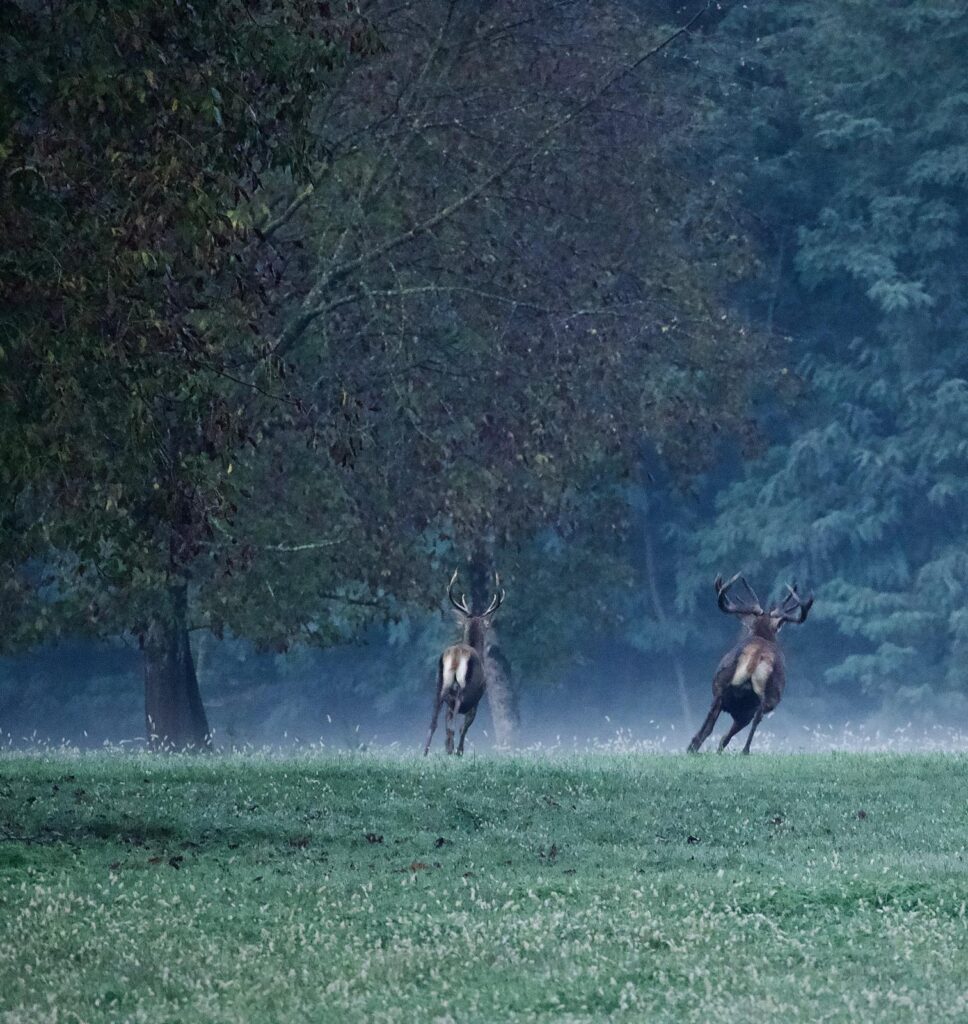
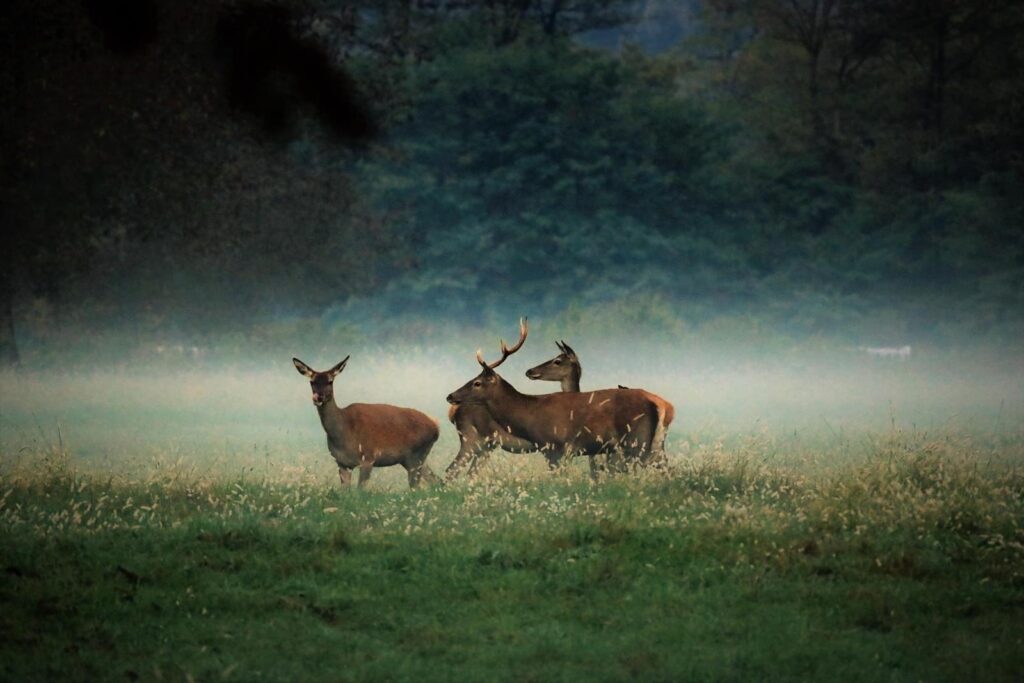
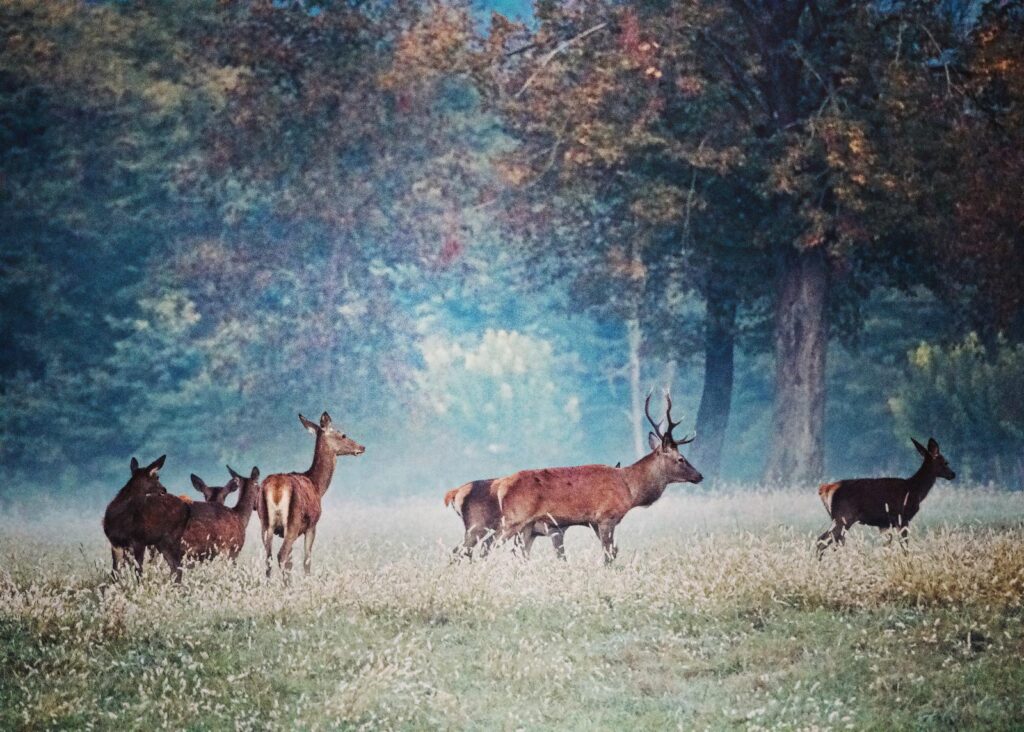
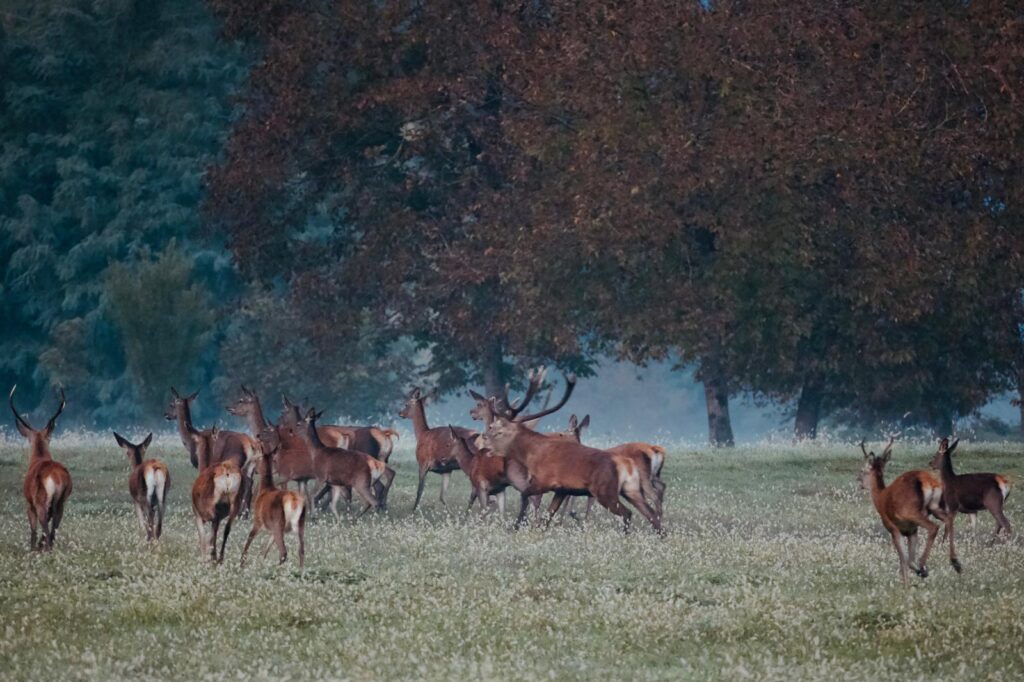
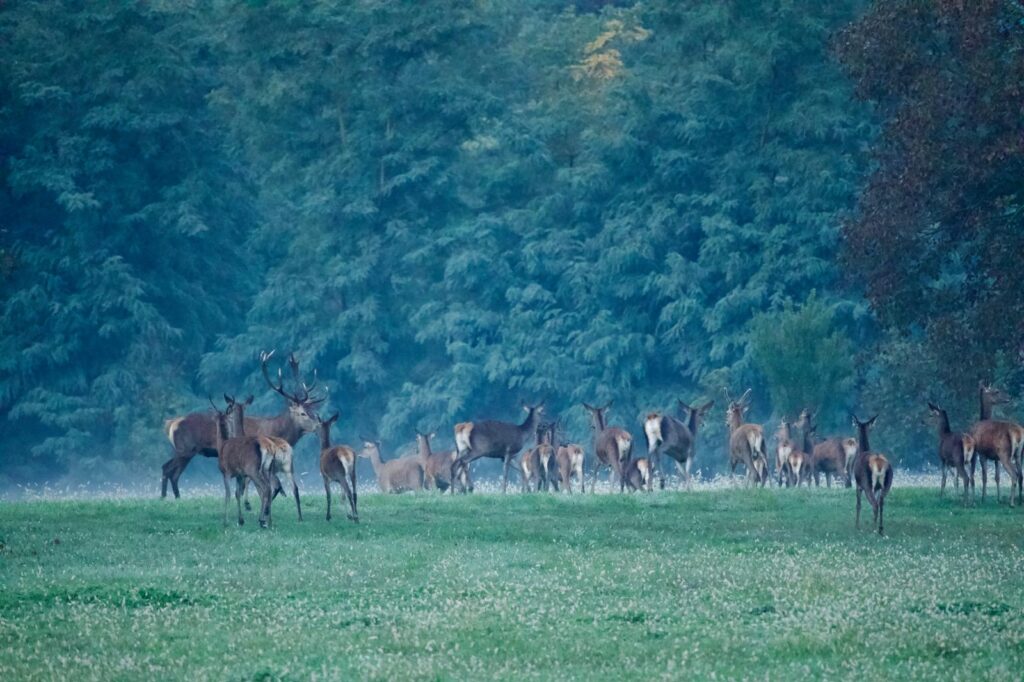
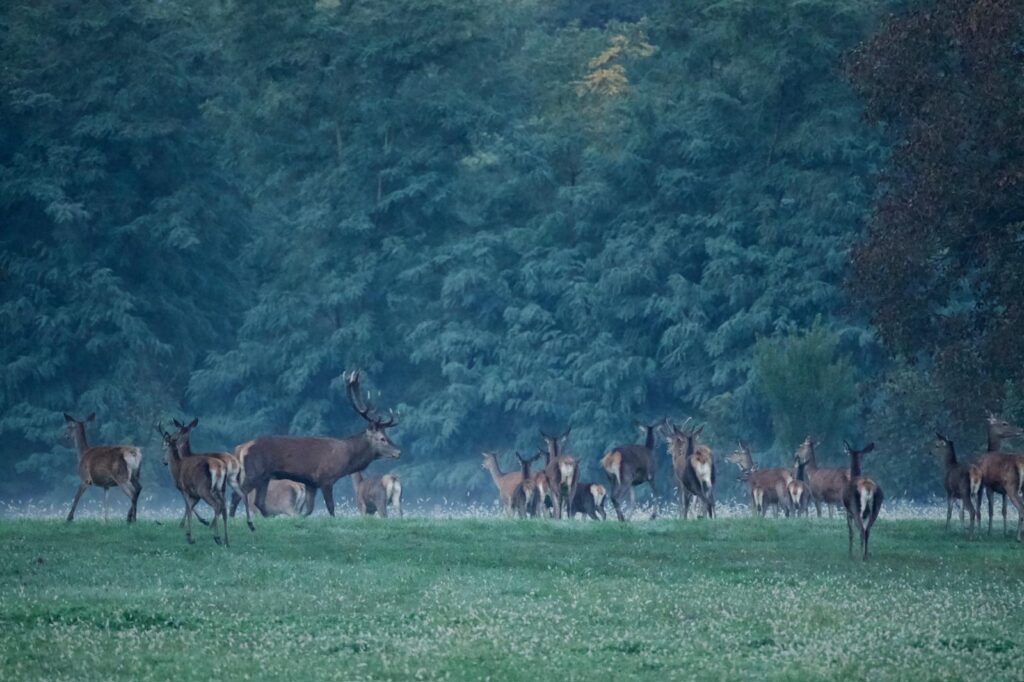
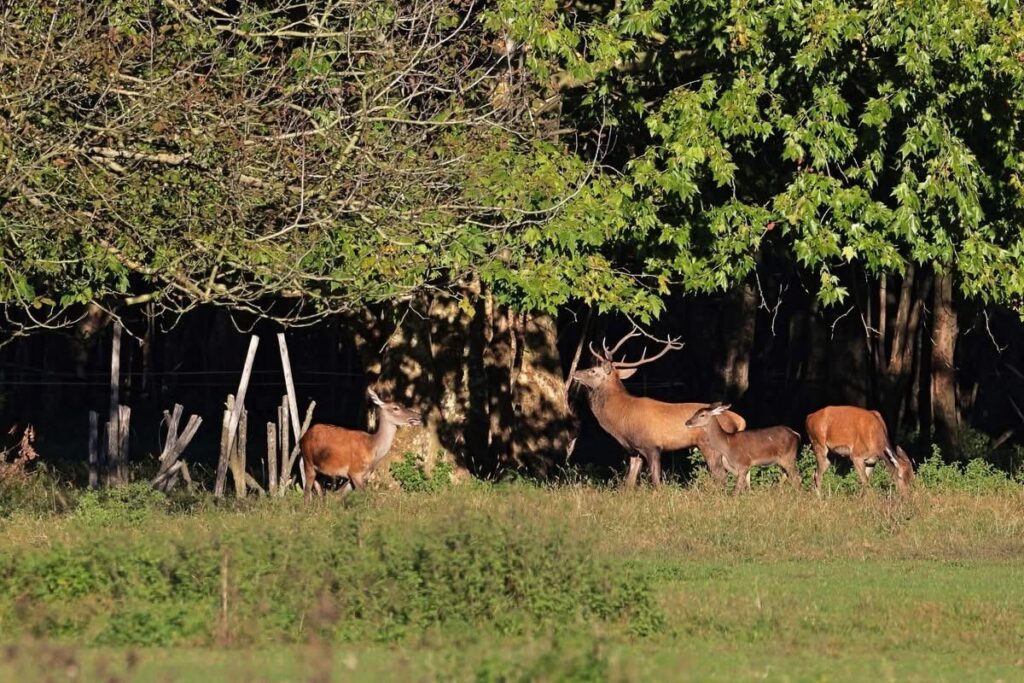
The deer's bellowing at the Lago di Piano Nature Reserve. Photo by Fabrizio Manservisi
What to do in the surrounding area
An evening at the bramito goes well with an afternoon in the valley and a dinner in Carlazzo or Porlezza.
- Piano Lake Nature Reserve — complete information sheet, map and circumnavigation of the lake
- The water lilies of Lake Piano —our article on summer flowering, to return in another season
- Castel San Pietro — the fortified hill overlooking the lake
- Church of San Vittore in Porlezza — the parish church that governed the entire territory for five centuries
- Where to eat in Carlazzo and Porlezza
- The Valley Floor — the page on the territory between Lake Ceresio and Lake Como
In brief
Where: Piano Lake Nature Reserve, Carlazzo (CO) — Reserve house in the Piano hamlet.
When: September 15 – October 15, 2026, peak late September/early October. Twilight and pre-dawn.
As: Guided tours are available by reservation (riservalagopiano@cmvallilarioceresio.it · 0344 74961) or independently only on the main marked path.
Brings: binoculars, warm clothing, red light, patience.
Do not bring: noise, flashlights pointed at animals, drones, calls.
Article by Philip Colombo. Scientific review of Vincenzo Perin, Park Ranger of the Lago di Piano Nature Reserve (Lario and Ceresio Valleys Mountain Community). Photographs: Fabrizio Manservisi.