Description
Discovering secret places
Established by the Lombardy Region as a Protected Nature Reserve and recognized as a Special Area of Conservation and Site of Community Importance by the European Union, the Piano Lake Nature Reserve represents an unspoiled environment that fosters biodiversity, a context composed of different natural environments such as lake, wetlands, meadows, woods, streams--a unique heritage where flora and fauna are the undisputed protagonists.
A naturalistic oasis between Lake Como and Lake Ceresio
A true naturalistic jewel of the Menaggio Valley, located halfway between Lake Como and Lake Ceresio, the Lake Piano Nature Reserve is an unspoiled and valuable environment for nature observations and trekking.
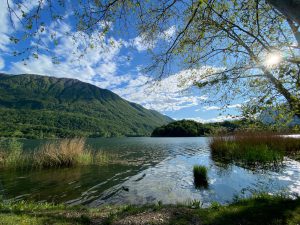
A crystal-clear body of water, rich in fish of considerable size such as pike or of conservation interest such as Po river gobies, reflecting the surrounding mountains of the Menaggio Valley, particularly the Galbiga and Pidaggia mountains, in the setting of a protected Regional Nature Reserve recognized as a Special Area of Conservation and Site of Community Importance by the European Union.
This particular protection stems from the EU's need to safeguard continent-wide declining and rarefied habitats and species (wild animals and plants) that, at Piano Lake, have survived to date.
How to get to the Reserve
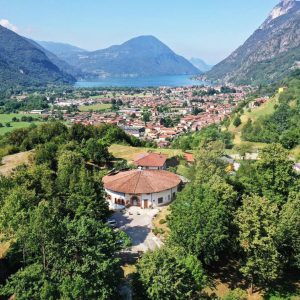
The Lago di Piano Regional Nature Reserve is located in the Lepontine Alps halfway between Menaggio and Porlezza, near the Lake Lugano. Easily reached by car from Menaggio along state road 340 which connects to Porlezza.
The Reserve House and the tour route
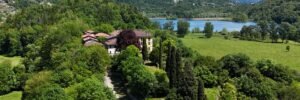
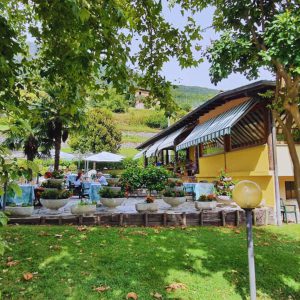
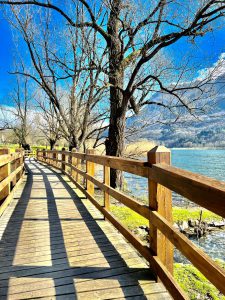
The Reserve is located halfway between Lake Como and Lake Ceresio and is a valuable environment for fascinating nature observations and treks. The Reserve House, the starting point and headquarters of the park, houses the park rangers' offices, a book-shop, a rowing boat rental service, an educational-nature room and guest quarters for overnight visitors. Outside, a picnic area and a beautiful pier overlooking the lake are available to all.
The main tour route is immersed in lush nature: approximately 5 kilometers of excitement, passing through numerous distinct natural environments: aquatic plants, reed beds, meadows, humid forests, broadleaf trees, and coniferous trees. Access is free and can also be self-guided thanks to the numerous red-white-red trail markers that mark the route. Along the trail, it's not uncommon to encounter wild animals such as deer and roe deer, while birds and amphibians are never lacking. Numerous vestiges of the past are also well-preserved: the Ancient Mills, the Lembra Washhouse, specialized farms, the bird snare, and kilometers of dry stone walls. On the summit of Montecchio Brione (a geological feature of the Quaternary period), a fortified rural village has stood for almost a thousand years. Castel San Pietro, dating back to the Middle Ages. It is a cluster of ancient houses built close together with a single access road and located in a dominant position overlooking the valley floor.
Outstanding biodiversity
The exceptional biodiversity found in the Piano Lake Nature Reserve is evidenced by the presence of the freshwater crayfish (Austropotamobius pallipes italicus), a rather rare small crustacean that survives only in the cooler, oxygenated waters of the reserve.
Nearby
- Camping Frog
- De Gusta, Cafeteria Bar
Experiences
- Hiking tour in the reserve lasting about 3 hours
- Small boat rental at the Visitor Center “House of the Reserve”
Photo credits: Vincenzo Perin
The Lake and Landscapes


Flora, Fauna and Trails