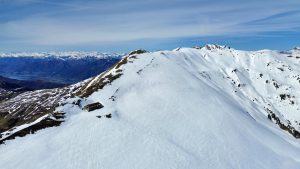
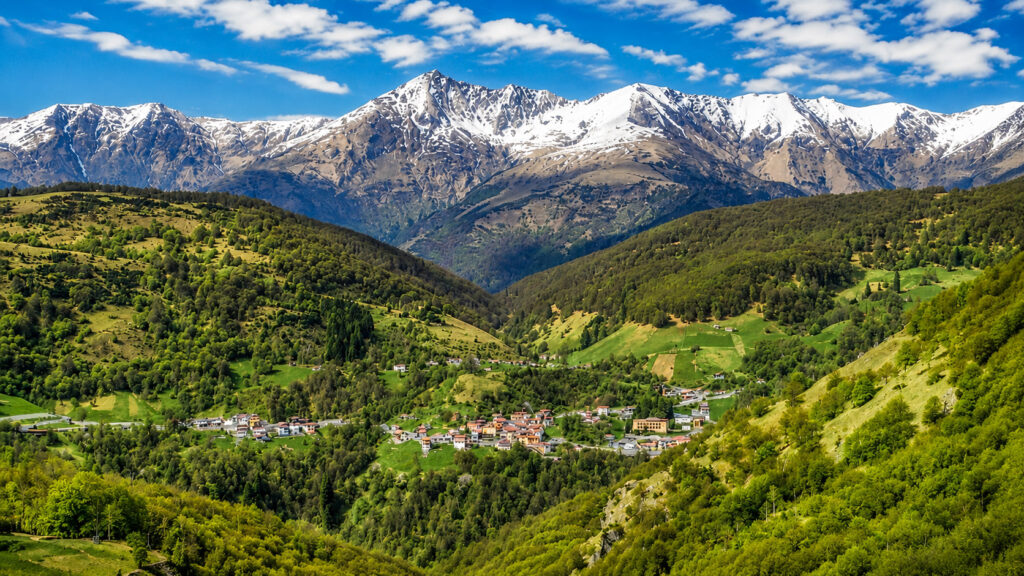
La Rezzo Valley It is a small pre-Alpine valley in the province of Como, in Lombardy, adjacent to the Cavargna Valley and to the Valsolda on the border with the Canton of Ticino. The Ceresio5Valli portal covers two municipalities in the area: municipality of Val Rezzo, above 1,000 metres above sea level, born in 1928 from the fusion of the ancient communities of Buggiolo e Sawmill (with the municipal headquarters in Buggiolo) and accompanied by the locality of Nandres; and the municipality of Corrido, whose four fractions — Vestetto (municipal seat), Bicagno, Eraser e Molzano —they extend along the moraine slopes to the right of the Cuccio stream, dominating the valley entrance. Both territories, historically part of the Pieve di Porlezza in the Duchy of Milan, are crossed by the provincial road that leads from Porlezza to the valley.
The Rezzo Valley preserves an ancient iron and steel tradition: a smelting furnace was active in Buggiolo as early as 1589 and another in Seghebbia since 1785, and ironworking is still depicted in the municipal coat of arms, along with the rhododendron, a characteristic flower of its mountains. From the Cava Pass, shared with the Cavargna Valley, high-altitude hikes depart to the San Lucio Refuge and Mount Garzirola (over 2,100 meters), while from the village of Pramarzio, a trail leads directly to Valsolda. The parish church of Santa Maria Assunta in Buggiolo, erected in 1641 by Archbishop Cesare Monti as a branch of the Cavargna parish, preserves the area's historical religious identity. In Corrido, overlooking the Cuccio torrent from the top of a rocky spur, stands the church of Saints Materno and Martino, documented since the 13th century and elevated to parish status in 1587, which preserves baroque frontals in polychrome scagliola by the Magistri Intelvesi.
The smelting furnaces of Buggiolo and Seghebbia
The Rezzo Valley preserves a iron and steel tradition documented since the 16th century: the melting furnace of Buggiolo is already attested in 1589, that of Sawmill since 1785, both powered by the waters of the Cuccio stream and charcoal from the surrounding beech woods. Ironworking was one of the few subsistence economies in the valley, and even today the rake and the hammer They stand out in the municipal coat of arms of Val Rezzo next to the Alpine rhododendron. The remains of the ovens - dry stone structures with a combustion chamber and a slag discharge channel - are visible along the Path of Ancient Crafts, a thematic itinerary that starts from Buggiolo and crosses the sites of Alpine industrial archaeology.
The path of the partisan Umberto Guaino
In the woods of Val Rezzo there is a path dedicated to Umberto Guaino, a partisan from Como who fell in November 1944 in a clash with a unit of the Italian Social Republic while trying to reach Switzerland through the Cava Pass. The route, restored in the 2000s by the'National Association of Italian Partisans The Como section, in collaboration with the municipalities of Val Rezzo and Corrido, passes through symbolic places of the local Resistance: the Pramarzio refuge where Guaino spent his last night, the Combattimento clearing, and the commemorative cross erected in 1985. It is a path of historical memory that keeps alive the testimony of the few survivors of the partisan bands Cacciatori delle Alpi and Cinquantaduesima Garibaldi, active in the Lario–Ceresio–Ticino triangle.
From Pramarzio to Valsolda — the high-altitude trail
From the location of Pramarzio (1,260 metres), an alpine plateau above the town of Buggiolo, is the starting point of one of the oldest ridge paths in the Ceresio5Valli area: an ancient transhumance route which, crossing the crest of the Mount Galbiga, leads to the heart of the Valsolda descending towards Castello and Dasio. The route, now marked by the CAI with the number 52, retraces medieval paths used by shepherds, smugglers, and loggers who worked the forests of the two valleys. The crossing, approximately 14 kilometers and a four-hour walk, passes through high pastures, monumental beech forests, and panoramic clearings from which the view simultaneously encompasses Lake Ceresio to the south, Lake Como to the east, and the Ticino Prealps to the north—a unique geographical synthesis of the area.