
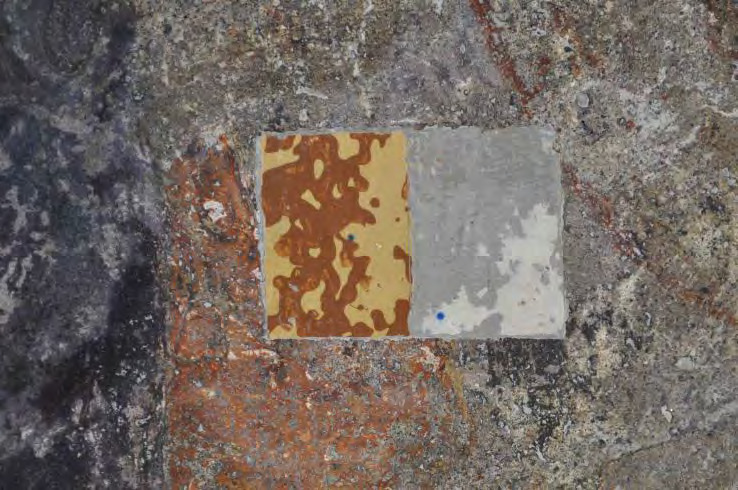
August 2022. While work is in full swing on the restoration of the painted facade, Dr. Ilaria Bruno, official of the Superintendency of Archaeology, Fine Arts and Landscape for the metropolitan city of Milan, arranges a series of investigative essays on the three mirrors of the presbytery of the Church of San Vincenzo Martire in Claino. For decades, those walls, behind and to the sides of the high altar, have been covered with a washable yellow tempera paint resembling a marble, applied in the 1960s. No one knows for sure what lies beneath.
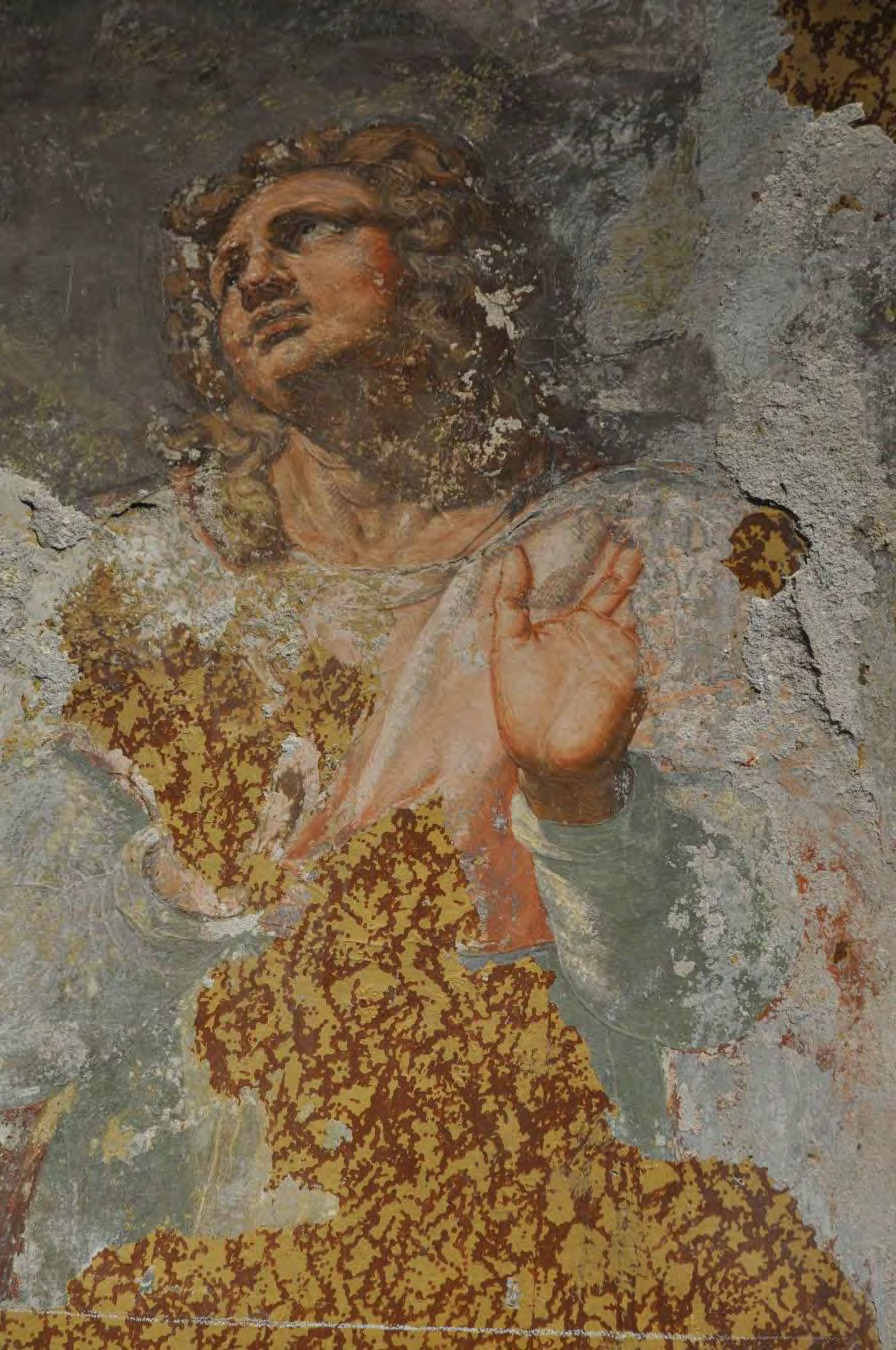
A few millimeters of removal are enough for the surprise to explode. Under the dullness a face emerges, then another figure, then a hand raised to the sky. They are 16th-century frescoes of extraordinary qualityA Crucifixion in the center, two scenes of the martyrdom of Saint Vincent of Saragossa on the sides, figures of Michelangelo's power still charged with their original chromaticism. The first attribution hypotheses began to circulate almost immediately. Leading the delicate work of desciabo, calibrated millimeter by millimeter to avoid losing a single layer of original color, is the restorer Eliana Tovagliaro.
In June 2023, at the conference “Mannerism in Intelvi Valley and the artists of the lakes between the sixteenth and seventeenth centuries” held in San Fedele d'Intelvi and organized by APPACuVI, the cycle is attributed to Pellegrino Pellegrini known as Tibaldi (Puria of Valsolda, 1527 – Milan, 1596). Two years later, in November 2025, the attribution is formalized in a scientific volume by Prof. Andrea Spiriti, Professor of Modern Art History at the University of Insubria. And with it, Claino—a village of five hundred inhabitants overlooking Lake Ceresio—officially enters the circuit of great Lombard Renaissance art, alongside Bologna, Lodi, and the Escorial of Philip II of Spain.
“One of the most subtle painters of sixteenth-century Europe.”
Federico Zeri, on Pellegrino Tibaldi
The attribution: a Tibaldi of his maturity
The volume signed by Spirits — Pellegrino Tibaldi. The frescoes discovered in Claino, published by APPACuVI with the patronage of the University of Insubria — proposes a precise dating: circa 1585, during a return of Tibaldi to Puria in the period following the death of Charles Borromeo (1584) and immediately preceding his departure for Spain in 1588. A chronological placement that is based on documentary elements - Tibaldi is documented in Puria on several occasions from 1563 to 1566, and regularly returned to his native village - and on specific iconographic comparisons with two other pictorial cycles by the master: the Chapel of the Passion in the Church of San Cristoforo in Lodi and the frescoes of the Cloister of the Evangelists at the Royal Monastery of El Escorial.
The volume was presented on November 17, 2025, in the Great Hall of the Cloister of Sant'Abbondio in Como. The presentation was attended, in addition to Prof. Spirits, Dr. Ilaria Bruno, Prof. Umberto Piarulli (vice-rector of the University), Marco Ausenda (APPACuVI president), the restorer Napkin maker and the architects Grossi e Cioni Mori.
The work: three mirrors, an iconographic program
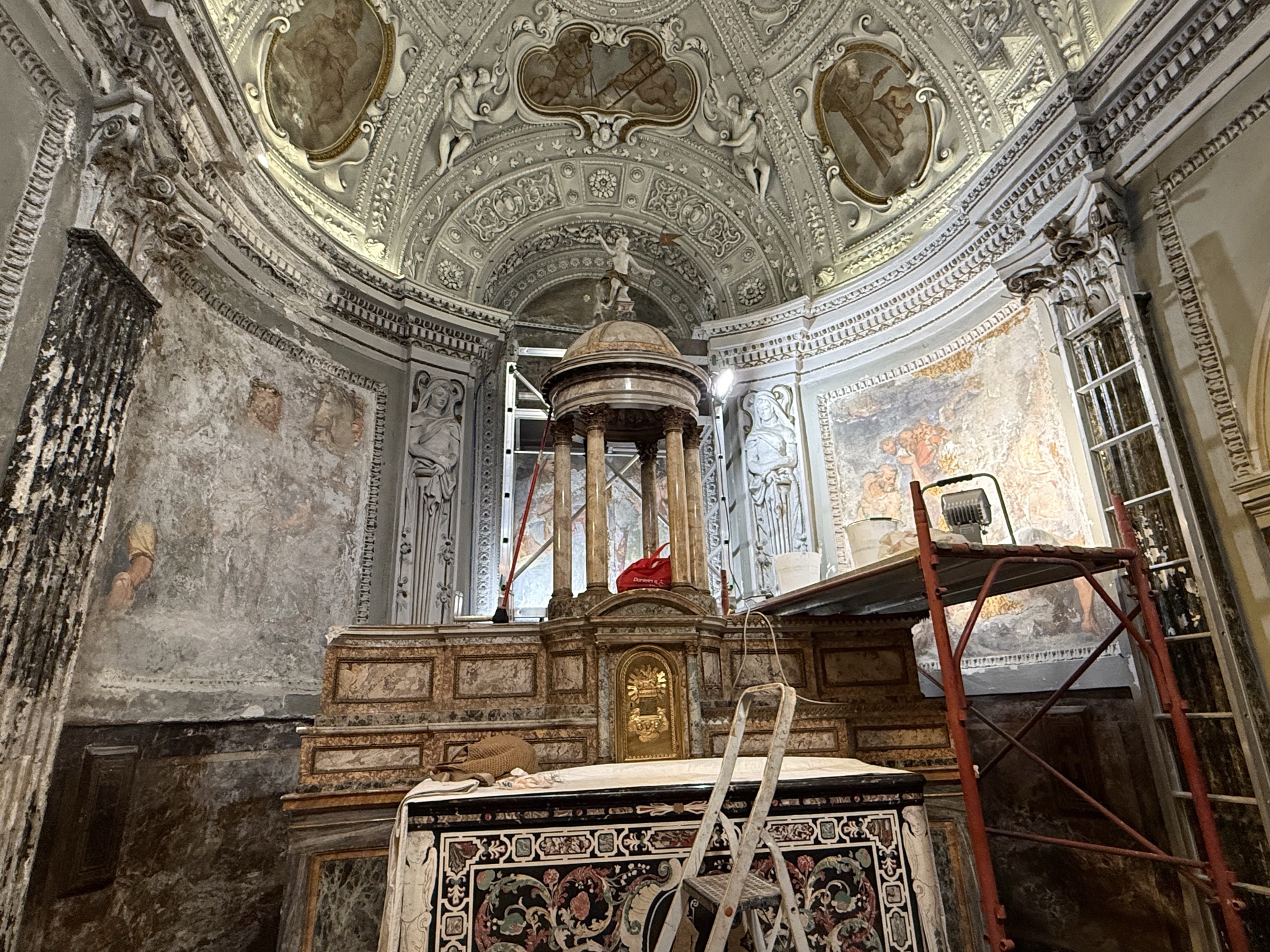
The cycle of the presbytery occupies three large mirrors enclosed by stucco frames: one of 3.60 × 1.60 meters behind the main altar, two of 2.00 × 1.60 meters on the sides. Each panel is painted with a powerful Michelangelo-esque Mannerist pathos.
The central panel: the Crucifixion
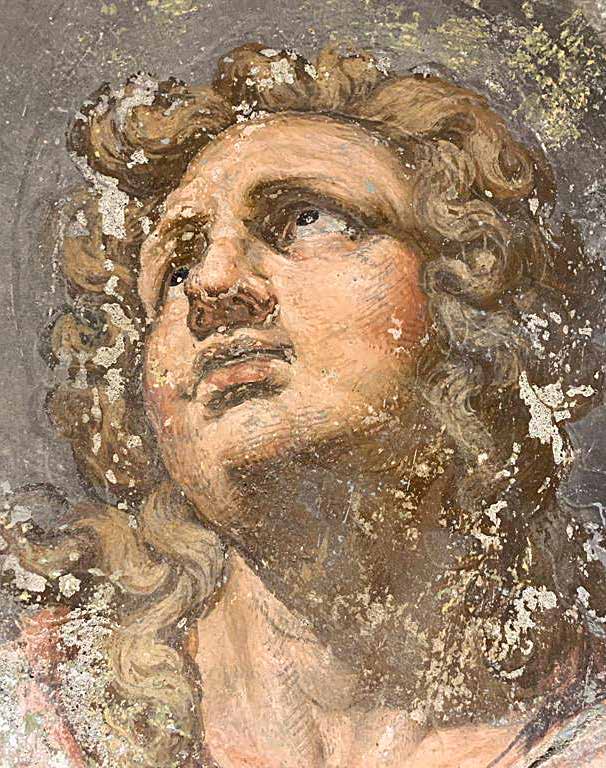
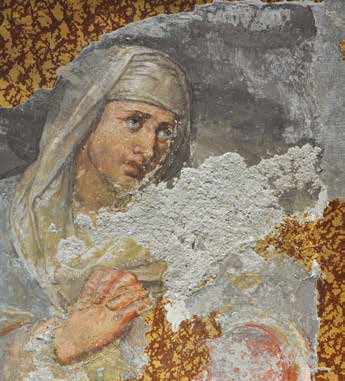
In the center stands a Crucifixion, of which the head with the white veil of the Praying Virgin — of immaculate iconography, according to the tradition of the “White Madonna” — and the lion's head of John the Evangelist, in addition to the trace of the sculpted Crucifix that dominated the scene. The latter could correspond to the wooden crucifix in late Michelangelo style now preserved in the right chapel of the same church, according to the hypothesis proposed by Spirits. Above the heads of Mary and John, two figures of angels can also be seen, still covered by very tight layers of plaster.
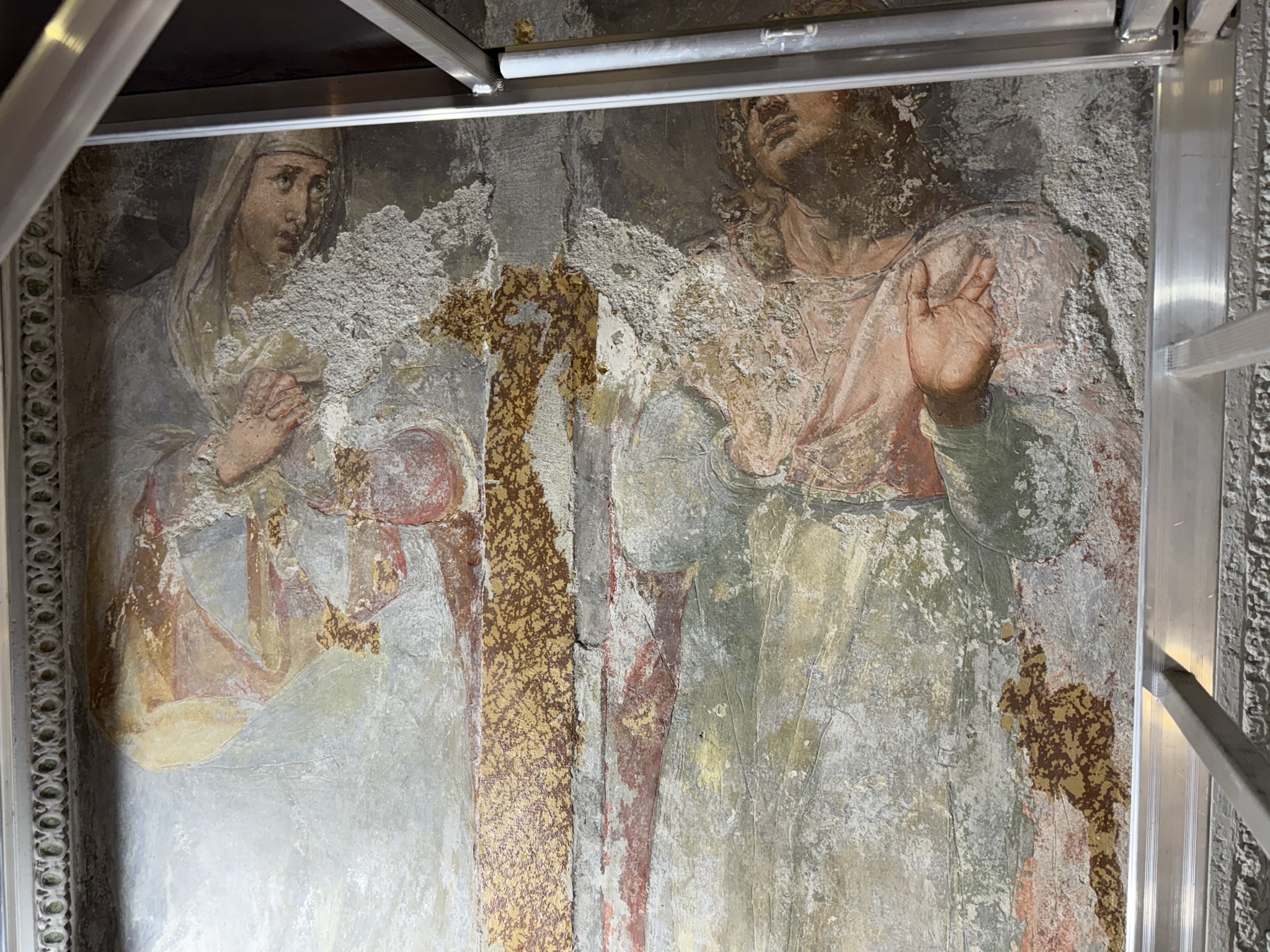
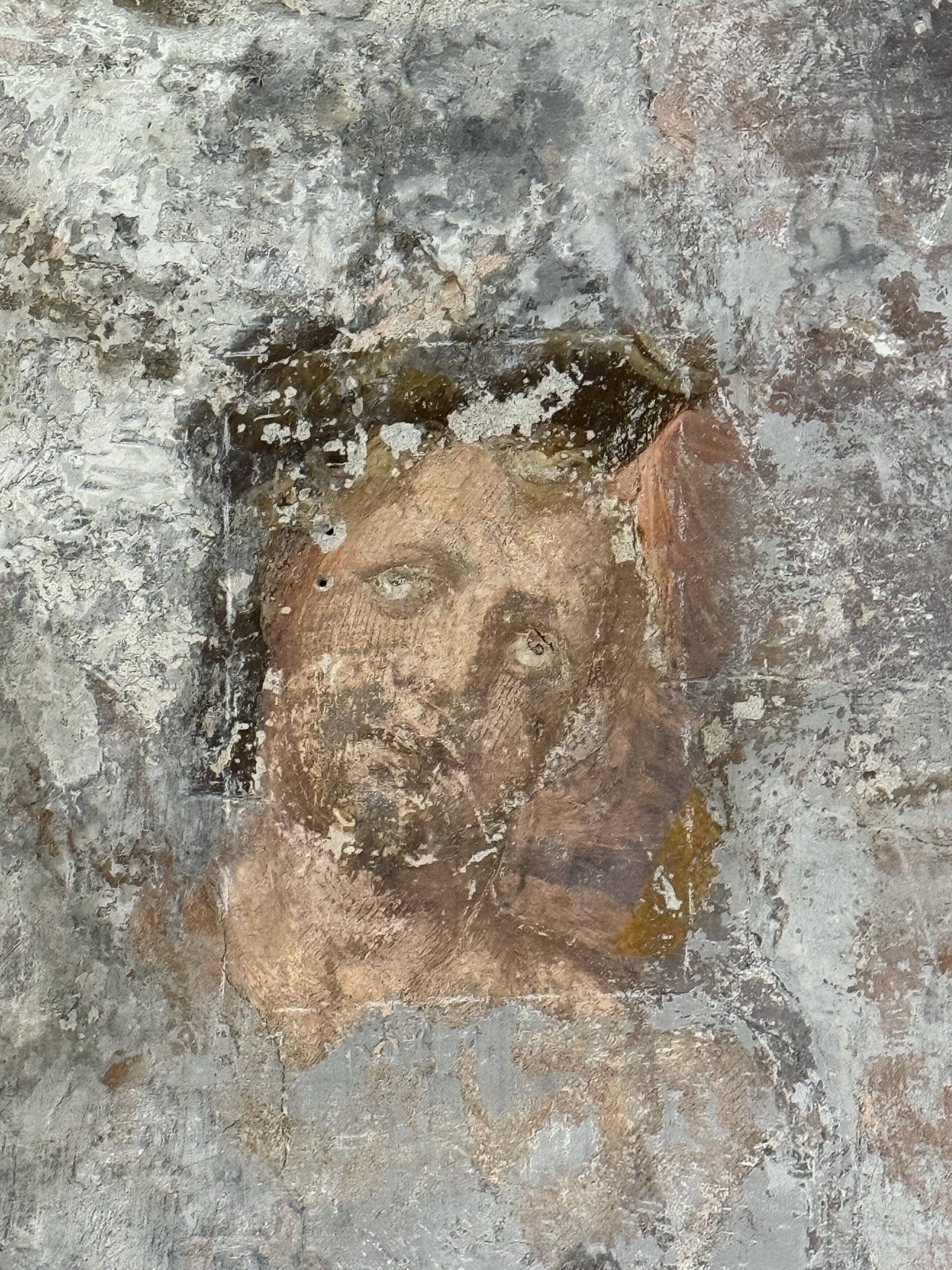
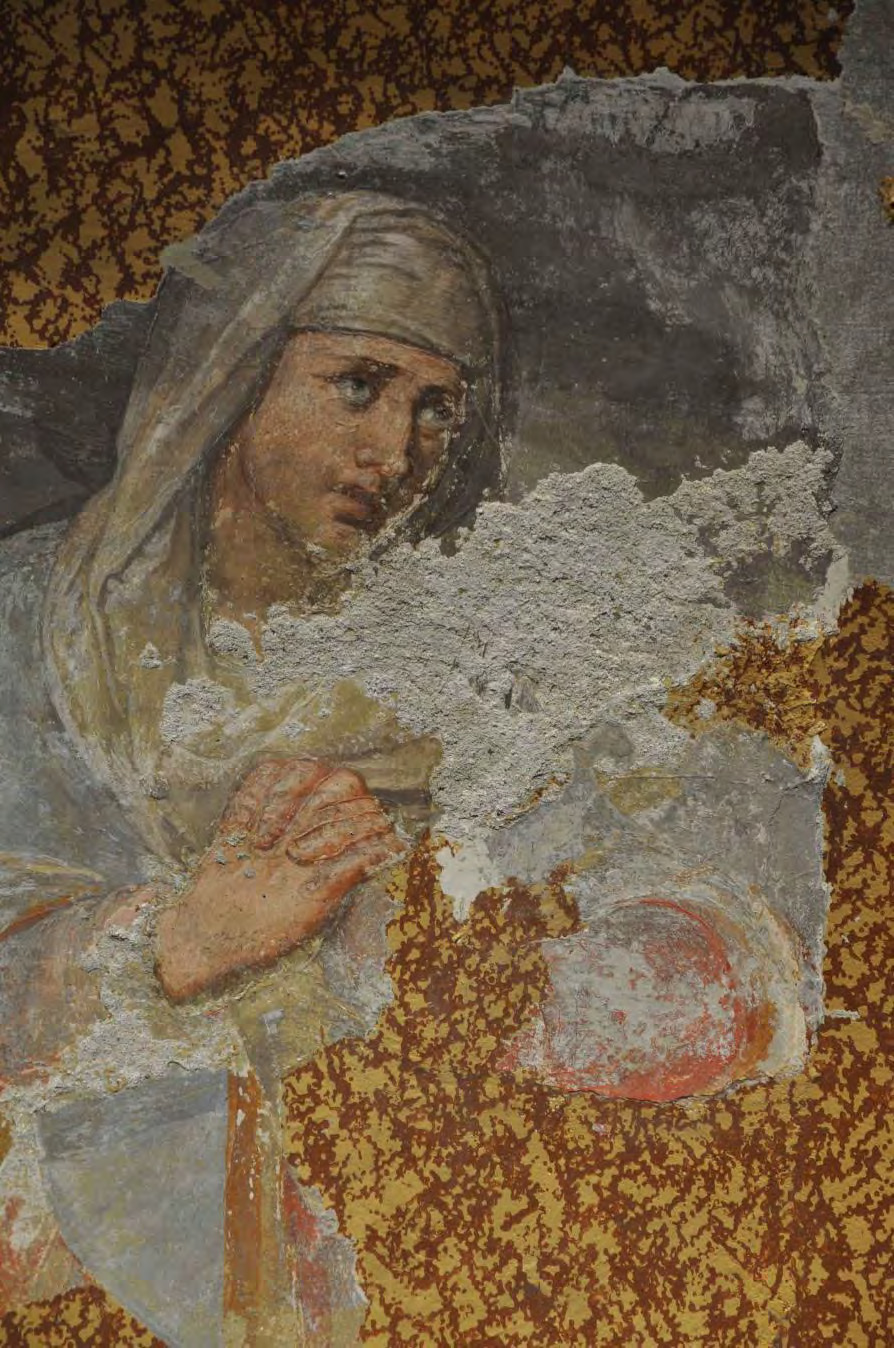
The visual isolation of the two figures clearly refers to the Gospel of John (19, 25-27), with the recognition of the apostle as the putative brother of Christ and the putative son of Mary.
The two side panels: the martyrdom of Saint Vincent
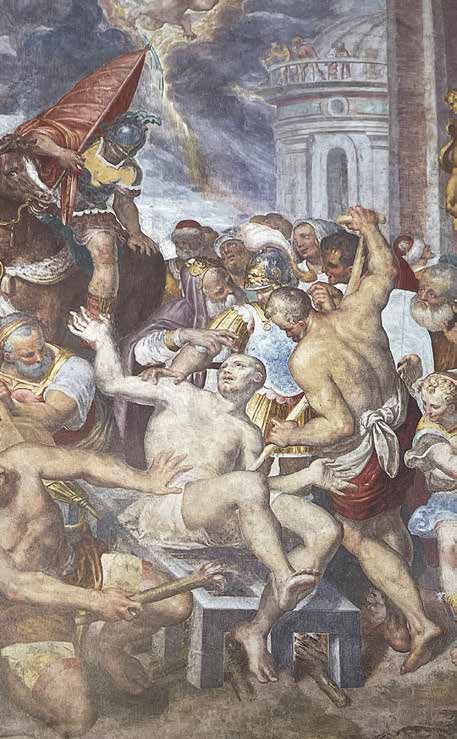
On the sides of the Crucifixion are the two scenes of the martyrdom of Saint Vincent of Saragossa, the patron saint of the church. The iconography follows the tradition consolidated in the 13th century by Golden Legend by Iacopo da Varazze: Vincenzo, archdeacon of Saragossa, subjected during the persecution of Diocletian in 304 AD to the torture decreed by the prefect Daciano.
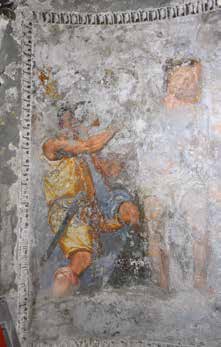
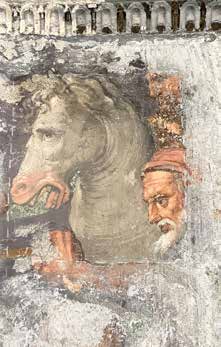
In the left pane The saint is hanging from the bier while being flayed with iron hooks. The figure of Daciano on horseback emerges to the right; Vincenzo's gaze turns upward with the indifference to the pain that hagiography attributes to him.
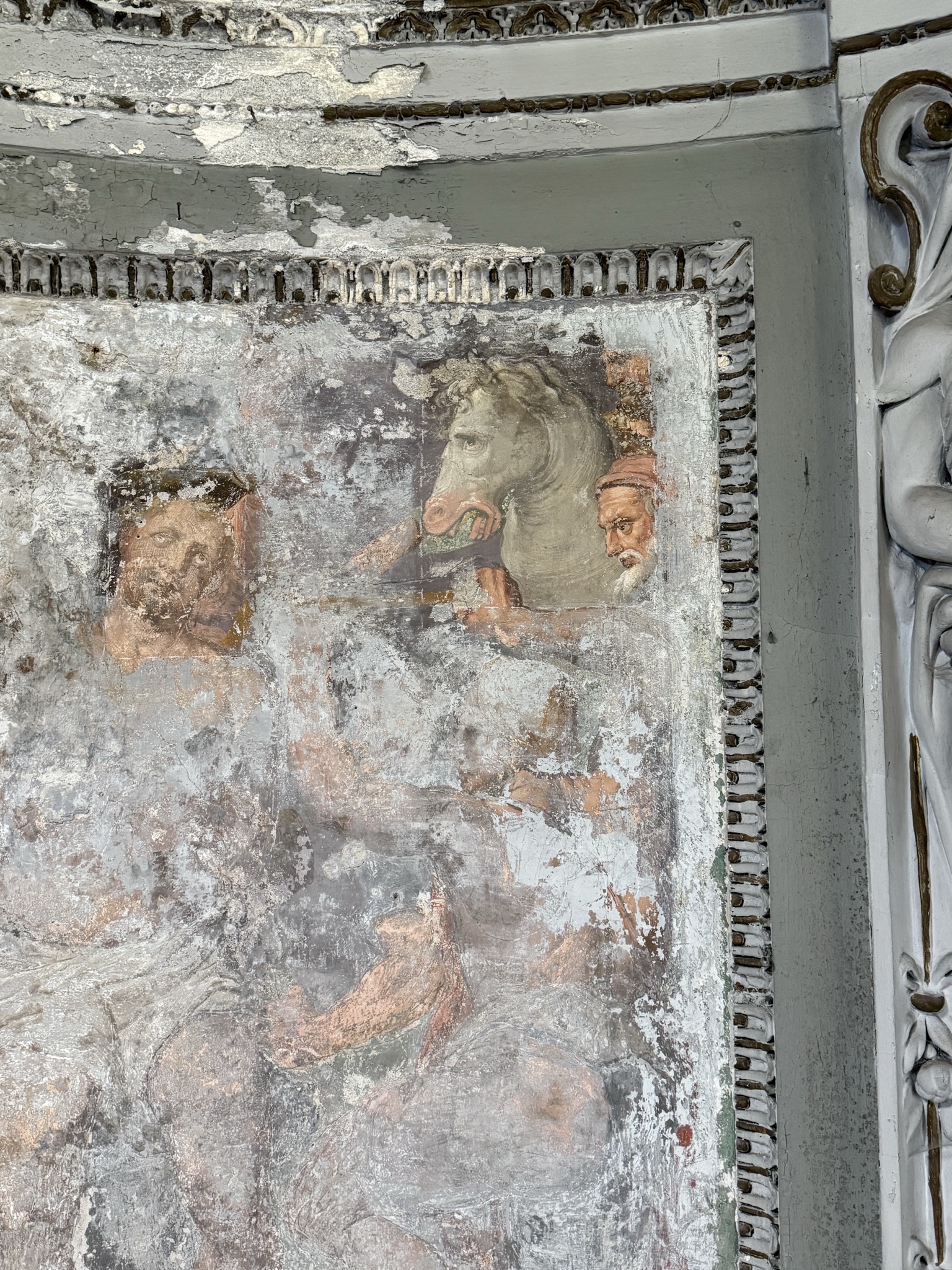
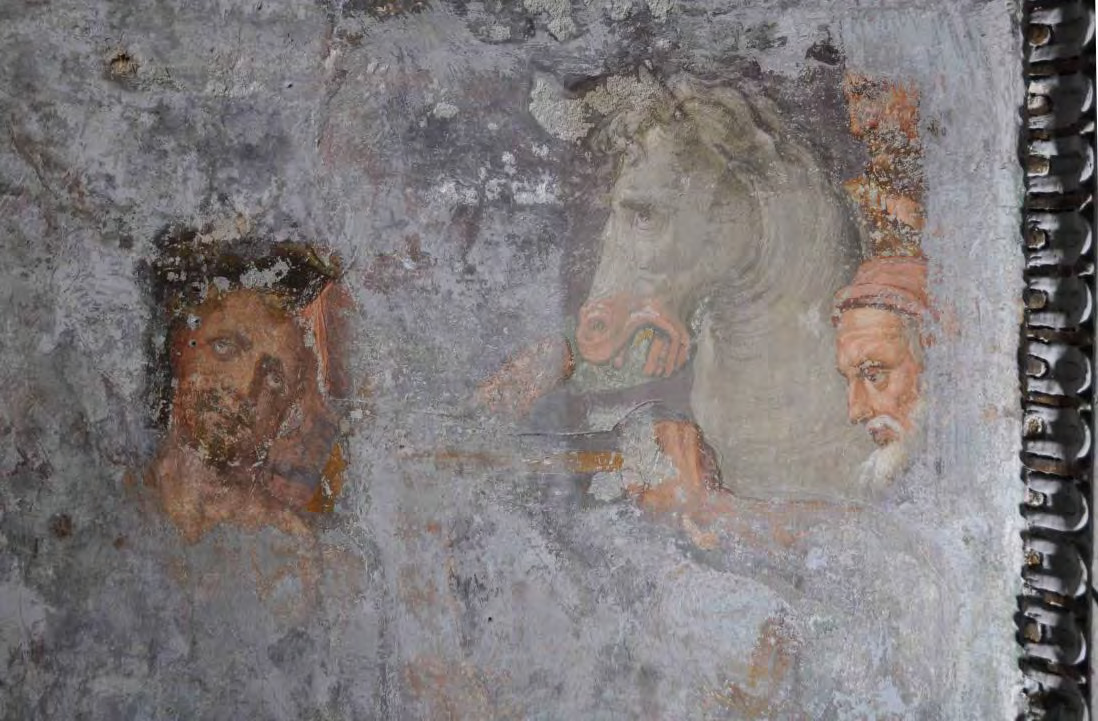
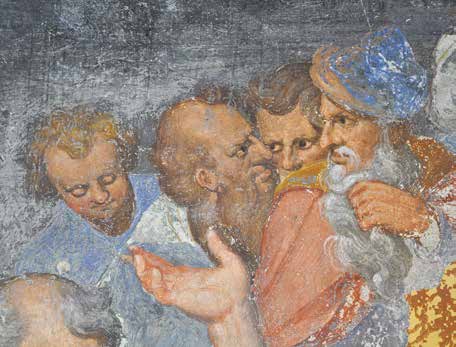
In the right pane Vincenzo lies on the grill, but raises his head and right hand to the sky, surrounded by the crowd. The two executioners in the foreground on the sides are particularly noteworthy: the executioner on the left, in particular, derives directly — according to the analysis of Spirits - from the Crucifixion of St. Peter painted by Michelangelo for the Pauline Chapel in the Vatican.
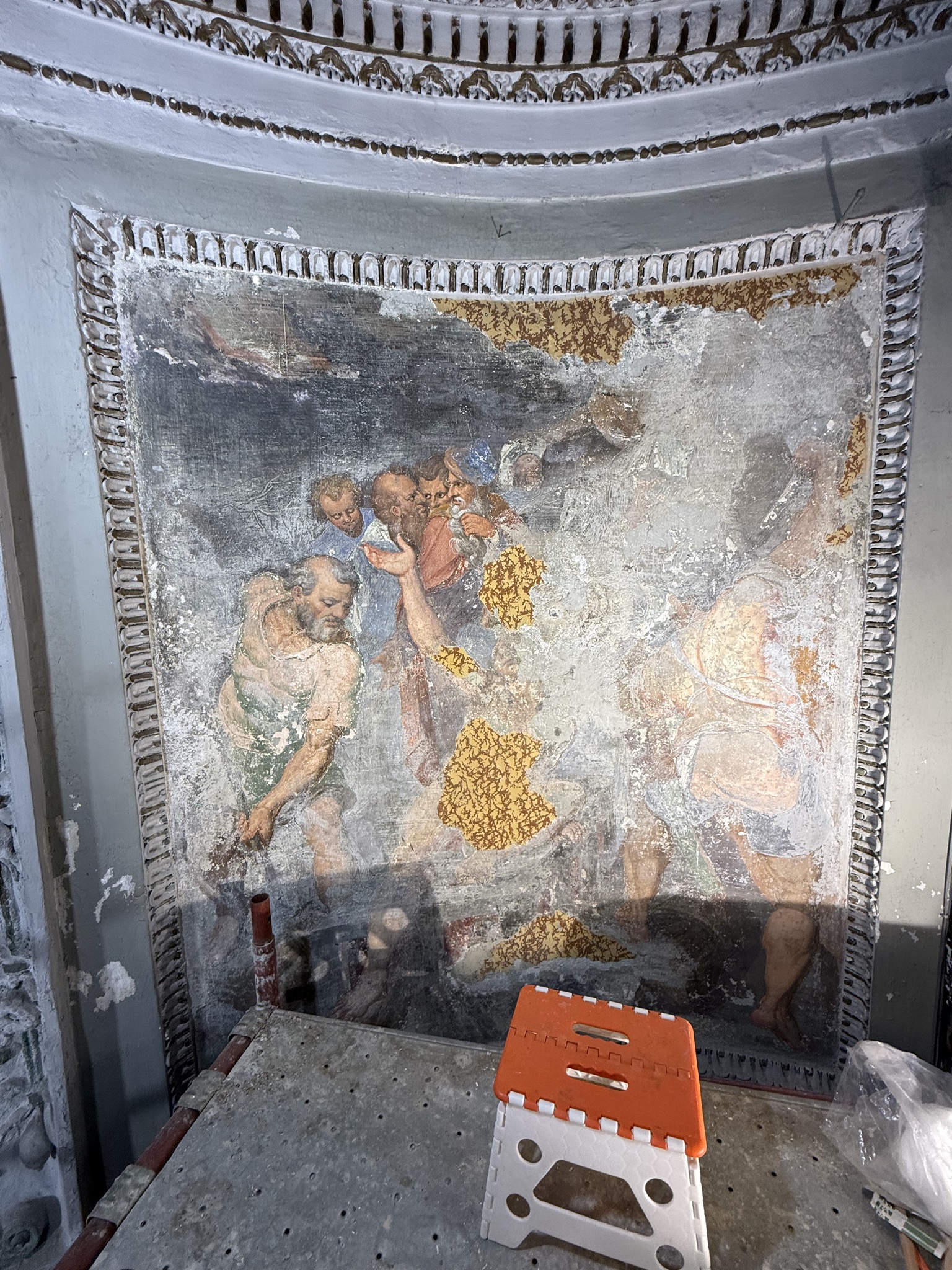
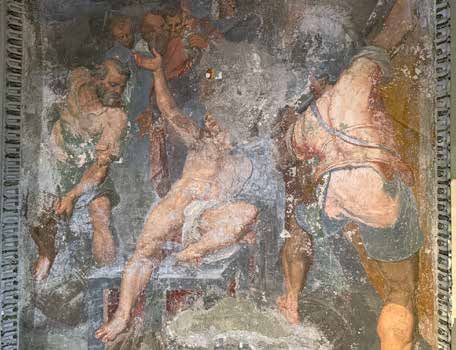
The iconographic combination - Christ crucified in the centre, the martyr his witness on the sides - builds a unitary theological programme: Vincenzo as imitator Christi, faithful witness who in his own passion relives that of the Savior.
Why Tibaldi: Michelangelo's style
The stylistic analysis of Spirits identifies in the Claínese cycle the vigorous Michelangelo mannerism Tibaldi's mature style. The powerful torsion of the bodies, the monumental gigantism of the figures, the attention to anatomical detail, and the controlled pathos of the central Crucifixion are the stylistic hallmarks of one of the artists who best reinterpreted Buonarroti's language in the Lombard context.
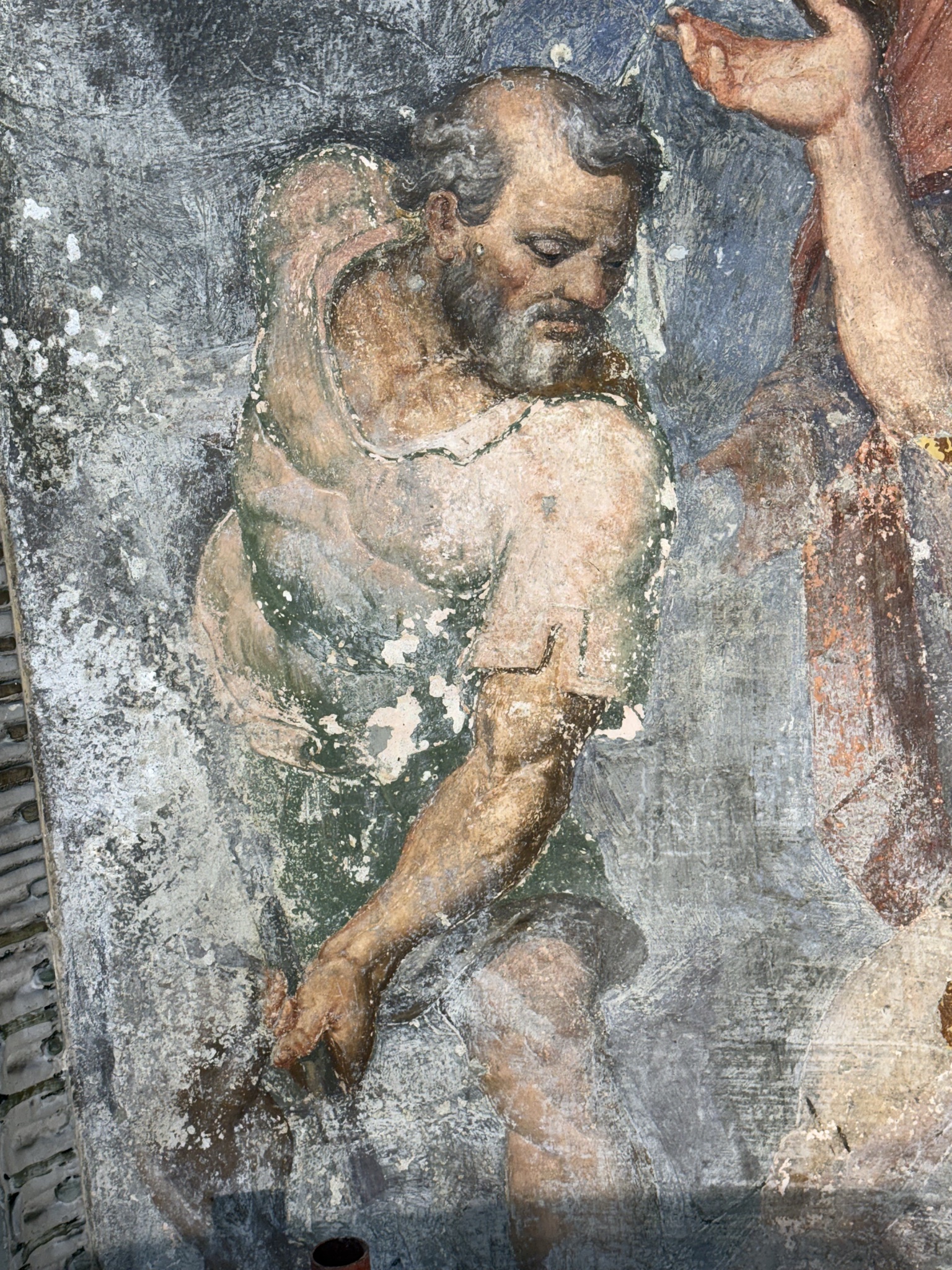
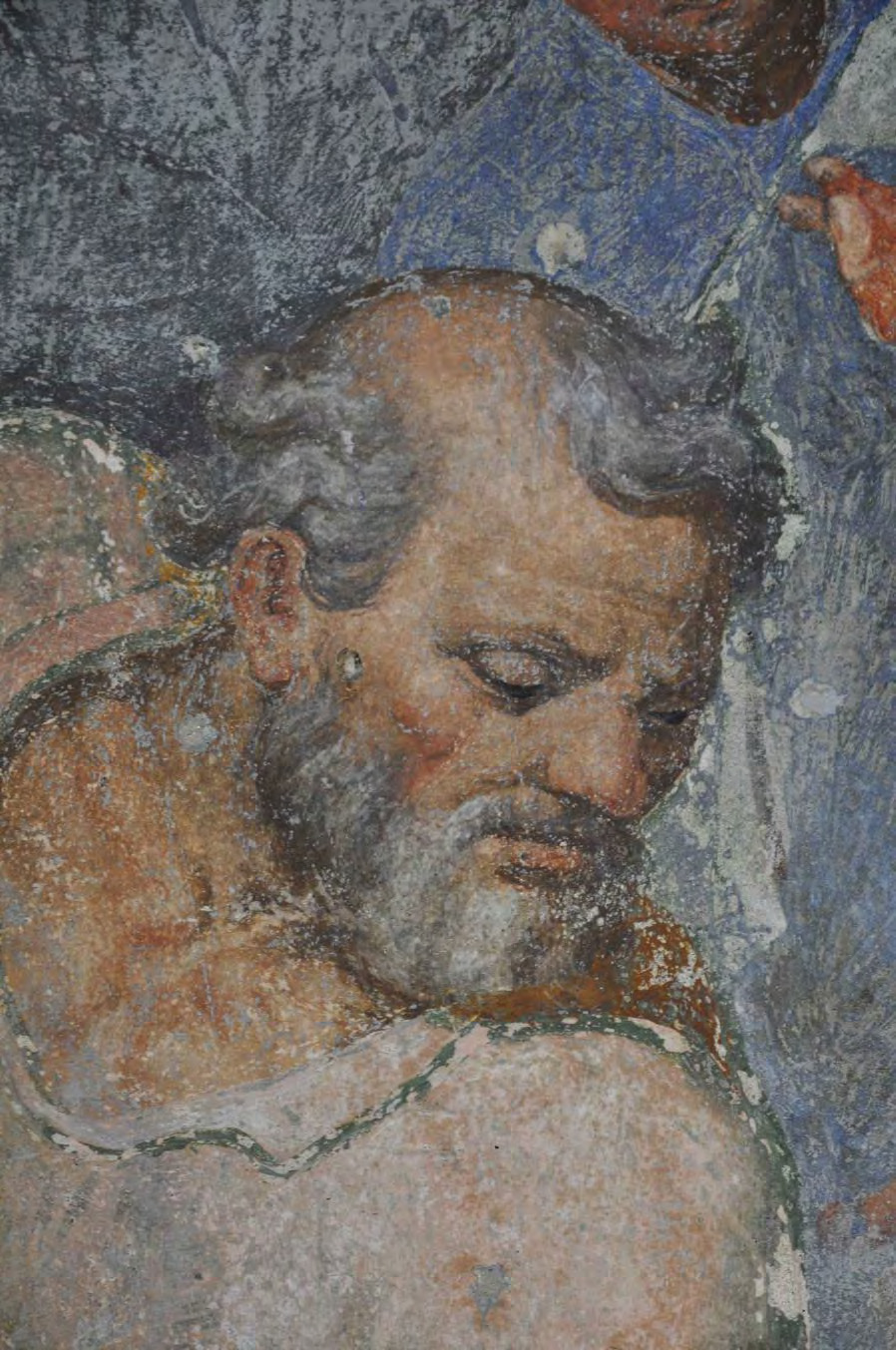
The figures of Claino - the young John with the receding hairline, the archangel Gabriel as a compositional model, the caricatural Leonardesque quality of the profile figure in the second martyrdom - reveal memories of Perin del Vaga filtered through a “Michelangelesque” stabilization that Spirits It traces back to Tibaldi's long stay in Milan in the service of Pius IV Medici and Carlo Borromeo. These are the same years in which Michelangelo, mythologized by the papacy of the Milanese Pius IV (1559-1565) and later venerated by champions of the Counter-Reformation such as Ignatius of Loyola and Carlo Borromeo, became the absolute pictorial model for Figino, Lomazzo, Meda and many other artists from the lakes.
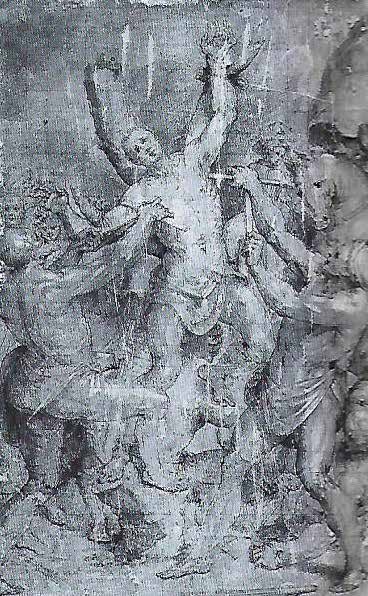
The study of Spirits It also documents the’influence of the Claínese cycle on immediately subsequent artists: Aurelio Luini he created for the Milanese church of San Vincenzino alle Monache, shortly before 1587, a First and a Second martyrdom of Saint Vincent (today at the Pinacoteca di Brera and the Civic Art Collections at the Sforza Castle, respectively) which depend directly on the Tibaldian model. The chain continues: in 1735 Vincenzo Bellotti will create a canvas for the church of Saints Gusmeo and Matteo in Gravedona First martyrdom so far thought to be derived from Luini, but which - as demonstrated Spirits — actually copies directly the Tibaldi of Claino.
Tibaldi, Valsolda, and Val d'Intelvi: Two Centuries of Artistic Emigration
Pellegrino Tibaldi was born in Puria di Valsolda in 1527. He is an illustrious son of the same valley which, a century later, would give birth to Paolo Pagani (Castello Valsolda, 1655-1716) — another great name of the late Lombard Baroque, of which Ceresio5Valli has recently told the new story Andromeda tied to the rock exhibited at the Casa Pagani Museum in Castello.
But Tibaldi is not an isolated case. Valsolda and the neighboring Intelvi Valley — where Claino stands and where the frescoes have resurfaced — are the heart of one of the most important cultural phenomena of Lombard art between the sixteenth and eighteenth centuries: the’artistic emigration of lake people. Generations of architects, painters, sculptors, plasterers, and master builders left these villages to export their art from Italy to Spain, from Central Europe to Poland, Lithuania, Russia, and Sweden, organized in family businesses passed down from father to son.
From the Valsolda families like the left Get along, i Bellotti, i Fountain, i Merlins, i Ceroni, i Puttini, i Well, i Little faces, i Lezzeni. From the Intelvi Valley an equally dense network of dynasties: the Quail of Laino (of which Giuseppe emigrated to Munich and was the founder of a family of famous Bavarian artists), the Straight always from Laino (with Paolo active in Württemberg and Leopoldo in Ansbach, today at the centre of a cultural twinning with APPACuVI), the Frisians they Scotti emigrated to Germany, the Carloni of Scaria —four generations from the seventeenth to the nineteenth century, from Pietro Francesco to Carlo Innocenzo, active in the German and Austrian courts. Castiglione d'Intelvi was the birthplace John Good, the first of the “Magistri Intelvesi” of which we have news, already active in the 12th century.
In this panorama, Tibaldi represents a monumental figure: architect and painter, active in Bologna in the 1540s, then in Rome at the Cappella Paolina in 1550, then in Lombardy from 1564 as trusted architect of Pius IV and Charles Borromeo, finally in Spain from 1588 to 1595 to carry out the great pictorial undertaking of the Patio of the Evangelists and the Library at the Escorial.
The frescoes of Claino are therefore, according to the chronology of Spirits, work of Tibaldi's maturity, created during a brief interval when the artist had returned to Valsolda, probably to organize his work in preparation for the Spanish departure. The cycle parallels the Lodi San Cristoforo cycle, following the "standard lakeside practice" of reusing cartoons, and precedes the Escurial works by just a few years.
The restoration in progress: selective whitewash removal, chemical gels and Er:YAG laser
As of today (spring 2026) the restoration it's not finished yet. Under the hands of Eliana Tovagliaro Complex, dramatic figures gradually emerge, in some places perfectly preserved and in others reduced to fragments. For the restorer, the cycle presents an exceptionally complex stratigraphy, the result of overlapping interventions between the nineteenth and the twentieth centuries: in addition to the washable yellow tempera with a faux marble effect (laid down “about fifty-sixty years ago”, millimetric thickness), the original pictorial film is covered by layers of plaster, from residues of window fillers, from mash nineteenth-century based on oils and waxes now degraded into oxalate crusts and lime repainting of blue skies.
“I hypothesize that these highly valuable paintings of ours were simply covered up as an alternative to conservative restoration as a solution to the deterioration.”
Eliana Tovagliaro, on the reasons for twentieth-century veiling
A technical reading that overturns the first instinctive question of every visitor — why on earth would anyone cover up a Tibaldi? —restoring it to its dimension of conservation practice: in an era in which modern scientific restoration was not yet widespread practice in smaller construction sites, covering a compromised fresco might have seemed the least traumatic solution.
The method applied by Napkin maker it is the selective whitewash removal, calibrated millimeter by millimeter. The removal occurs by alternating mechanical techniques (scalpels, micro-chisels), aqueous gels with controlled pH (agar, carbopol, gellan) and — in the most stubborn areas, particularly on the lime repainting of the skies — the Er:YAG laser cleaning at a wavelength of 2940 nm, optimized for lightening carbonate and oxalic acid crusts without adding moisture. The water infiltration that had severely damaged the wall in the left panel between 2022 and 2024 was stopped with the intervention on the roofs, gutters, and drainpipes, completed in July 2025.
The pictorial restoration is part of a larger renovation project of the Church of San Vincenzo Martire, already partially completed thanks to the contribution of Lombardy Region for the facade and the Italian Episcopal Conference for the building's envelope. But completing the restoration of the frescoes—including specialized diagnostic analyses (polished section microstratigraphy, SEM-EDS, micro-FTIR) essential for addressing the residual areas of more resistant plaster—requires specific funding.
APPACuVI: the engine of discovery
Among the promoters of the initiative for the study, restoration and valorization of the cycle, a prominent figure is APPACuVI, the Association for the Protection of the Artistic and Cultural Heritage of the Intelvi Valley. Founded in 1973 with the aim of promoting and financing restorations of the artistic heritage of the valley, it is today the cultural association of reference of the Lario-Intelvese Mountain Community, with headquarters in Palazzo Scotti in Laino and chaired by Marco Ausenda. His Scientific Director it is the Prof. Andrea Spiriti, who signed the attribution of the Claínese cycle.
The association operates on three complementary fronts: the restoration financing, the scientific research (of which the volume on Tibaldi is a paradigmatic example, arising from the 2023 conference on Mannerism in the Intelvi Valley), and the cultural dissemination through conferences, study trips in the footsteps of the Artists of the Lakes, guided visits to the area, publications and the quarterly The Voice of APPACuVI.
It is thanks to this combination of rigorous research, conservation efforts, and institutional collaboration that the 2022 discovery quickly transformed from a local discovery to an event of national significance.
Support the restoration of the Tibaldi cycle
Anyone wishing to make a concrete contribution to the completion of the pictorial restoration of Tibaldi's frescoes in Claino can do so via bank transfer to the association's account:
- Account holder: APPACUVI ASSOCIATION FOR THE PROTECTION OF THE ARTISTIC AND CULTURAL HERITAGE OF THE INTELVI VALLEY
- Bank: Intesa Sanpaolo
- IBAN: IT92G0306909606100000126672
- BIC/SWIFT: BCITITMM
- Causal: Restoration of the Pellegrino Tibaldi frescoes in Claino
Attention: The bank transfer procedure verifies that the IBAN corresponds to the account name, so it is important to indicate the exact full name indicated above.
For information: Walter Barelli (APPACuVI Treasurer), tel. 338 200 2021, tesoreria@appacuvi.org. To join the association as a member, you can download the membership form from the official website: www.appacuvi.org.
Claino con Osteno: the church, the village, the open-air museum
La Church of San Vincenzo Martire It is of Romanesque origin, with a cult that could date back to Carolingian roots. The Latin cross plan with the two side chapels — later dedicated to Our Lady of the Rosary and the Holy Crucifix — dates back to the period before the fourteenth century, while the current consecration of the building dates back to August 3, 1510 by Galeazzo Baldo of Orta, bishop of Tiberias, delegated by the Cardinal of Milan Ippolito I d'Este. The church preserves a figurative stratification of notable interest from the 15th and 16th centuries, which ranges from the ancient stone baptismal font (1461) to the Piety by Master Gentilino (1492), to the bas-relief of the native Marco Antonio Prestinari (originally intended for the retrochoir of Milan Cathedral), to the wooden altarpiece with the Virgin and Child with Saints from 1561.
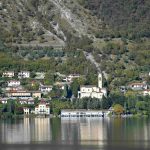
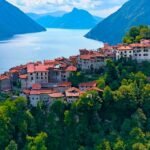
Claino with Osteno It is a municipality of about 500 inhabitants located at the northern end of the Lake Ceresio, where the Intelvi Valley opens towards the lake. Geographically unique: although it belongs to the province of Como, ecclesiastically it is part of the Archdiocese of Milan (not the Diocese of Como), sharing this unique position with the municipalities of Valsolda and Porlezza. A historically border location, which explains its centrality in the artistic and religious flows between the Duchy of Milan and the territories of the Canton of Ticino.
The village of Claino preserves an interesting historical and architectural stratification, and can be visited on foot from the town center. In addition to the Church of San Vincenzo, it is definitely worth discovering the Painted Village of Claino: an open-air museum born in 2015, with over 40 contemporary paintings made on the facades of historic houses among the medieval alleys, with a privileged view of the Lake Lugano. A free artistic experience, accessible year-round, which naturally complements a visit to the parish church.
To participate in the rediscovery
Tibaldi's Claino cycle is one of the most significant artistic discoveries in the Lake Ceresio area in recent decades. This rediscovery places the Intelvi Valley and the neighboring Valsolda at the center of the great narrative of late-16th-century Lombard art.
For those who would like to learn more:
- Purchase or request the volume Pellegrino Tibaldi – The frescoes discovered in Claino by Prof. Andrea Spiriti, published by APPACuVI, November 2025 (ISBN 978-88-98086-75-7 Archivio Cattaneo Editore). The volume can be downloaded in PDF format from www.appacuvi.org
- Contribute to the restoration campaign via bank transfer (coordinates above)
- Join APPACuVI to support the association's activities in the Intelvi Valley area
- Participate in events organized by the association: study trips, conferences, concerts, festivals
- Follow APPACuVI on social media channels (Facebook, Instagram, YouTube) to stay updated on the association's activities
Frequently Asked Questions
Where is the Church of San Vincenzo Martire located?
In the hamlet of Claino, in the municipality of Claino con Osteno (CO), in the Intelvi Valley, at the northern end of Lake Ceresio. Address: Claino, Via Parrocchiale. The parish of reference is that of Porlezza, governed by Father Giorgio Allevi.
Can the frescoes be visited?
Restoration is ongoing (spring 2026). For information on visits, please contact APPACuVI at appacuvivalleintelvi@gmail.com or visit www.appacuvi.org.
Who discovered the frescoes?
The discovery took place in August 2022 during the restoration of the painted facade of the church, when Dr. Ilaria Bruno (Superintendency of Archaeology, Fine Arts and Landscape for the Metropolitan City of Milan) has arranged for preliminary tests to be carried out on the presbytery's mirrors. The subsequent stripping and pictorial restoration work is being conducted by the restorer Eliana Tovagliaro.
Who attributed the frescoes to Pellegrino Tibaldi?
The attribution was formulated for the first time in June 2023 on the occasion of the APPACuVI conference “Mannerism in the Intelvi Valley and the Artists of the Lakes” in San Fedele d'Intelvi, and subsequently confirmed and documented by Prof. Andrea Spiriti (University of Insubria) in the volume Pellegrino Tibaldi – The frescoes discovered in Claino (APPACuVI, November 2025).
Why were the frescoes covered?
According to the restorer's hypothesis Eliana Tovagliaro, the twentieth-century velarium was applied as a pragmatic solution to the pictorial degradation, as an alternative to conservative restoration which at the time would have required resources and skills not available in a smaller provincial construction site.
How can I support the restoration?
By bank transfer to IBAN IT92G0306909606100000126672 (Intesa Sanpaolo), made out to “APPACUVI ASSOCIAZIONE PER LA PROTEZIONE DEL PATRIMONIO ARTISTICO CULTURALE VALLE INTELVI”, with the reason for payment “Restoration of the Pellegrino Tibaldi Claino frescoes”.
Article by the Ceresio5Valli editorial staff. Information on the attribution, chronology, and stylistic analysis of the cycle is taken from the volume Pellegrino Tibaldi – Gli affreschi scoprirti a Claino di Andrea Spiriti, published by APPACuVI in November 2025. The technical information on the restoration and the state of degradation are taken from the report of Eliana Tovagliaro “Descialbo and Conservative and Aesthetic Restoration of the Hidden Mural Painting” (Milan, November 23, 2025). Information on the APPACuVI association is taken from the official website www.appacuvi.org and the quarterly magazine La Voce dell'APPACuVI (Year XXII, No. 167, Spring 2026). Photo credits for the frescoes: Ubaldo Castelli, Eliana Tovagliaro, Andrea Spiriti (Reproduction authorized by APPACuVI).
Photo gallery
A selection of additional photographs from the Tibaldi cycle in Claino and the Church of San Vincenzo Martire: details of the panels, details of the ongoing restoration, and views of the parish church. Click on each image to enlarge.
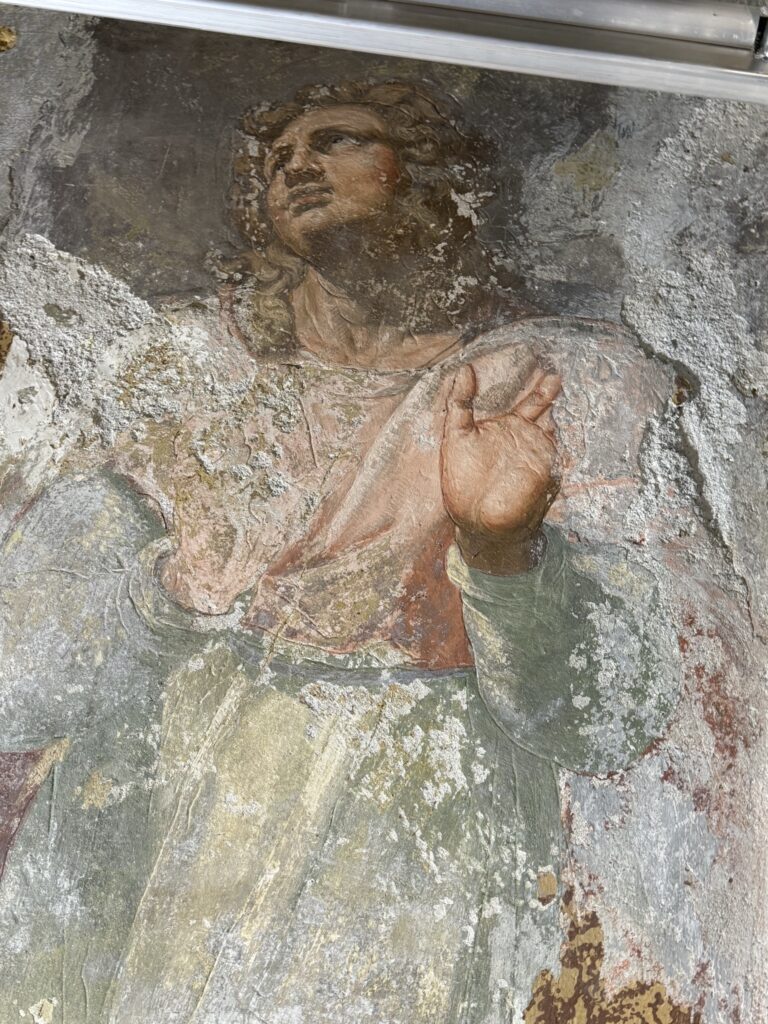
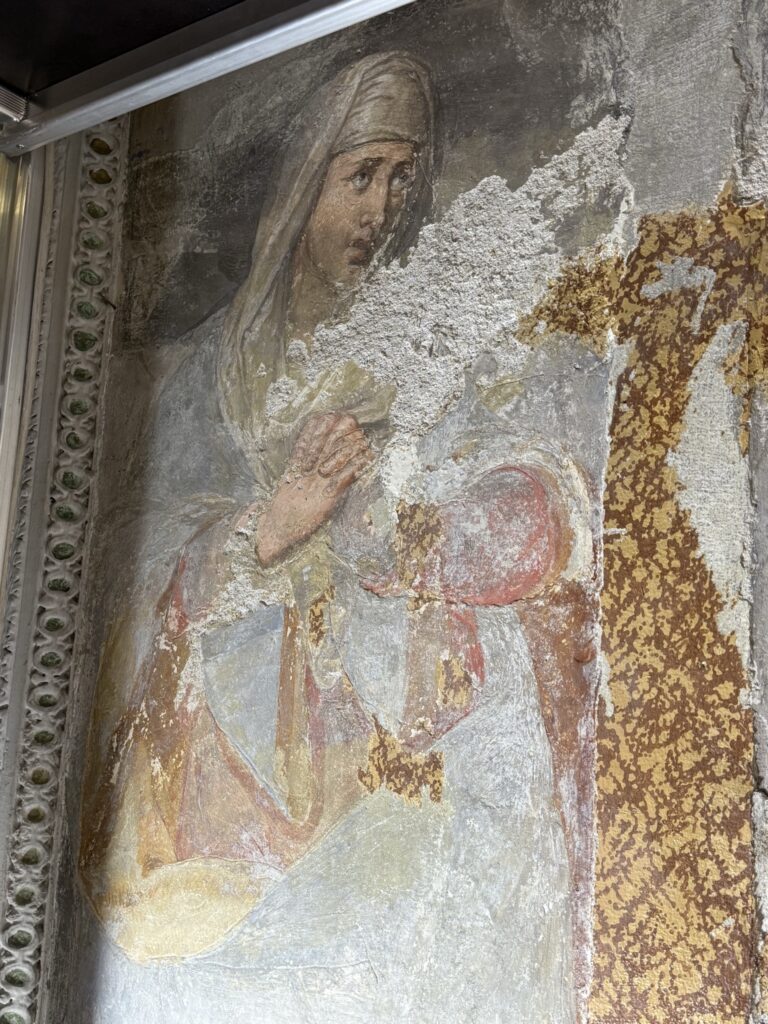
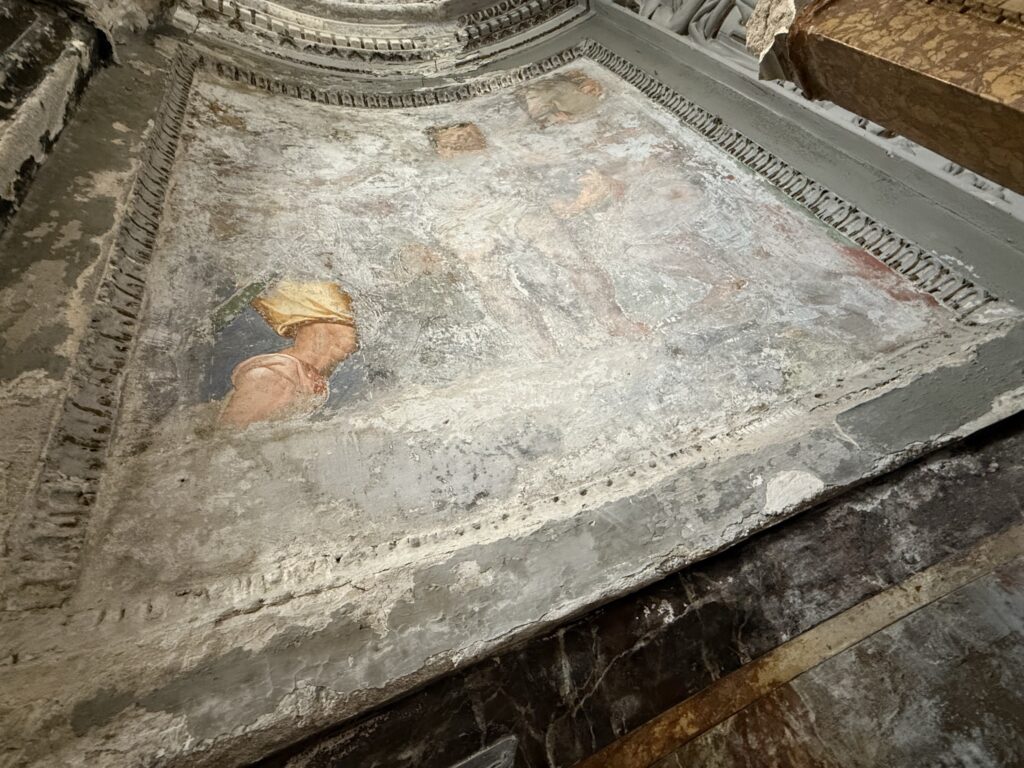
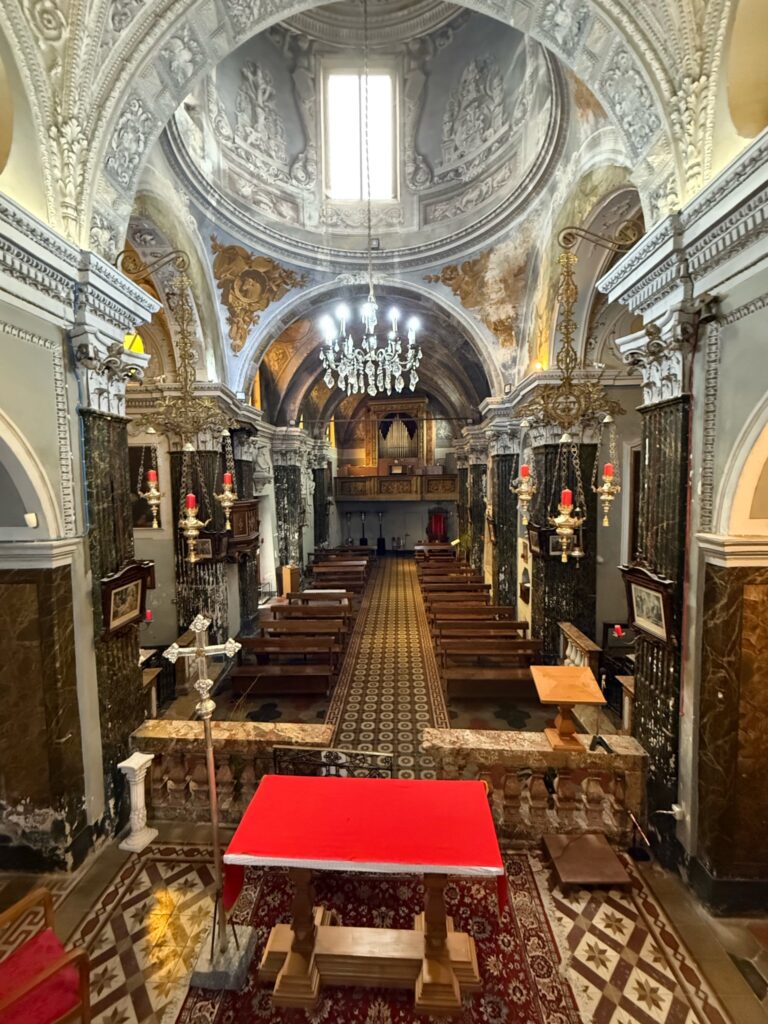
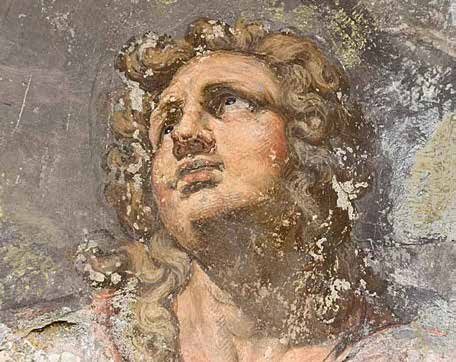
Pellegrino Tibaldi's frescoes in Claino — photo gallery. Photos: Ubaldo Castelli, Eliana Tovagliaro, Andrea Spiriti.











A comprehensive, well-documented treatise that places Pellegrino Pellegrini's work within the artistic, geographical, and historical context of our valleys. It introduces and encourages a visit. Excellent work.