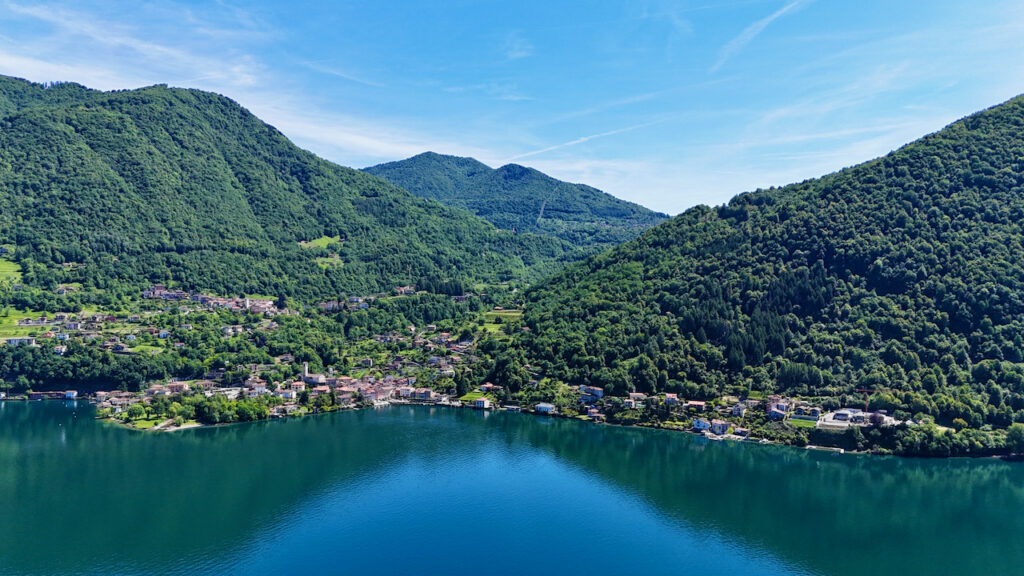
La Intelvi Valley It is a pre-Alpine valley in the province of Como, in Lombardy, which has the shape of an inverted "Y" and connects the Lake Ceresio to Lake Como through the Sella di San Fedele (735 metres). The Ceresio5Valli portal covers the northern orographic side of the valley – the one crossed by the Telo di Osteno torrent, which gives rise to one of the tributaries of the Ceresio flowing into the lake at Osteno – including the municipalities of Claino with Osteno, Laino, Ponna, and the location of Ramponio Verna, a hamlet of the municipality of Alta Valle Intelvi since 2017. The valley has been inhabited since prehistoric times, as evidenced by the Monte Caslé hill fort near Ramponio Verna, archaeologically investigated by the Como Museum, and Celtic tombs from the Gallic era discovered in Ponna; the hamlets of Claino and Osteno formerly belonged to the diocese of Milan.
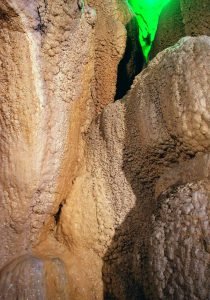
The distinctive feature of the Val d'Intelvi is the extraordinary emigration of artists - the so-called Intelvi Masters o Magistri Antelami, active since the 12th century — who exported their art from the valley throughout Italy and Europe. Among the many, Andrea Bregno (1418-1503), born in Claino con Osteno, was one of the most important sculptors of Renaissance Rome, active as a papal sculptor; Lorenzo degli Spazzi, originally from Laino, worked on the cathedrals of Milan and Como between the 13th and 14th centuries; in the Baroque period Gian Battista Barberini (1593-1666), also from Laino, was a respected plasterer and sculptor active in the imperial territories. On the lake, near Claino con Osteno, there are two notable natural sites: the Caves of Rescia, a rare example of karst erosion with stalactites, stalagmites and the Santa Giulia waterfall, and the Osteno Gorge, a deep gorge accessible only by boat that Antonio Fogazzaro described in the novel Bad shadow (1881).
Andrea Bregno and the Papal Sculpture of the Renaissance
Born in Claino with Osteno In the 1418, Andrea Bregno he was one of the most important sculptors of the Renaissance Rome, active as a papal sculptor for the pontiffs Paul II, Sixtus IV e Innocent VIII. His workshop — the most prolific in Rome in the 1470s and 1480s — produced dozens of cardinal funerary monuments, altars and tabernacles now preserved in the Roman basilicas of Santa Maria del Popolo, Santa Maria sopra Minerva, St. Peter in Chains and in the Sistine Chapel itself, where its brackets support part of the marble decoration. Bregno died in Rome in 1503, leaving a family of sculptors who continued the craft for two generations: his work marked a crucial transition between the early Tuscan Renaissance and the great Bramante era, and made the small town of Claino con Osteno one of the invisible cradles of Italian art.
The Antelami Masters — Architects and Sculptors of Europe
Starting from 12th century, from the Val d'Intelvi and the neighbouring Val di Lugano an extraordinary generation of artisans specialized in the working of stone and marble emigrated: the Magistri Antelami o Intelvi Masters. Organized into real transnational corporations, they worked on the construction sites of the cathedrals of Genoa, Como, Cremona, Milan e Pisa, exporting a building tradition that mixed Lombard, Ligurian and transalpine influences. The recognition of their status was officially consecrated with the Privileges of Charles V of the 1517, who protected their professional rights throughout the Empire. Even in the Baroque and Neoclassical periods, sculptors and stucco workers from Intelvi such as Lorenzo degli Spazzi, active in the cathedrals of Milan and Como, and Gian Battista Barberini (1593-1666) from Laino, worked in the courts of central Europe, keeping alive a professional tradition that lasted over seven centuries.
The Osteno Ravine and the *Malombra* of Fogazzaro
THE''Osteno Ravine, a deep gorge carved by the Telo torrent near its mouth in Lake Ceresio, is a unique karst phenomenon: a narrow accessible ravine exclusively by boat from the port of Osteno, where the rock walls narrow to a few meters creating a suggestive play of shadows, waterfalls and cavities eroded in the limestone rock. The place inspired Antonio Fogazzaro some of the darkest pages of his first novel Bad shadow (1881): the story of Marina di Malombra, a noblewoman haunted by the spirit of an ancestor, unfolds partly between the waters of the Ravine and the lakeside villas along the shore. Today, guided tours by rowboat allow you to relive the novel's 19th-century atmosphere, with itineraries that alternate readings of Fogazzaro's works with geological explanations of the karst phenomenon.
The prehistoric hill fort of Monte Caslé
The Mount Caslé, heights of 1,227 meters near Ramponio Verna, houses one of the most important prehistoric hillforts of Lombardy: a fortified hilltop settlement attributed to the'Middle-Recent Bronze Age (1500-1200 BC), systematically investigated by Archaeological Museum of Como since the 1970s. The excavations have yielded impasto ceramics, bronze objects, fireplaces and the remains of a dry stone wall that enclosed a residential area of approximately 4 hectares, strategically positioned on the natural transit route between Lake Ceresio and Lake Como. Celtic tombs of Gallic era, found in the vicinity of Ponna, attest to the continuity of occupation of the site throughout the centuries, until the arrival of the Romans who incorporated the territory into the Regio XI Transpadana.