Description
On the rocky spur that closes the Valsolda, among the alleys that have raised generations of painters and architects.
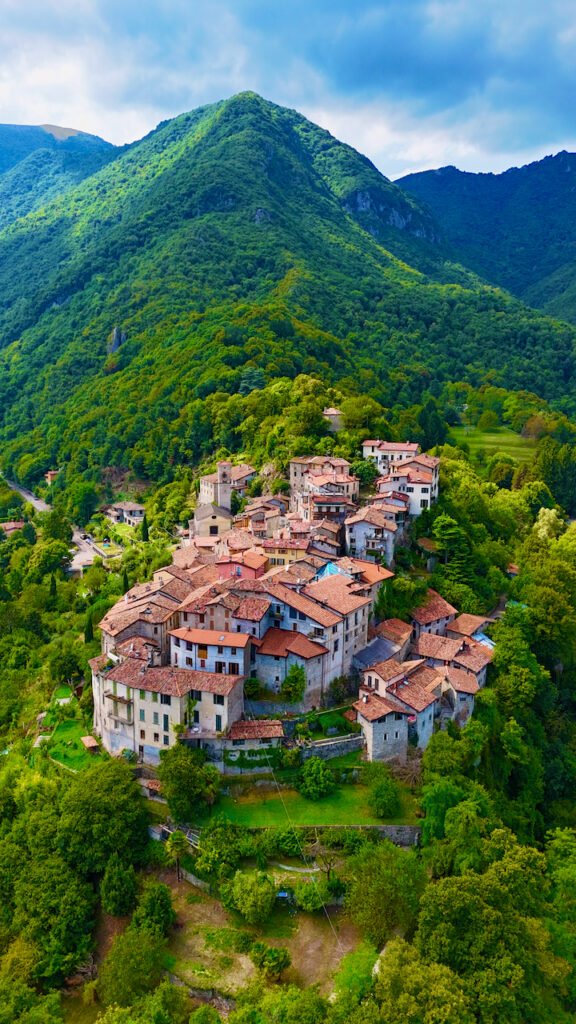
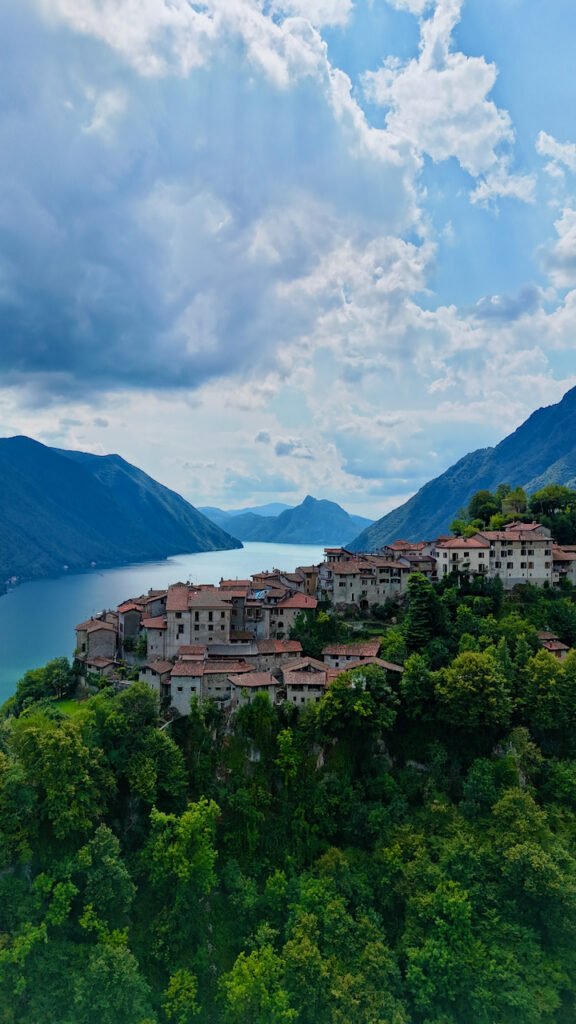
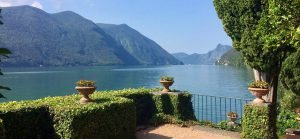
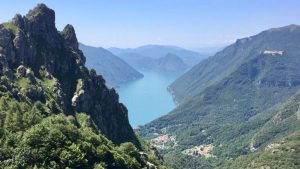
Castle (in the Como dialect Castle) is a fraction of the municipality of Valsolda, located at 451 metres above sea level, perched on a sheer rocky spur overlooking the Ceresio. The slope is less steep towards San Mamete and more impervious in the part towards Puria, nicknamed for this reason “At the pizza”. The houses are arranged in a semicircle, leaning against each other, following the medieval defensive system; alleys, stairways, porticoes, and ravines compose a building fabric dating from the 16th to 19th centuries, with frequent remains from earlier periods. The village currently has fewer than fifty inhabitants and no commercial establishments.
Origins and prehistory
The Castello area has been inhabited since prehistoric times. Around 1870, during an excavation at the foot of a rock right where the castle once stood, a cache of bronze axes dating from the late Bronze Age to the early Iron Age was discovered: they are the oldest documented metal objects in the entire area.
The Confalonieri Castle
The toponym derives from castrumAt the top of the village stood the ancient fortress of the Milanese Confalonieri family, involved in the Ten-Year War between Como and Milan (1118-1127). A drawing by Pezzana from 1612 depicts it as pentagonal in shape with a tower at each corner; the actual dimensions in the ruins, still legible today, are approximately twenty meters per side. The castle was demolished at the end of the sixteenth century by order of Gian Giacomo Medici, known as “il Medeghino,” in agreement with his Swiss neighbors.
The ruins remained visible until after World War II: in 1946, an English private individual, Edmond Schiwerdt, purchased the site and attempted a partial reconstruction, which was never completed. Today, the reconstructed portion is a private residence, while the chapel of the ancient castle has survived intact: it is the current Oratory of Our Lady of Sorrows.
Castle and the Cathar heresy
The last recorded castellan is Stefano Confalonieri di Agliate, a Milanese nobleman who in the mid-13th century had turned the castle into a refuge for Cathars. Stefano was himself a Cathar, belonging to the Cathar church of Concorezzo. On April 6, 1252, he helped organize the murder of Friar Pietro da Verona, a Dominican inquisitor, killed in the Barlassina forest while returning from Como to Milan.
The trial lasted 43 years: Stefano confessed his role in 1257 before the inquisitor Raniero Sacconi in the rectory of Crescenzago, and was finally condemned only in 1295. The martyrdom of Peter of Verona is depicted in numerous churches of Valsolda, including the parish church of San Martino a Castello, where his presence takes on the meaning of a local and not just devotional memory.
The Oratory of Our Lady of Sorrows
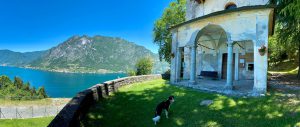
At the highest point of the village, on Via alla Rocca, stands the oldest building in Castello: the Oratory of the Blessed Virgin of Sorrows, formerly the castle's private chapel. The architectural structure is Romanesque (11th-12th century), recognizable by the pointed-arch vaulting and stone capitals.
The titles over time reflect its layered history. Originally titled Sancti Martini in arce (“San Martino nella rocca”), became in the seventeenth century Crucis alias Sancti Martini in arce —dedication recorded in the visitation records of Cardinal Cesare Monti, Archbishop of Milan—due to the presence of a wooden crucifix. In 1745, the priest Don Domenico Antonio Pagani, parish priest of Castello and vicar forane of Valsolda, restored the oratory and gave it its current dedication. At that time, the central stucco niche, the altar, the statue of Our Lady of Sorrows with the Dead Christ, and the statues of Saint Michael the Archangel and Saint Charles Borromeo were built.
In the early 20th century, the parish priest Don Fedele Rusca erected an iron cross on the castle esplanade in memory of the fallen, which was later moved next to the small church. An ancient painting depicting a saint, dating to the early 14th century, was recently discovered, likely from a demolished section of the chapel or from a portico that connected it to the castle.
From the churchyard, you can enjoy a 360-degree view of the entire valley. The oratory can be visited upon request or, from June to September, on the first Sunday of the month.
Historiographical note. The title “San Martino” originally belonged to this high chapel (in ark); it then migrated to the new parish church in the valley, leaving the chapel of the fortress free to take on its current dedication in the eighteenth century.
The Sons of Castello: A Hotbed of Emigrant Artists
Castello is one of the hubs of the great phenomenon of the Comacine craftsmen: between the 16th and 18th centuries, the village exported an anomalous concentration of painters, sculptors, and architects to Italy and Europe.
- Giovanni Antonio Paracca, known as Valsoldo (1546-1599) — sculptor, active in Rome.
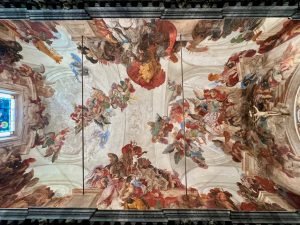
- Paul Pagani (1655-1716) — painter, active in Venice, Moravia and Poland; author of the vault of the parish church of San Martino and celebrated by the museum dedicated to him: Pagani House Museum.
- Francesco Pagani — painter, author of the frescoes in the sacristy of Saint Martin (1669).
- Carlo Antonio Pagani (1674-1712) — sculptor; critics attribute the facade of Casa Pagani to him.
- Paul Fontana (1696-1765) — architect active in Volhynia (now Ukraine), one of the main exponents of the Ukrainian Baroque.
- Antonio Paracca (1722-?) — architect, active in Northern Europe in the second half of the eighteenth century.
- Domenico Merlini (1730-1797) — state architect to the King of Poland Stanisław August Poniatowski. In Warsaw he worked on the Royal Castle (the royal chapel from 1776 where the heart of Tadeusz Kościuszko is kept), the Palace on the Island in Łazienki Park and numerous palaces in the Polish capital.
Castello is therefore one of the peripheral workshops from which Lombard Baroque reached Warsaw, Krakow, Volhynia and beyond: a story that is still little told, but written in the stones of the village.
Castle in the Little Ancient World by Fogazzaro
Castello is part of the Fogazzaro Literary Park. The former Town Hall of the hamlet, now home to the Pagani House Museum, is the “little palace of Uncle Maironi” described by Antonio Fogazzaro in Little Ancient World. From Castello, in a few minutes on foot, you go down to Oria, where the headquarters is located Villa Fogazzaro Roi, property of the FAI.
The Castle Festival
Every year, the Compagnia del Castello ETS organizes the Sagra del Castello, a medieval-themed event that opens the cellars, courtyards, and alleyways of the village with a period market, workshops, shows, and—a distinctive feature—a game played with living pawns in costume. The reported attendance exceeds five thousand people over two days. Each edition adopts a specific historical theme: smuggling (2018), the investiture of a Knight Templar (2022).
What to see
- Parish Church of San Martino — the “little Sistine Chapel of Lombardy”.
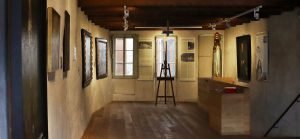
- Pagani House Museum —the painter's birthplace and documentation center on Valsoldese artistic emigration.
- Oratory of Our Lady of Sorrows — the Romanesque chapel of the fortress.
- Remains of the medieval entrance gates along the alleys.
- Portico of the Fighett —framed view of the upper valley.
- Churchyard of San Martino — panorama from Monte Brè to San Salvatore, over Lugano, Oria, Albogasio.
- Decorated palaces, fountains, wash houses — the signs of a community historically formed by artists.
Nearby
From Castello you can easily reach other points of interest in Valsolda and the middle Ceresio: the Valsolda Regional Forest, a protected area that covers a large part of the mountain slope behind the village, and the Sanctuary of the Blessed Virgin of Caravina, an important place of devotion overlooking the lake.
How to get there
Castello can be reached from Como by three main routes: through Lugano and the Gandria customs house; going up Intelvi Valley from Argegno and continuing towards Porlezza; or from Menaggio in upper Tremezzina, always via Porlezza. Once in Valsolda, The village can be reached from Oria via Via Ceresio, or by climbing the Sasso Rosso road that leads to Dasio, turning off towards Castello at Puria. The village is not accessible by car: a parking lot at the end of the road allows you to leave your vehicle and continue on foot along the steps that lead to the parish churchyard.
Recommended walking routes
- Castle — Albogasio (about 40 minutes).
- Castle — Puria via Sasso Rosso.
- Hiking ring: Porlezza → Loggio → Puria → Camporgna (700 m, highest point) → Muzzaglio → Castello → Puria → return.