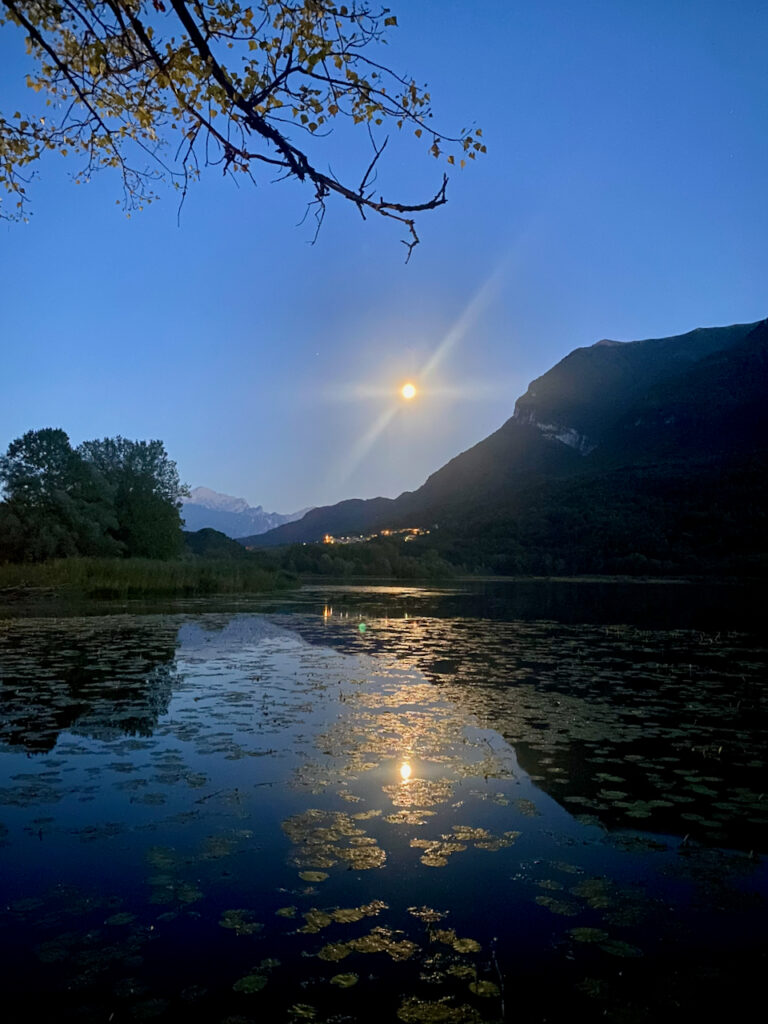
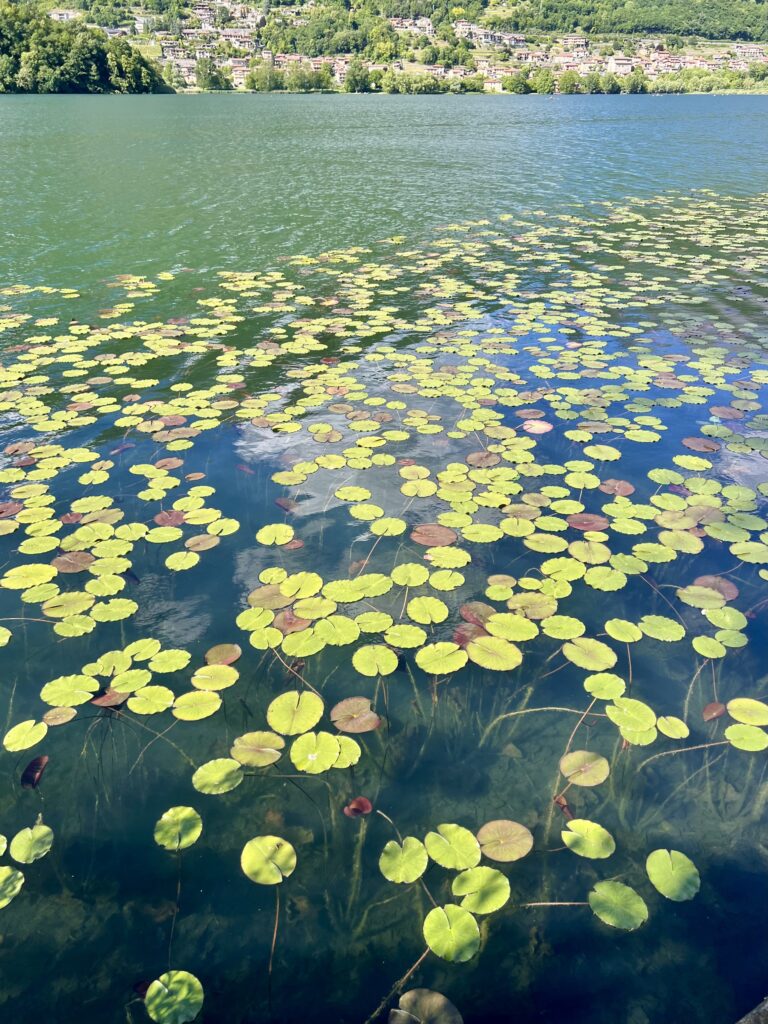
The first white corollas have recently appeared on the surface of Lake Piano. It's a phenomenon that repeats itself every spring, yet continues to amaze: within a few square meters of still water lies one of the largest aquatic blooms in the Lombardy pre-Alps.
For those seeking a naturalistic experience away from the crowds of the great lakes, the Piano Lake Nature Reserve It's one of the most discreet and generous destinations in our region. And May is the perfect time to discover it.
A small lake between two larger ones
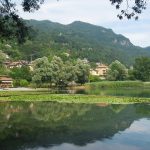
Lake Piano is located in Val Menaggio, exactly halfway between Lario and Ceresio, in the municipalities of Carlazzo e Good Lario, a stone's throw from Porlezza. It is a glacial valley floor lake of just 0.72 km², no more than 13 metres deep, enclosed in a Regional Nature Reserve of 176 hectares also recognized as Special Area of Conservation of the Natura 2000 Network, which expands its surface area to exceed 200 hectares.
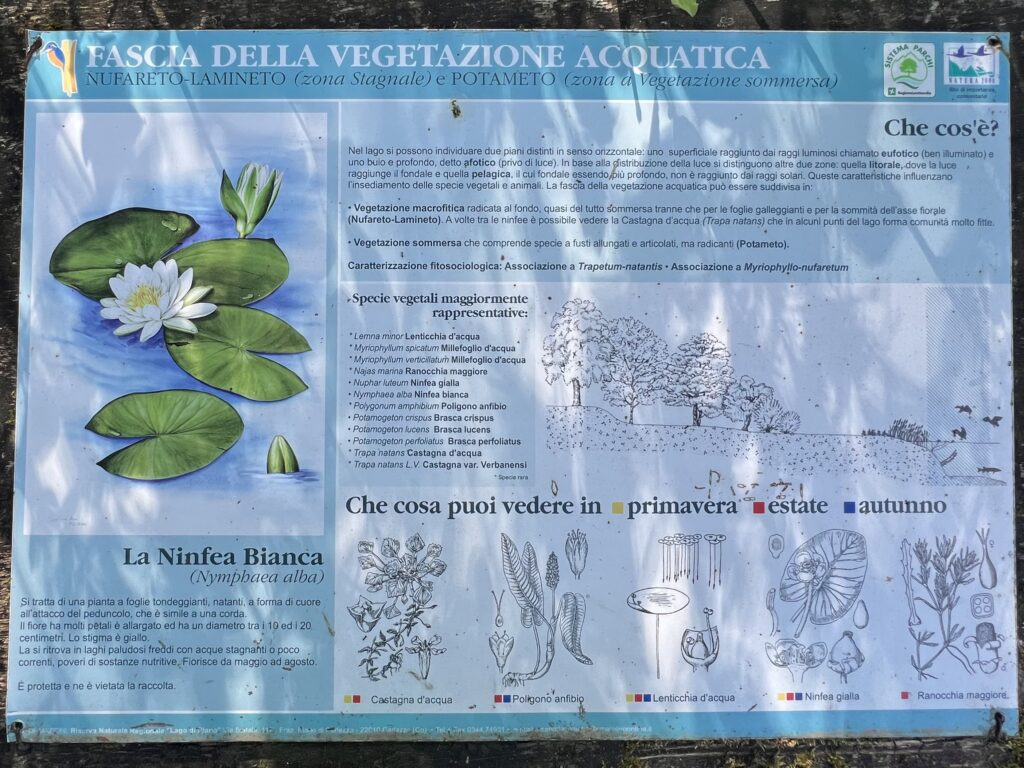
Its small size is exactly what makes it precious: the water balance is in equilibrium, the waters are slow and mesotrophic, and this creates the ideal conditions for the nufareto-lamineto — the dense floating aquatic vegetation of which water lilies are the protagonists.
What blooms in spring
Four main species alternate on the surface of the lake:
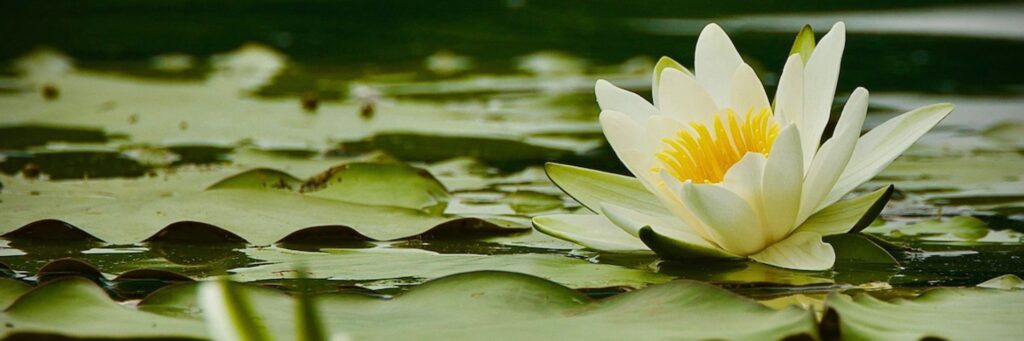
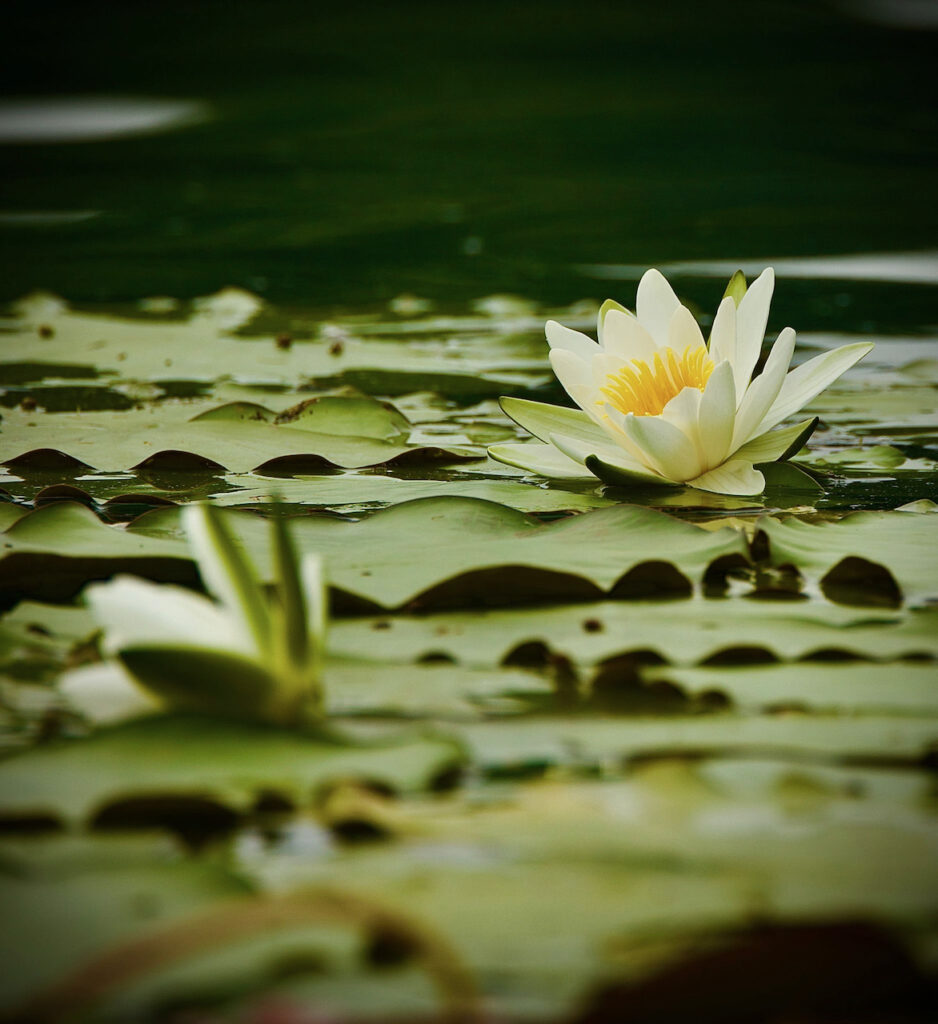
- White water lily (Nymphaea alba) — the large white corollas with the yellow heart
- Yellow water lily (Nuphar lutea) — the small cup-shaped yellow flowers, often confused with water lilies
- Water chestnut (Trapa natans) — smaller rosette leaves, more discreet flowering in early summer
- Amphibious polygon (Polygonum amphibium) — lanceolate leaves and delicate pink flowers towering above the water
Flowering usually begins at late April / early May and continues until September, with the visual peak between May and July. The flowers open only during the day and when the sun shines; on overcast days, they remain closed. For those coming from far away, it's worth checking the weather forecast before leaving.
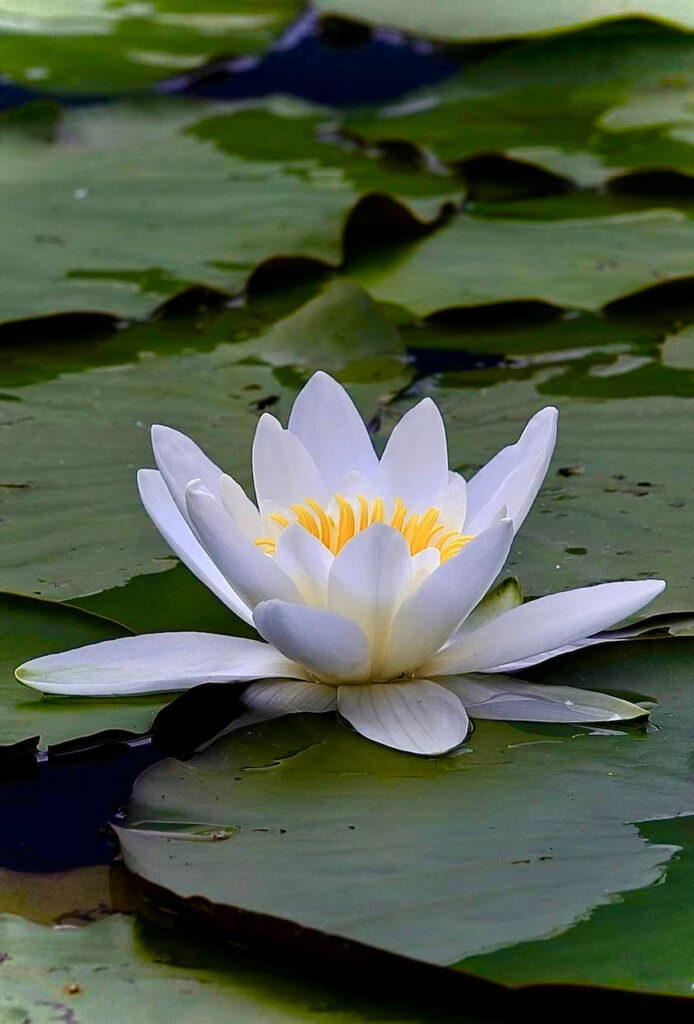
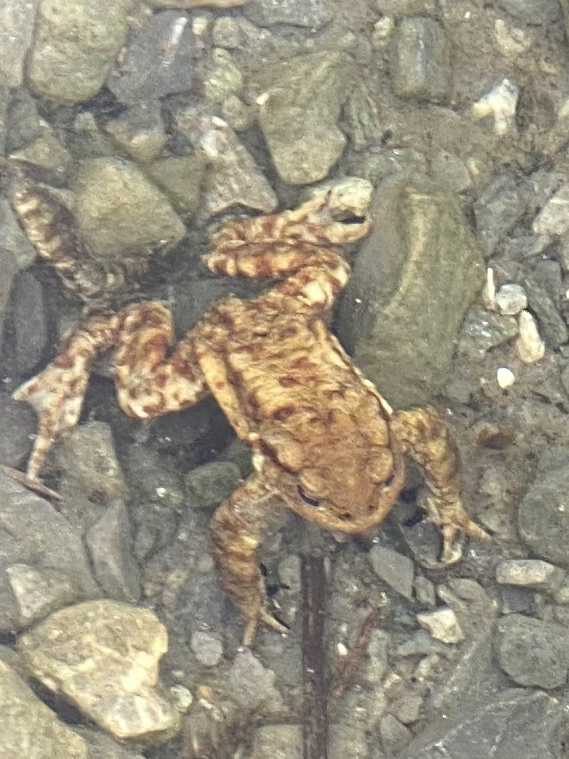
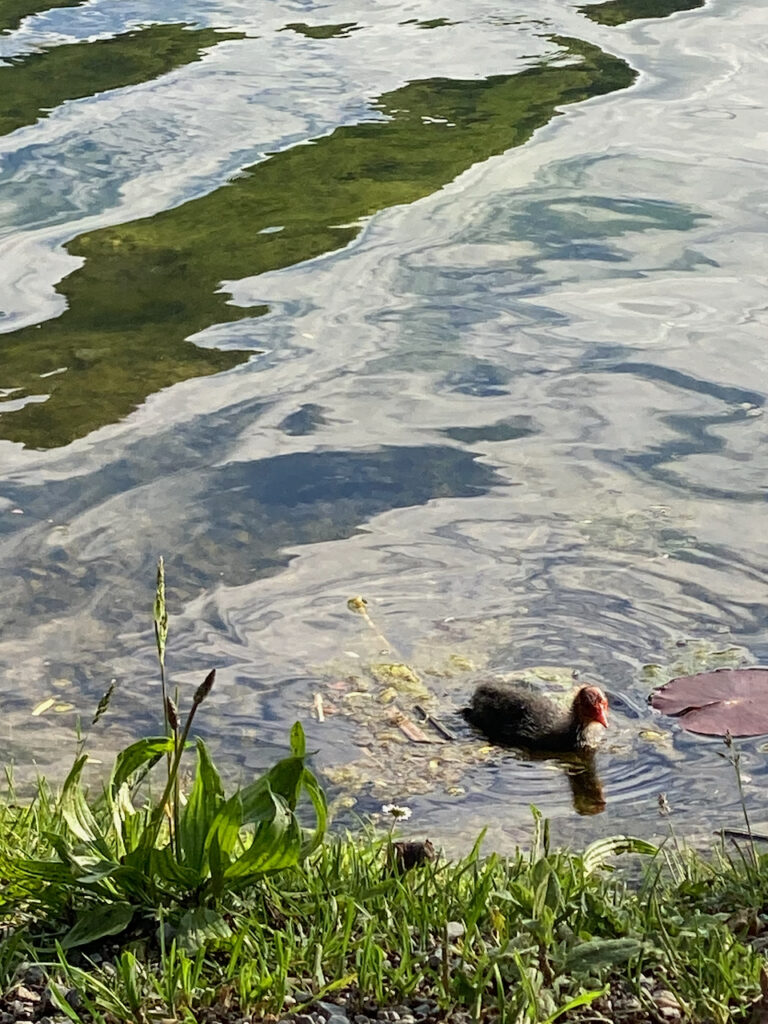
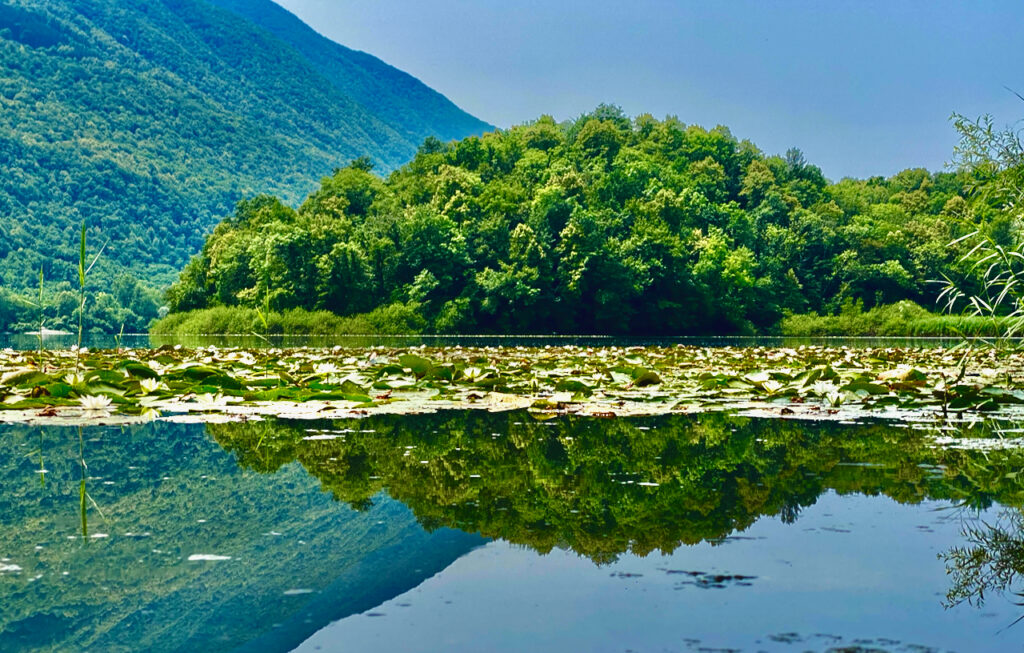
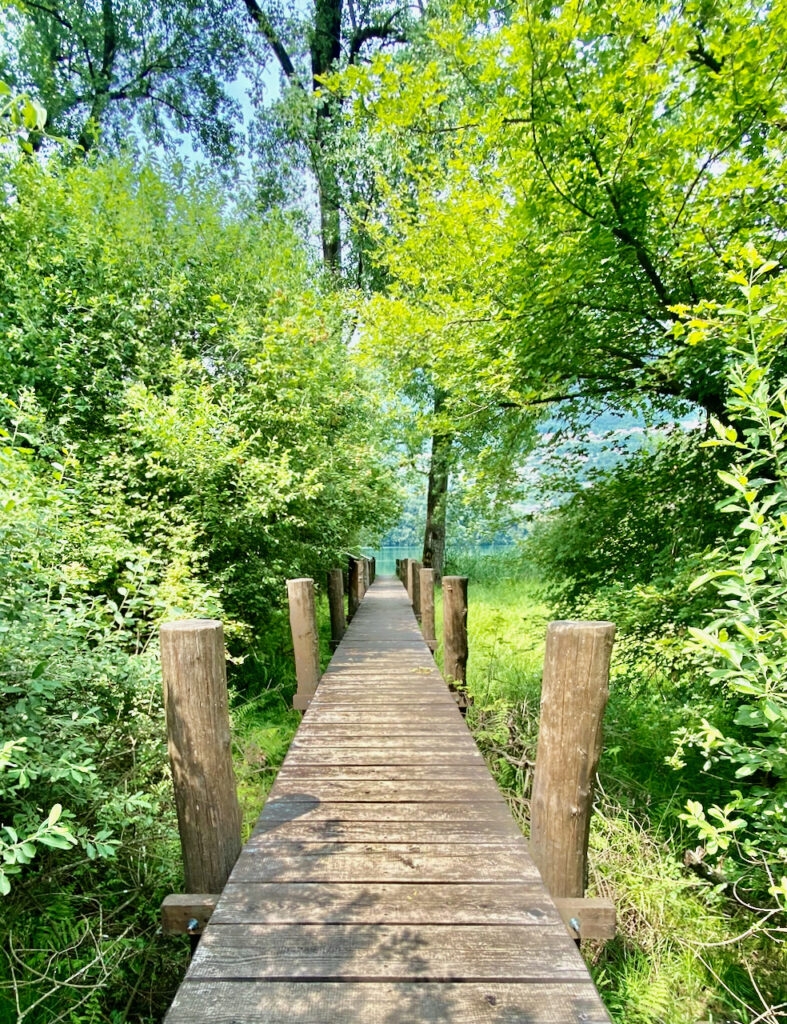
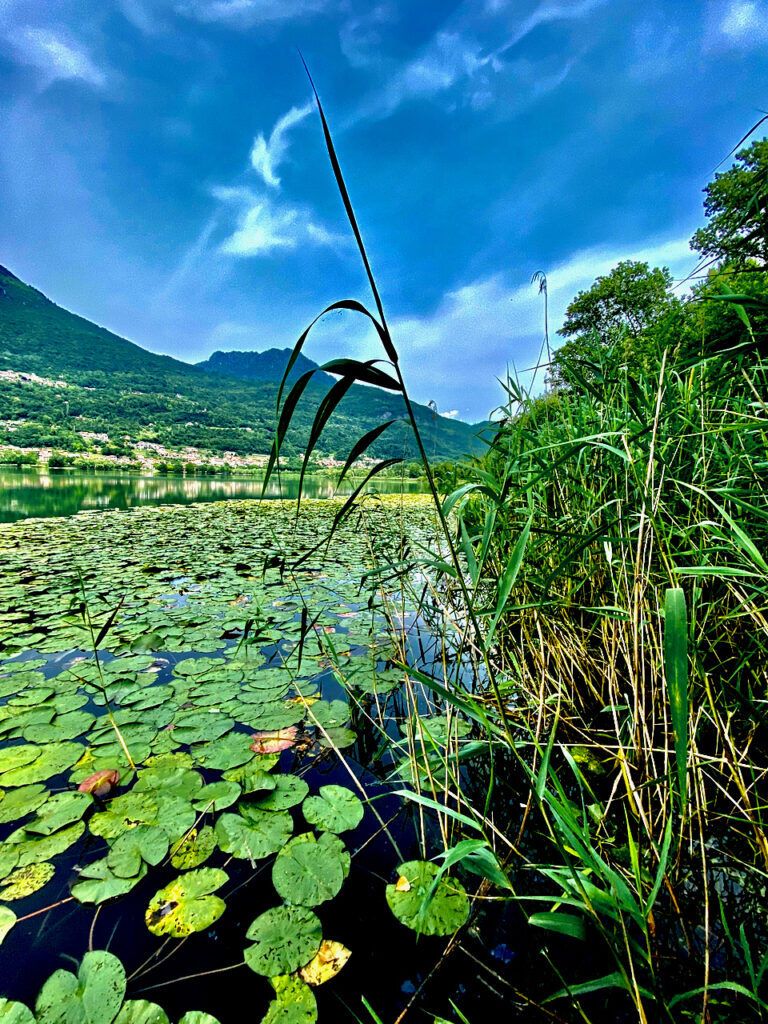
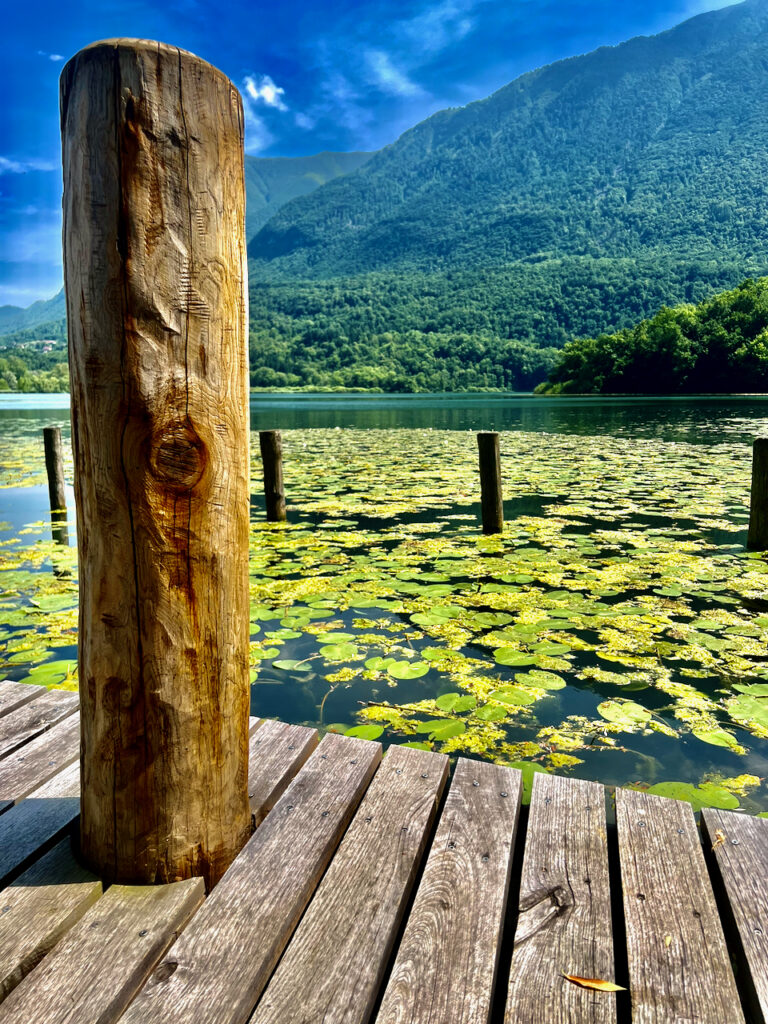
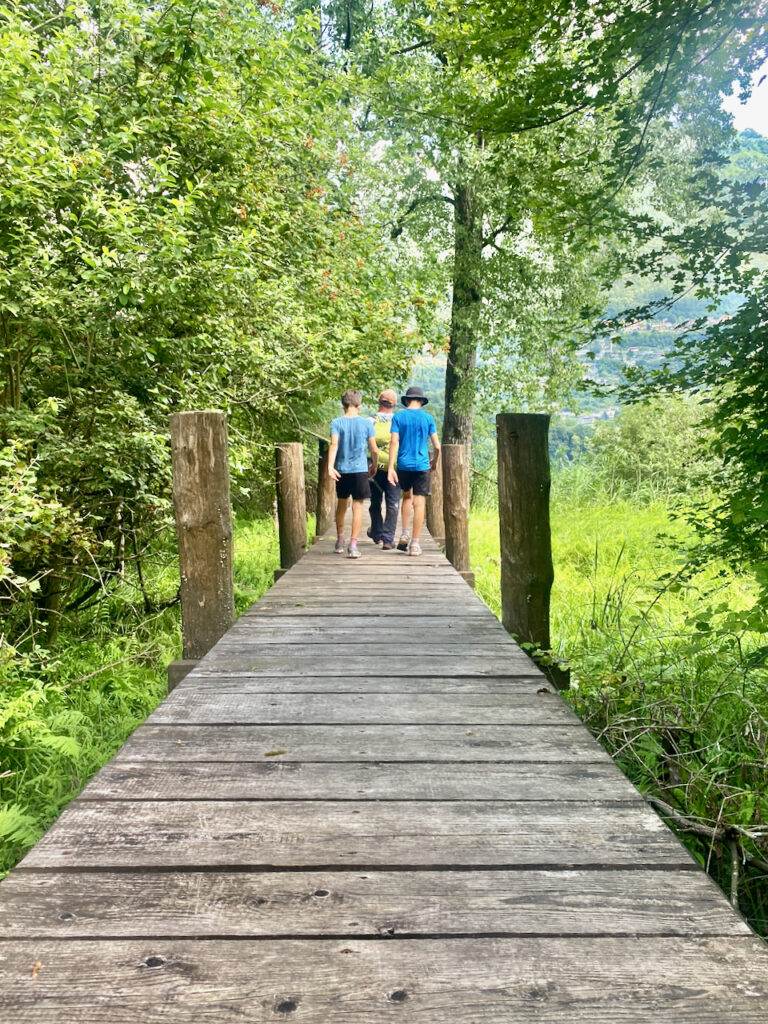
The water lilies of Lake Piano
The path and the best points to observe them
From the House of the Reserve (Visitor Center, tel. 0344 74961) is the starting point of the main, flat, and well-marked trail that runs along the lake. The route isn't a circular walk, but it's still complete: you can reach various observation points of the nufareto-lamineto from both shores, along short walks that are also suitable for families with children.
The best places to observe water lilies up close are:
- The walkways over the water immediately after the Visitor Center, where the path directly overlooks the nufareto-lamineto
- The southern shore, below Mount Galbiga, in the stretch between the beach of the locality Rivetta and the area called Mirandola, where frontal views of the lake open up
- The botanical walkway near the Nature Observatory (always along the southern bank), which accompanies the visitor - with specific signage - to understand and see for real the concept of "vegetation succession"«
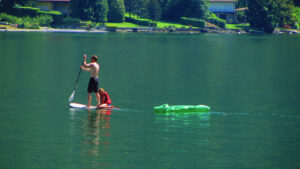
- The rowing boat available for rent at the Visitor Centre: the point of view changes completely, and you can get close to the floating colonies without damaging them
If you want to plan your visit with stops and times, consult the complete itinerary sheet Visit to the Piano Lake Reserve.
A recommendationWater lilies are not to be picked. It's prohibited by law throughout the Reserve, and they are a protected species. The pleasure is in looking at them, not taking them home.
The best light: tips for photographers
There's one thing you should know before you go: Water lilies do not follow the length of the day, but have their own internal rhythm. In June as in September the behavior is the same: the flowers open towards the 10–11 am, reach the maximum opening hours between 2pm and 3pm, and they gradually close back in late afternoon (around 4–5 pm). At first light and after sunset they are closed in bud.
The useful window for photographing them open is therefore approximately from 10:30 to 16:30. Inside, the two most interesting moments are:
- Late morning (11–12) — newly opened flowers, still fresh and perfectly white; light still at a minimum angle
- Mid afternoon (3–4 pm) —the flowers are at maximum aperture but the light is starting to warm up and soften, a condition often preferred by nature photographers
The only really difficult band is the midday with the sun high (12:30–2:30 PM in summer): Floating leaves reflect heavily, and whites burn easily. With slightly cloudy skies, the problem is less noticeable.
Those looking for close-ups can bring a telephoto lens (100–200 mm) to isolate individual flowers without leaving the path. For those renting a boat, a wide-angle lens is also satisfying, with the water lilies in the foreground and the Galbiga forest in the background.
For those who love the dawn: it's worth arriving early for the lake itself—mist over the reeds, still water, reflections of the mountains—knowing that the water lilies will still be closed until mid-morning.
Not just water lilies: a surprising biodiversity
Lake Piano is one of the small treasure troves of biodiversity in the province of Como. It has been surveyed over 160 species of birds (of which over 60 nesting), 17 species of fish and at least 26 mammals. The Reserve also hosts a stable population of the rare freshwater shrimp (Austropotamobius pallipes italicus), one of the last in the area.
Amphibians and reptiles are also well represented with about a dozen different species, among which the European pond turtle (Emys orbicularis), a threatened species with a fragmented and heterogeneous range that generates genetic isolation and serious conservation issues. For this species, Lake Piano represents one of the northernmost stations in Italy.
Among the birds closely linked to aquatic environments, the Kingfisher (Alcedo atthis): due to its striking livery and small size it symbolically represents the characteristics of the Reserve and, for this reason, it was chosen as logo.
Among the bird species that frequent the nufareto-lamineto, rails such as the Coot (Fulica atra), the Moorhen (Gallinula chloropus) and the Water Rail (Rallus aquaticus) are the most visible: the last two, thanks to their extremely elongated toes that distribute their weight over a large surface, are even able to walk on the large leaves of water lilies.
The Great Crested Grebe (Podiceps cristatus) — a purely aquatic and fish-eating bird, capable of diving and swimming without breathing for a few minutes — uses the plant parts of water lilies (leaves, stems, flowers) and algae to build its nest: a floating nest, anchored to the submerged stems of water lilies, in places where the water depth exceeds three metres.
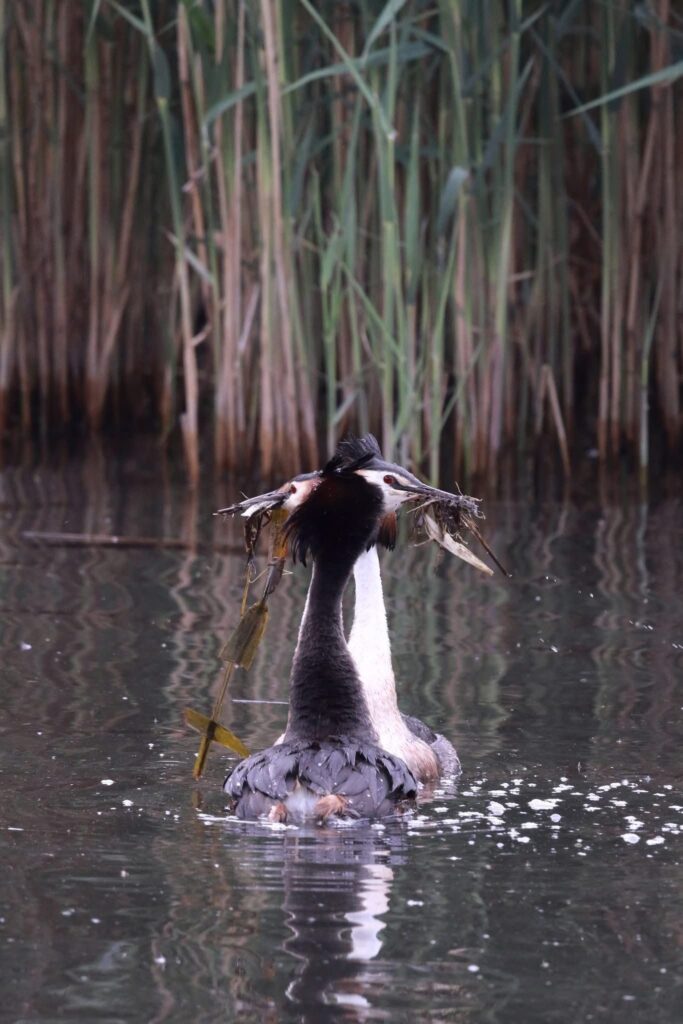
Between the end of February and the beginning of March, the Great Crested Grebe is the protagonist of a wedding parade which has no equal in the world of aquatic birds: the two partners assume different postures and shake their heads in mirror images, facing each other, raising their ear tufts of feathers in a truly exciting display. The apotheosis is reached when the two individuals begin to rise above the surface of the lake and run towards each other until they reach and touch each other's breastbones. The dance ends with the’wedding offering: the male, after fishing for submerged plant material, reappears on the surface, approaches the female and gives her the algae — it is the promise of fidelity and reproduction, with which they will begin to build their nest.
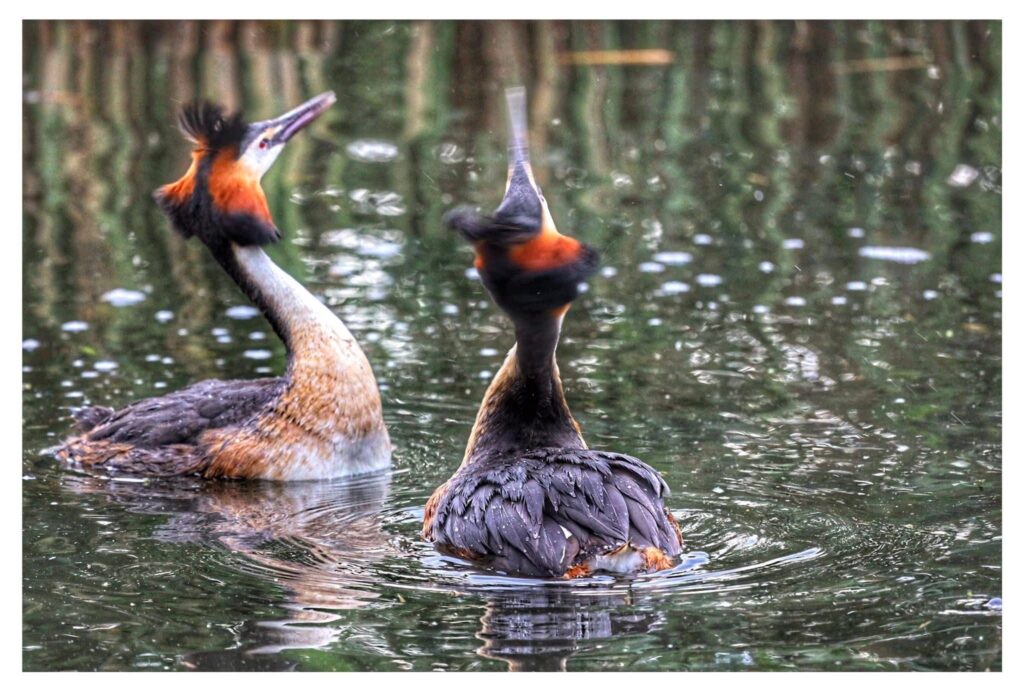
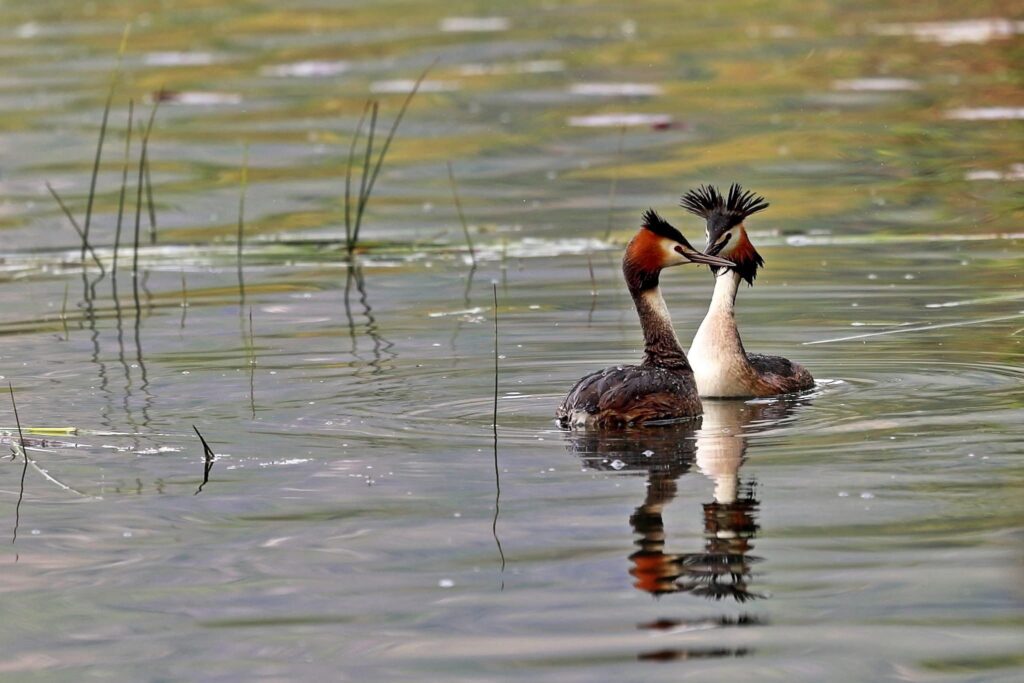
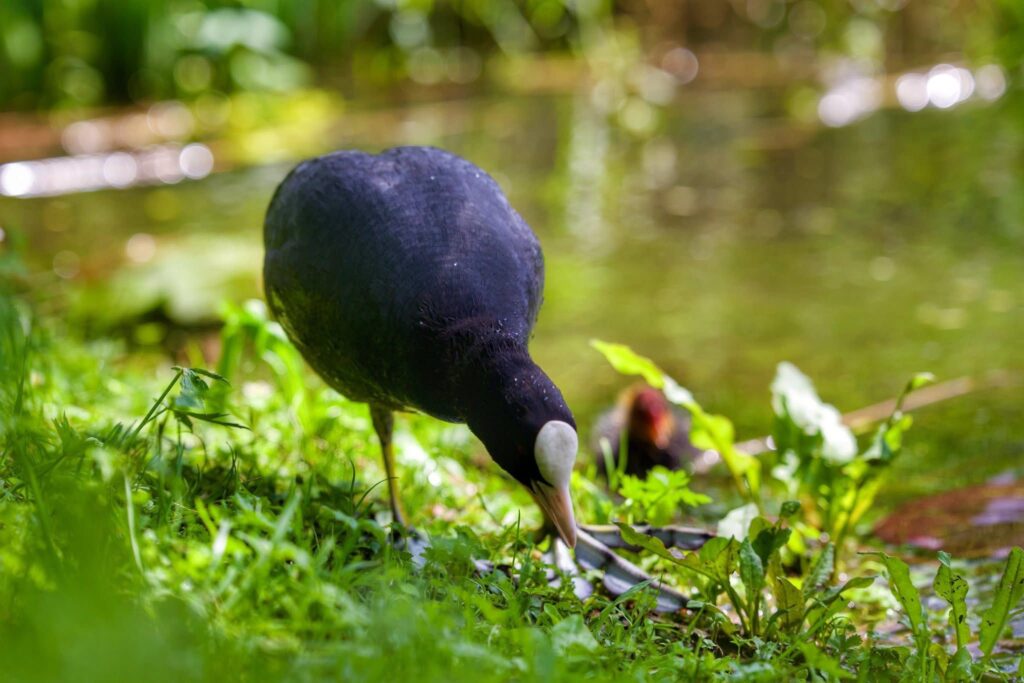
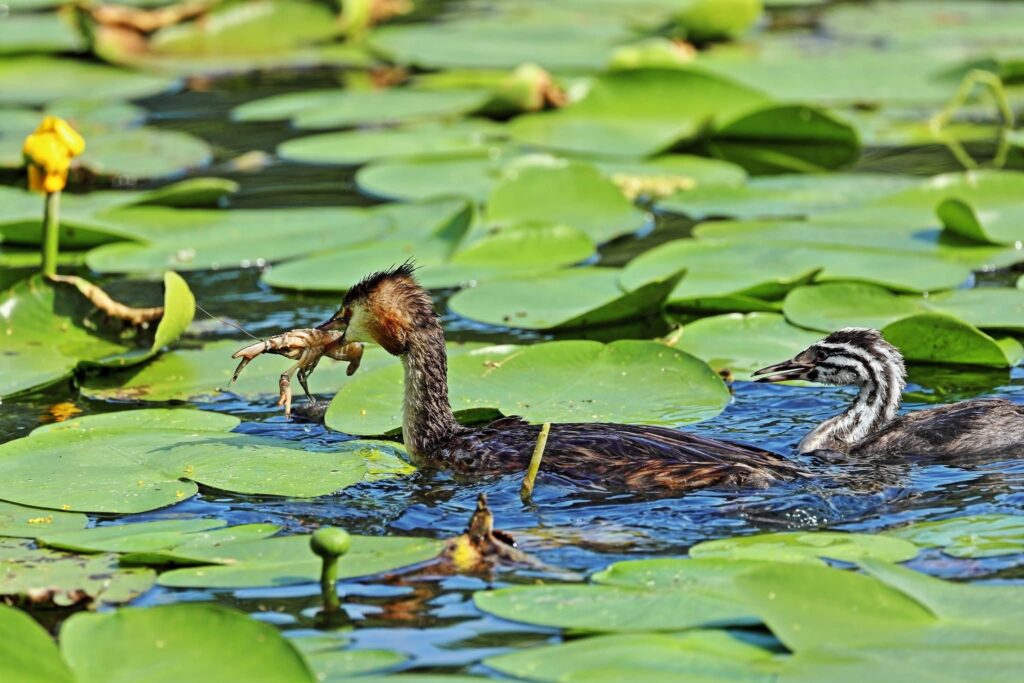
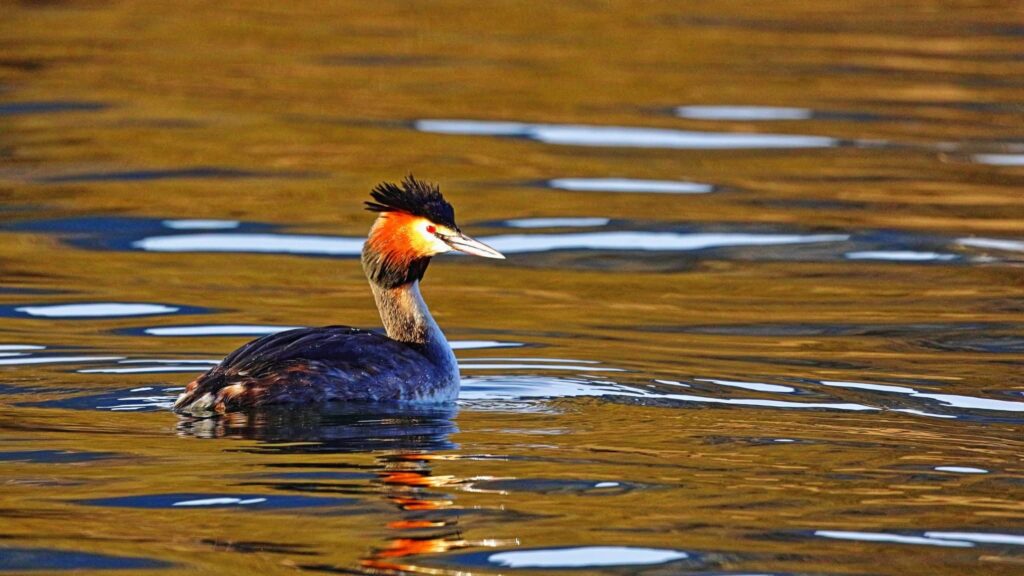
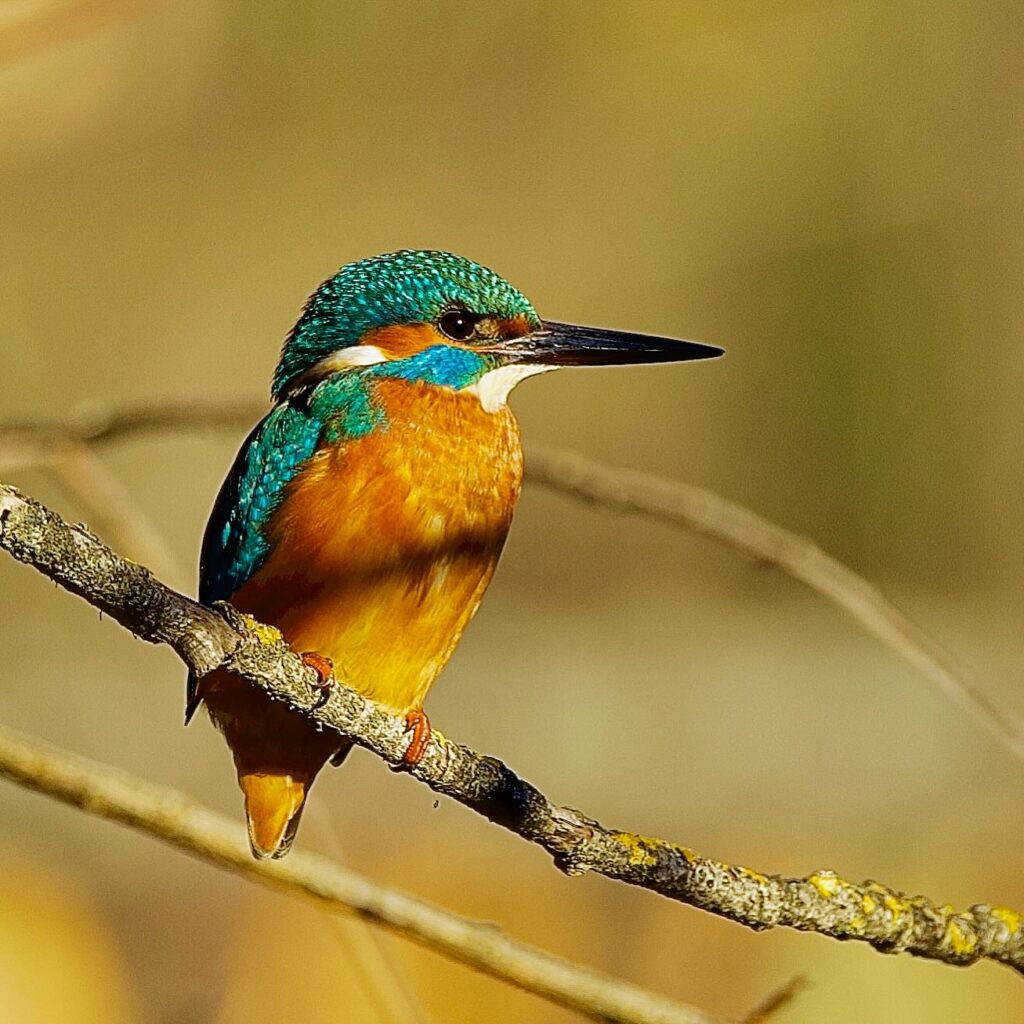
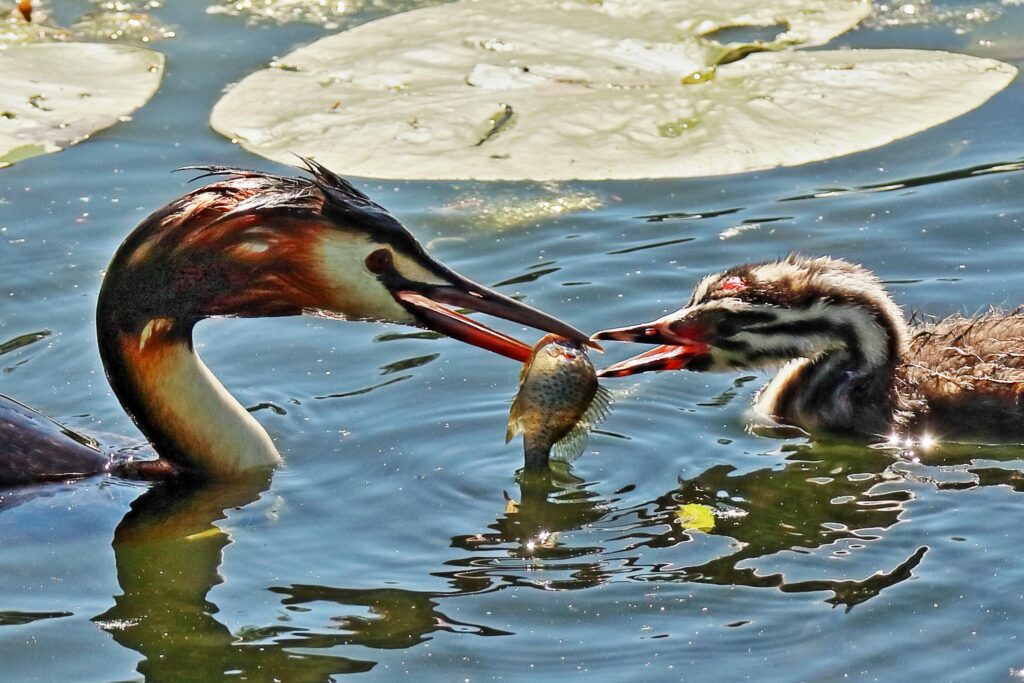
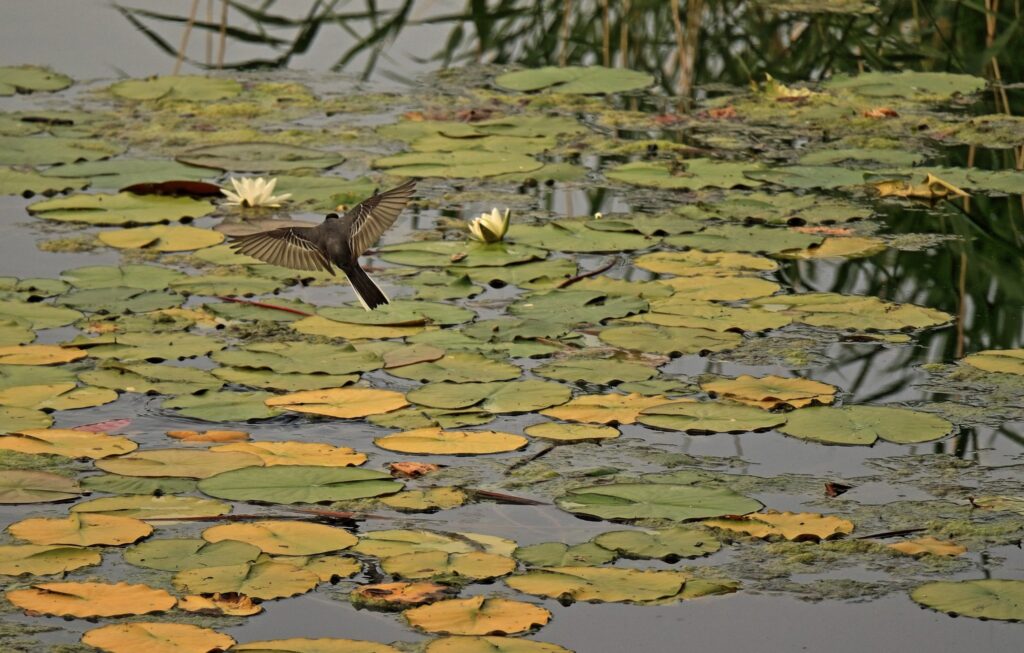
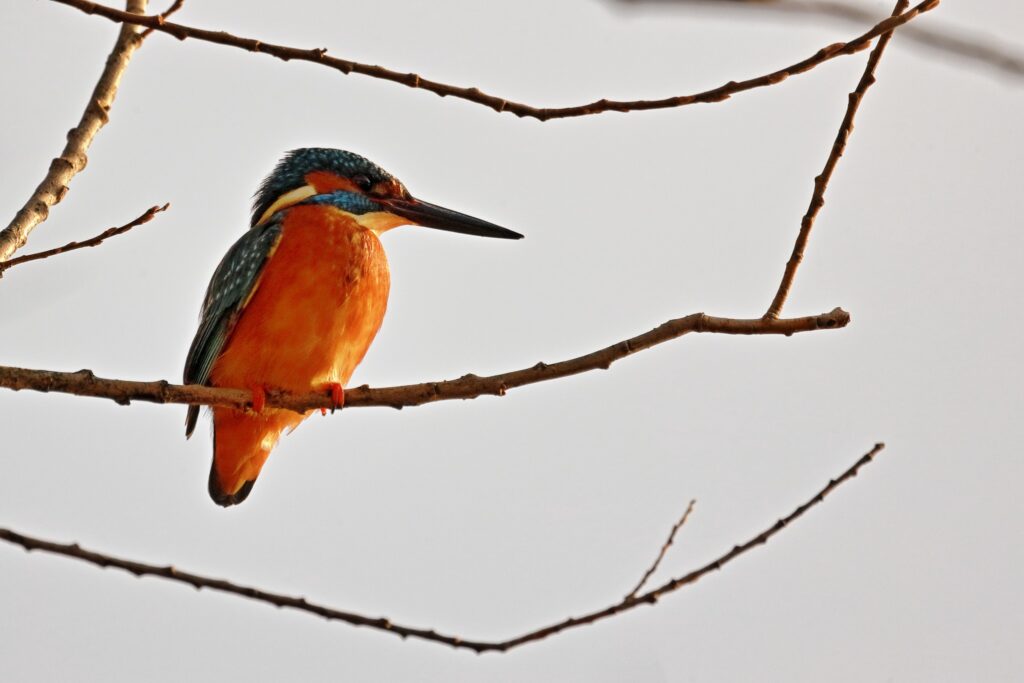
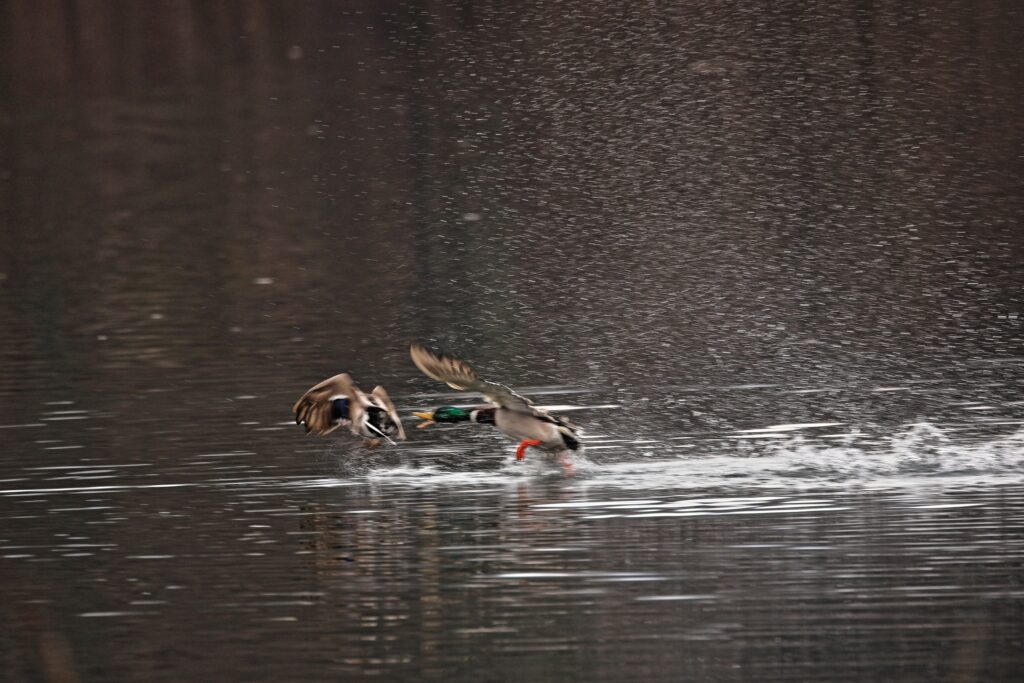
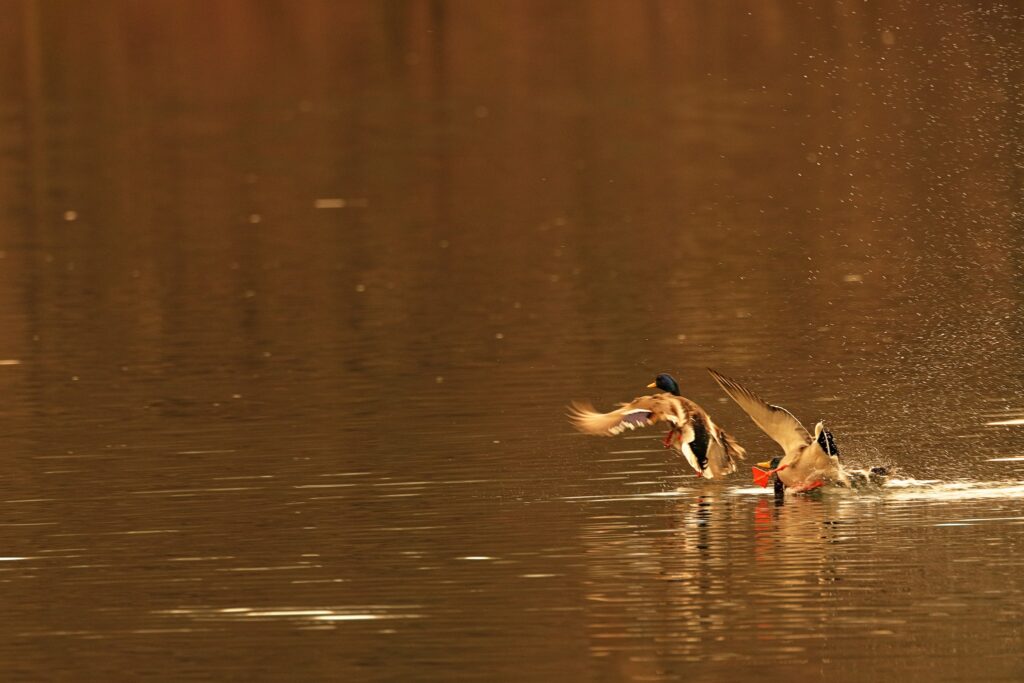
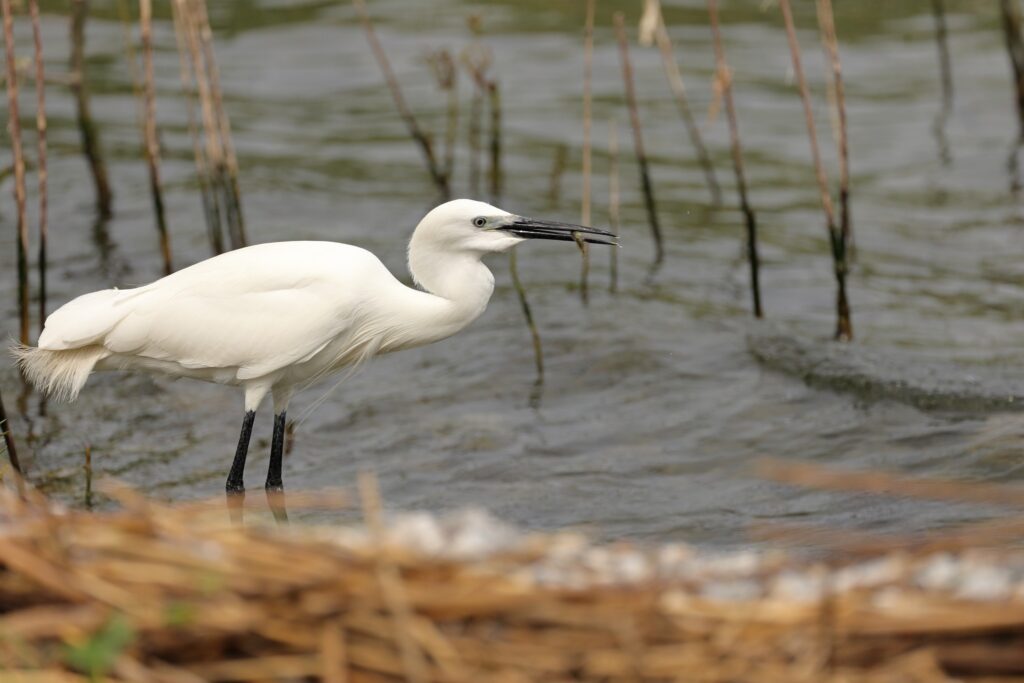
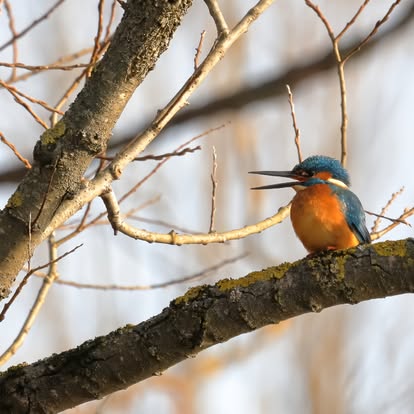
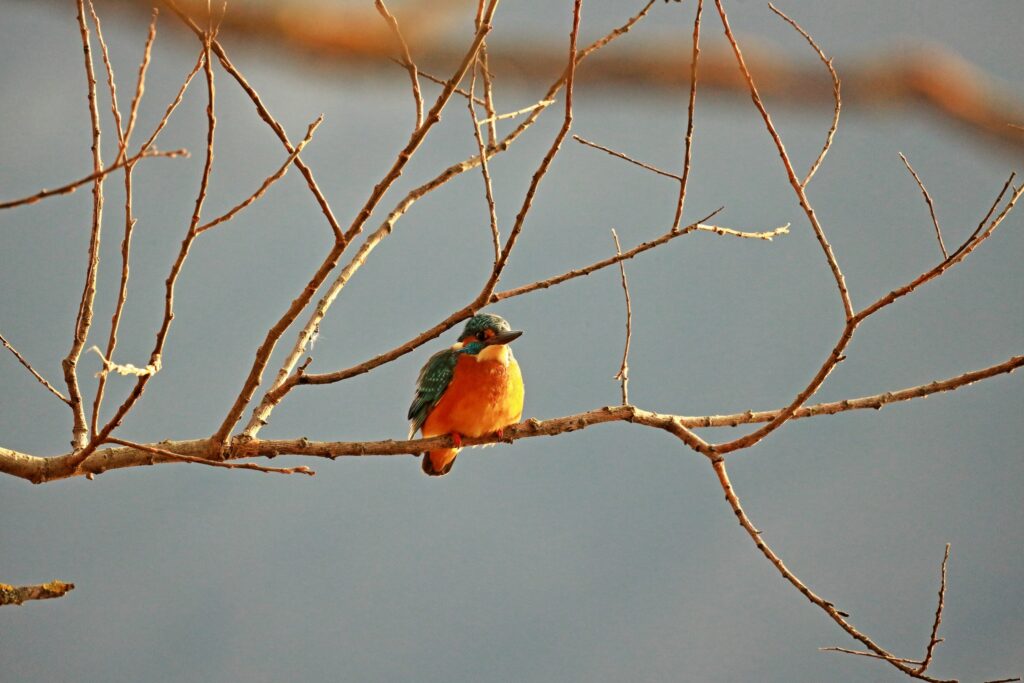
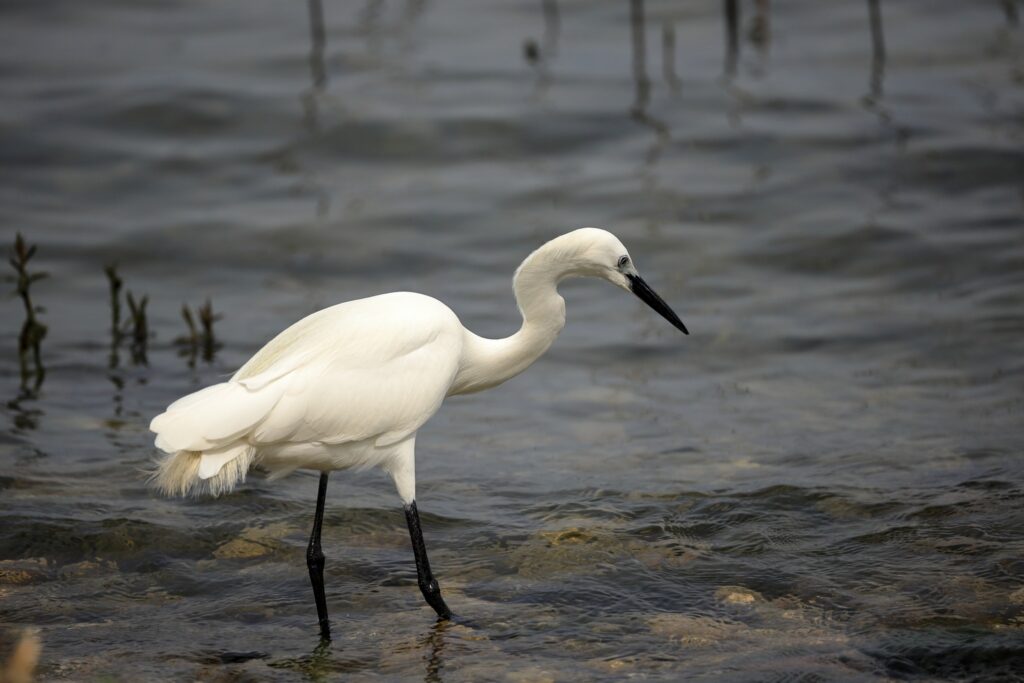
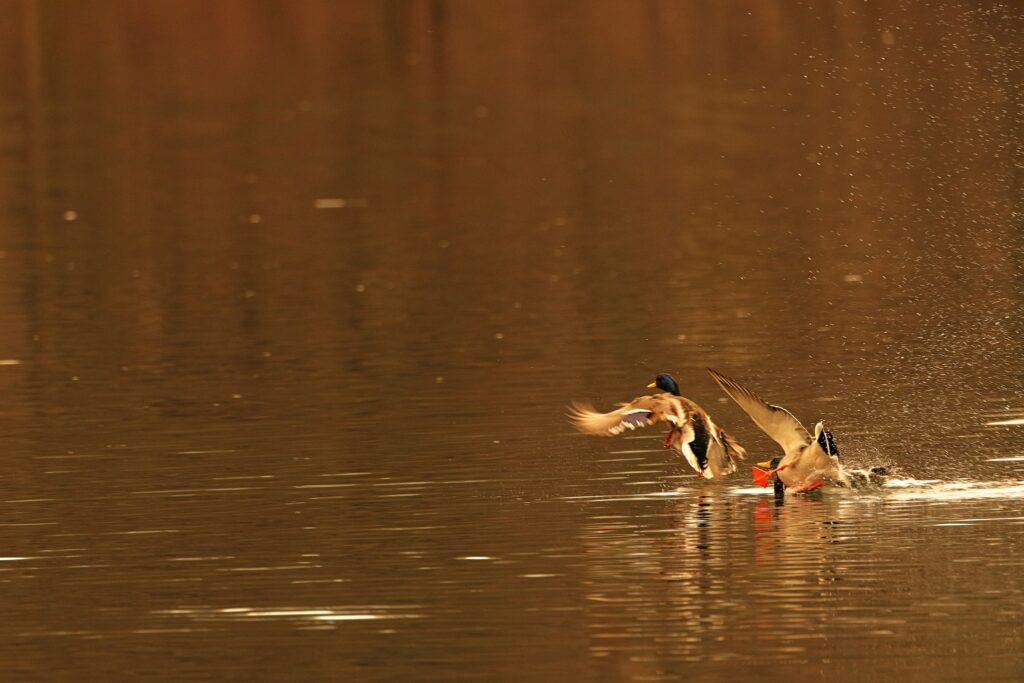
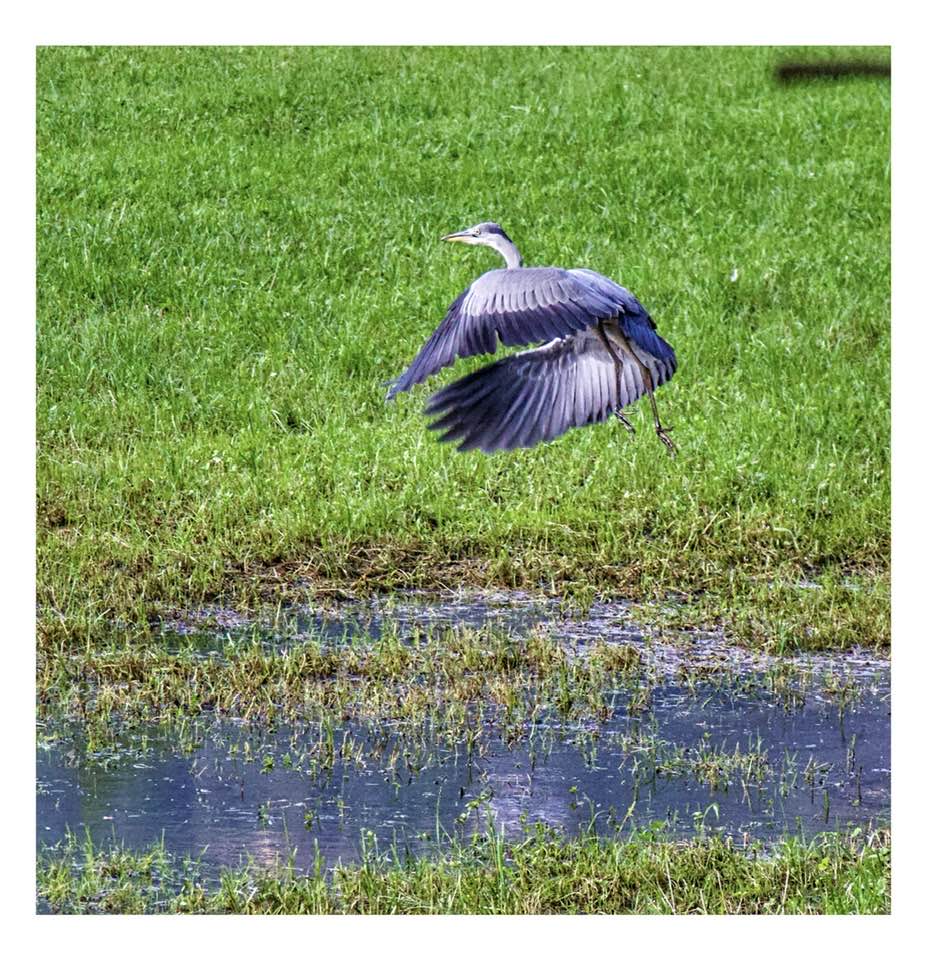
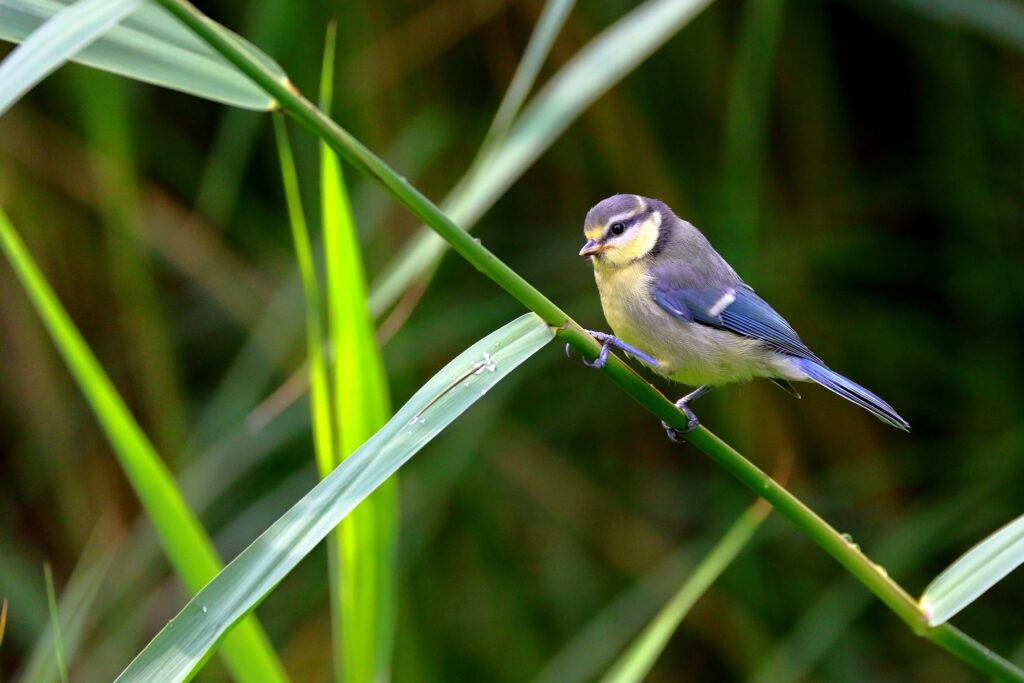
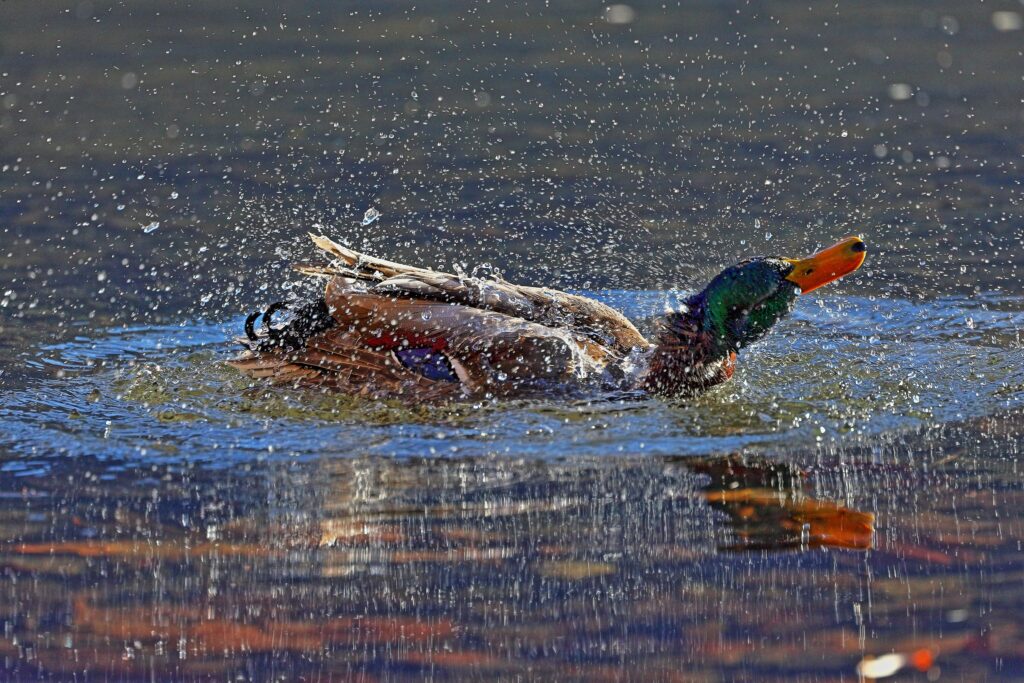
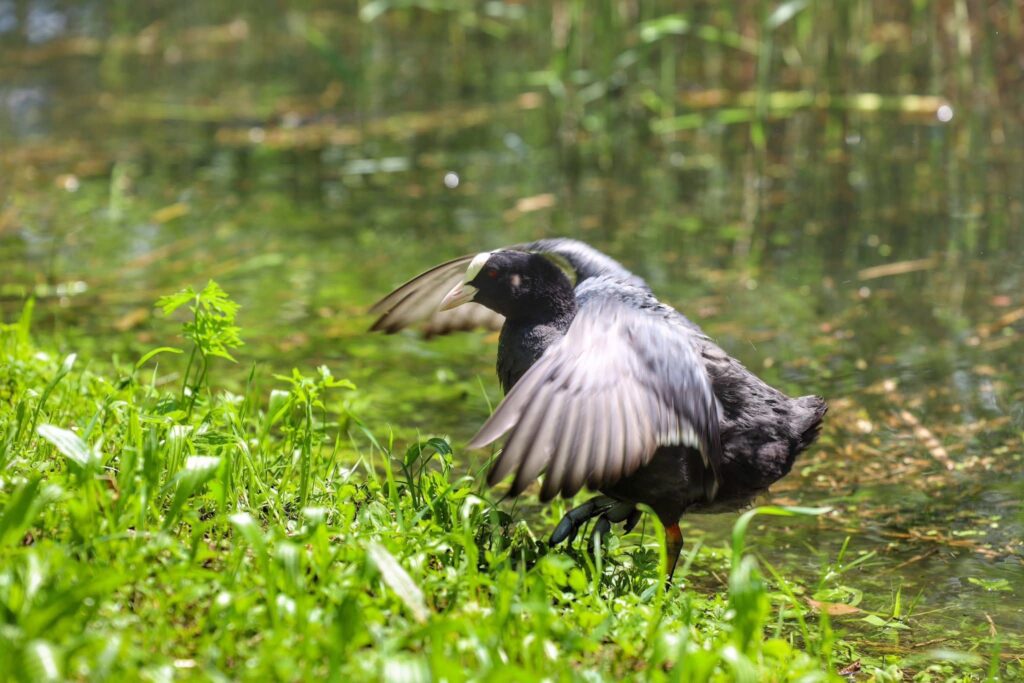
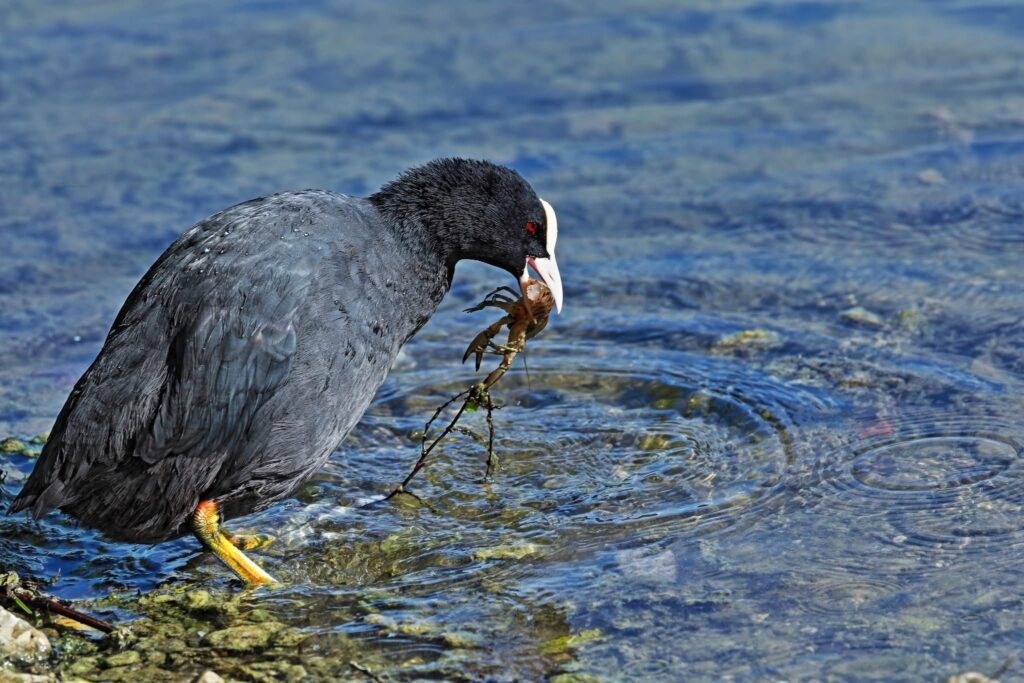
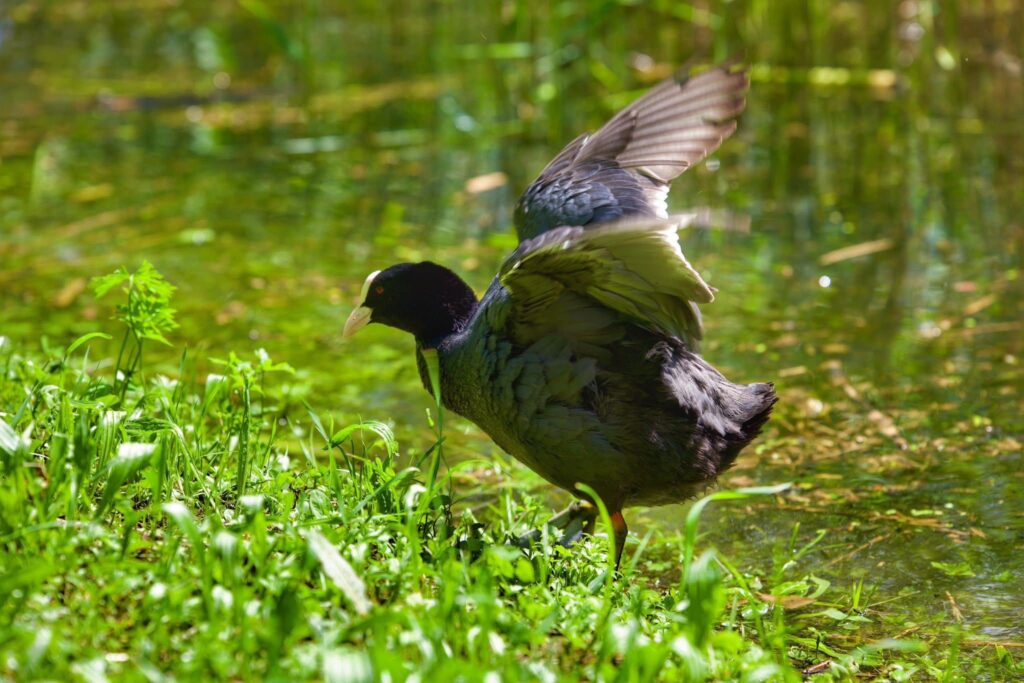
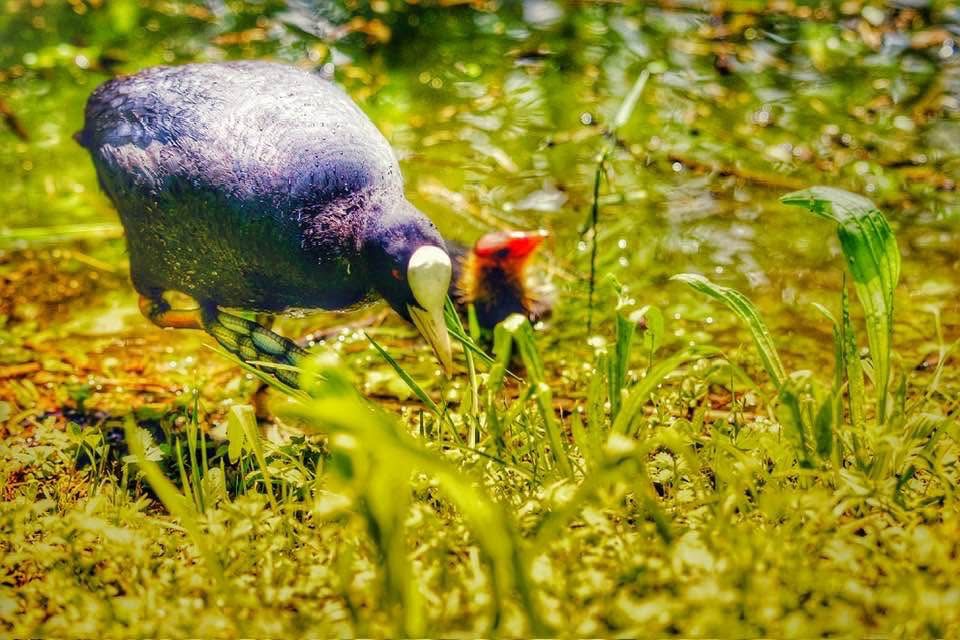
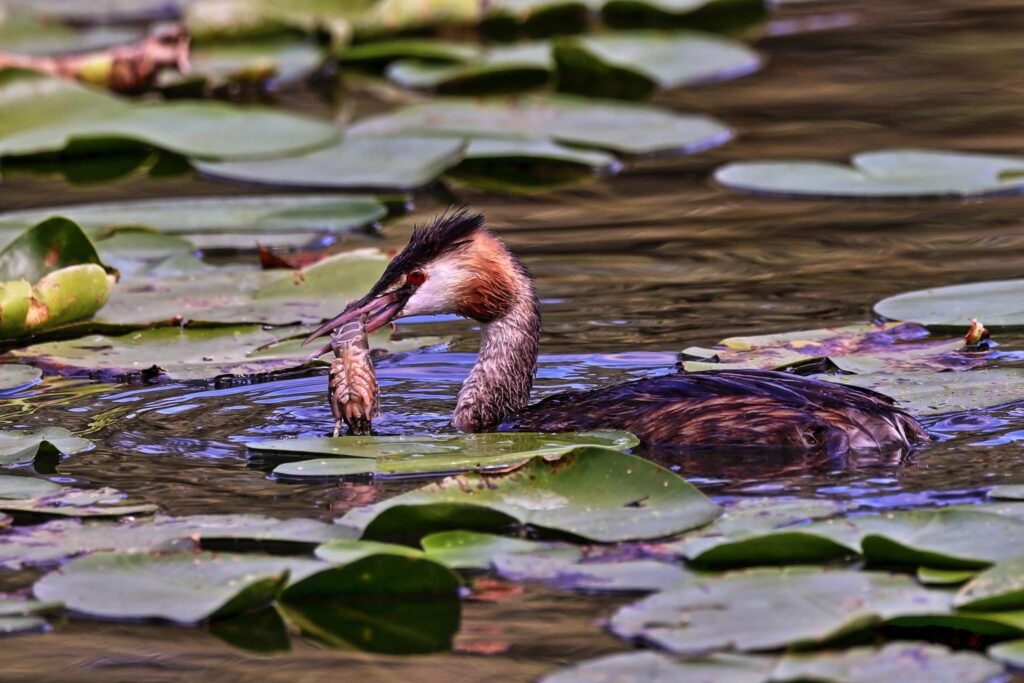
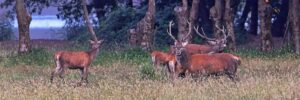
The fauna of the Lago di Piano Nature Reserve. Photo by Fabrizio Manservisi
For those who aren't satisfied with the blooms, the Reserve is a year-round destination: in autumn for the migratory passage, in winter when the lake freezes and completely changes its appearance, and in late winter to witness the grebe mating parade.
How to get there
By car: from the SS340 Regina Between Menaggio and Porlezza, exit for Piano Porlezza. Free municipal parking is available next to the traffic lights, or in front of the Casa della Riserva. Alternatively, you can leave your car at the nearby shopping centers (Carrefour Market and Iperal Carlazzo) and reach the lake on foot or by bike along the last stretch of the Porlezza–Menaggio cycle/pedestrian path, which borders the Reserve. From Lugano: about 30 minutes. From Como: about 1 hour.
For those arriving from Switzerland, Public Transport page (C12 bus) It is the most convenient public line.
What to see in the surrounding area
Lake Piano is the ideal starting point for a leisurely day between Carlazzo, Bene Lario, and Porlezza:
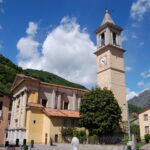
- Castel San Pietro — the small medieval village inside the Reserve
- Restaurants in Carlazzo for lunch
- Via del Ferro between Carlazzo and San Bartolomeo, historical excursion for those who want to extend the day
- Church of San Vittore in Porlezza to complete with a stretch of Ceresio
- Painted Village of Claino, a few minutes away, for its frescoed facades
When to go, in short
| Period | What to expect |
|---|---|
| Late February – March | Wedding parade of the grebes |
| May | Beginning of flowering, predominantly white water lily, fresh vegetation |
| June–July | Peak flowering, even water lily, long days |
| August | Still flowering widely, warmer |
| September | Flowering tail, softer light |
| Fall | Migratory passage |
| Winter | Frozen lake, completely different physiognomy |
The council: aim at mid afternoon (3–4 pm) On a sunny day, when the flowers are fully open and the light is already soft. Bring binoculars: the water lilies are the guaranteed spectacle; the rest of the Reserve is what you take home.
Article produced with the scientific advice of Vincenzo Perin, Park Ranger of the Lago di Piano Nature Reserve, who was particularly responsible for the fauna section. Photographs of the fauna: Fabrizio Manservisi.