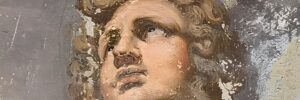
There's a new painting in Castello Valsolda. It is a canvas over one meter and seventy centimeters high, depicting a young woman with a naked body, her hands tied with vegetal laces, her gaze turned to the sky. Below, in a shadowy niche, a small cherub watches the scene. It is Andromeda tied to the rock, and until a few months ago no one knew it existed. It's a an absolute unreleased work by Paolo Pagani — the painter from Valsoldo who left the small village of Castello to paint in Venice, at the court of Vienna and in the Habsburg lands of central Europe — and from today it is exhibited at the Pagani House Museum, in the very house where the artist was born in 1655.
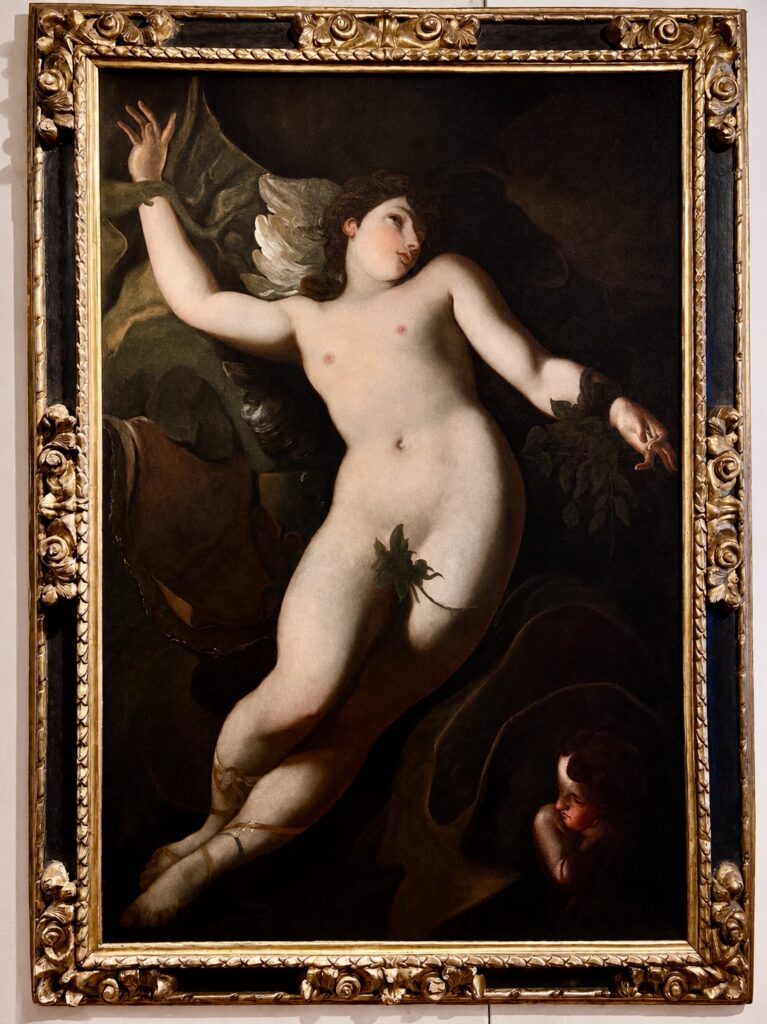
The work, of private collection and given in loaned to the museum, is an oil on canvas by 173 × 117 centimeters, recently professionally cleaned. The attribution to Paolo Pagani—already recognized at the time of the loan—was confirmed by the art historian Giorgio Mollisi on the basis of precise iconographic and stylistic elements, which proposes a dating towards the late seventeenth century, in a period immediately following the frescoes of Castello. It can be seen in Castello, a hamlet of the municipality of Valsolda on the Lake Ceresio, on the weekends when the museum is open.
The work: the moment of abandonment
The oil on canvas measures 173 × 117 centimeters (201 × 145 with the original frame). The protagonist is the heroine of the Greek myth from which it takes its name: daughter of Cepheus and Cassiopeia, exposed as a sacrifice to a sea monster on the cliff and then saved by Perseus. But Pagani—as he often did—chooses to represent the myth in an atypical moment: not rescue, but abandonment. Perseus is not there yet. Only a small cherub, at the bottom right, watches the scene helplessly from his rock niche.
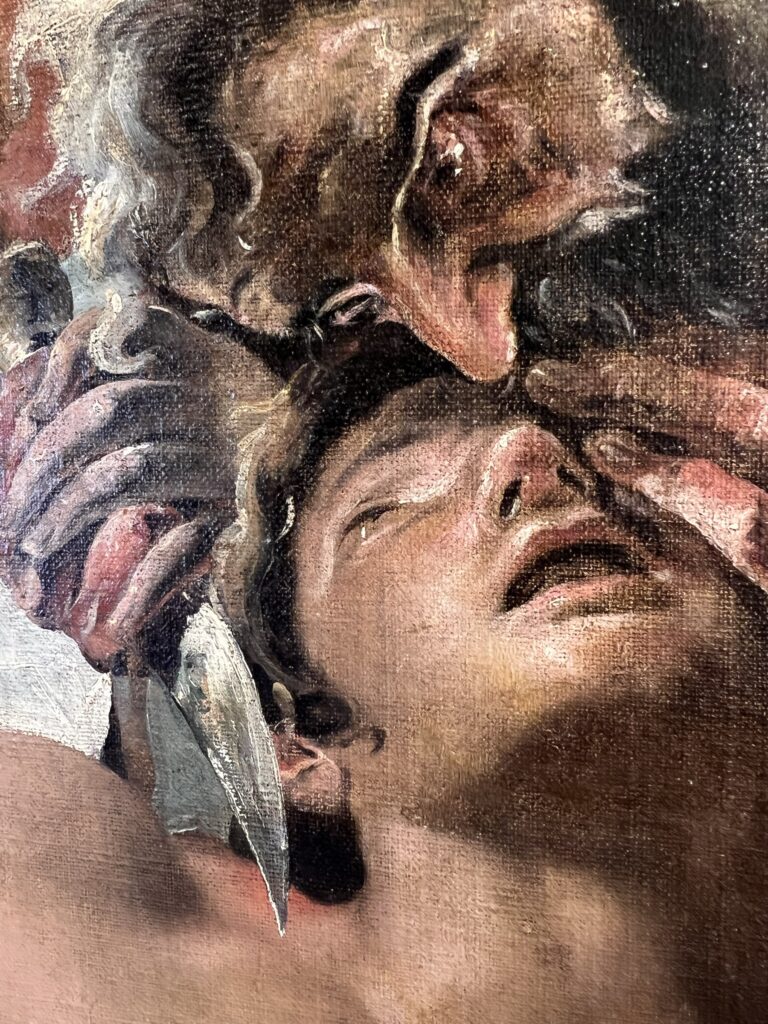
The iconographic details are carefully studied. Andromeda is tied to the wrists not by chains, as in most classical iconographies, but by vegetal laces. The feet are still in ancient sandals, adorned with beads, as the painter from Castello used to do. The body seems barely revealed by the impetuous wind blowing from the sea toward the cliff. The complexion is crystalline, marble-like, reflecting a variant of the myth according to which Perseus, in rescuing her, mistook her for a marble sculpture. It is a cultured painting, built on a profound knowledge of ancient sources, but also a painting of feeling: the raised arm, the twisting of the torso, the gaze seeking a sky from which no one is approaching.
The canvas is in excellent conservation conditions and has just received a professional cleaning that has restored its original luminosity. The most dramatic details resurface: the deep brown of the rocky background, the pale pink of the flesh illuminated by a light that seems to come from off-stage, the crystalline complexion that pictorially justifies the marble effect described in the myth.
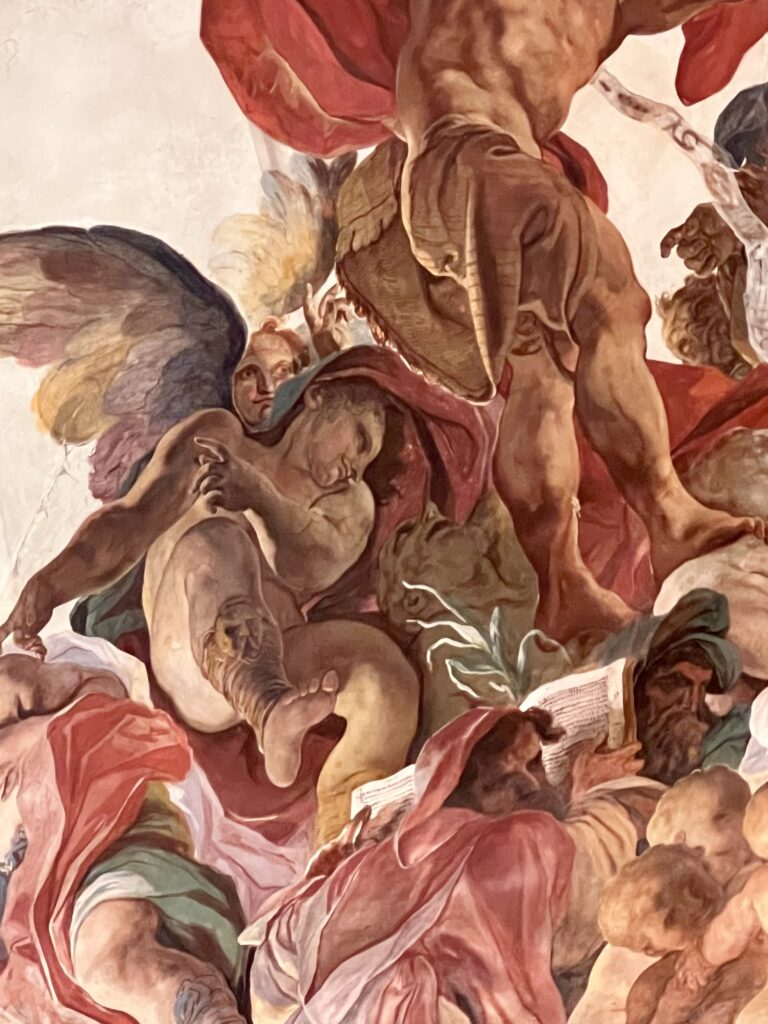
Giorgio Mollisi, the art historian who confirmed the attribution, identified many similarities with the female figures of the great fresco of CastelloAndromeda shares the pose with one of the Holy Martyrs depicted at the moment of their condemnation to death. The same torsion of the body, the same position of the face with the gaze directed upwards, the same formal code that Pagani applied — sacred or profane — to the theme of innocence awaiting its destiny.
Paolo Pagani, from Castello to Europe
Paul Antonio Pagani (Castello Valsolda, 22 September 1655 – Milan, 5 May 1716) is one of the most important names of the’artistic emigration from Valsoldese between the seventeenth and eighteenth centuries. He was born in the village of Castello, in the house that is now the museum dedicated to him. At about thirteen years old he left for Venice, where he trained in the studio of the painter and engraver Giuseppe Diamantini and came into contact with Pietro Liberi and with the Tenebrosi movement of Langetti and Loth, which influenced his pictorial language.
In 1690 he left Venice in the company of his pupil Antonio Pellegrini for a long journey through Austria, Germany, Moravia and Poland. He worked at Vienna for Emperor Leopold I, to Kroměříž (Moravia) for Prince-Bishop Karel Liechtenstein Castelcorn, a Velehrad and Krakow, where he painted the Martyrdom of Saint Sebastian in the church of Sant'Anna. His preparatory drawings are largely preserved in the Olomouc State Library of Science.
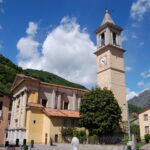
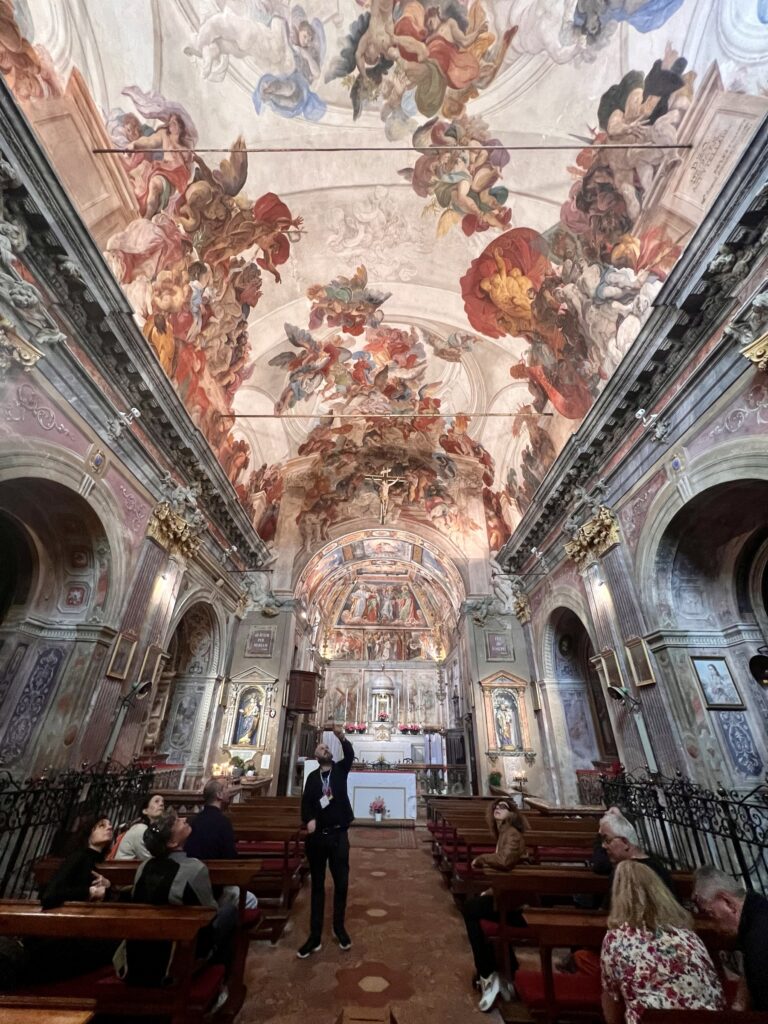
He returned to Castello on March 26, 1696 to leave his fellow countrymen his most surprising work: the frescoes of the Church of San Martino a Castello, who painted at his own expense and out of devotion. It is for this fresco cycle - culminating in the vault with the Assumption of Mary - that the church is today known as the “Lombard Sistine Chapel”: a definition that is not rhetorical, but justified by the technical mastery with which Pagani approached the scenographic painting of a complex surface, with figures inspired by the great Michelangelo Buonarroti.
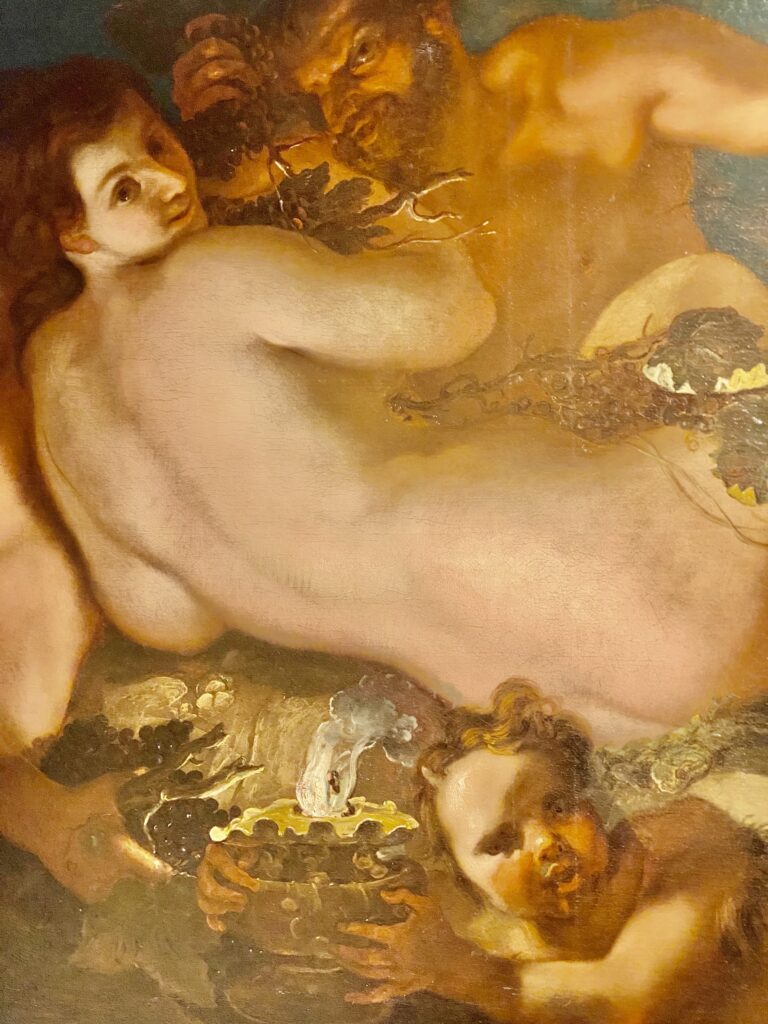
In the following years Pagani settled between Castello and Milan, linked by a very close partnership with the Marquis Cesare Pagani, an influential politician at the courts of Vienna, Madrid and Parma. From his mature Milanese period are masterpieces such as the Descent into Hell (today at the Casa Pagani Museum), the Saint Liborius of the church of San Marco in Milan and the Martyrdom of Saint Vitale in the parish church of Chiasso. His last works were the two large canvases dedicated to the life of Saint Anthony for the Milanese church of Santa Maria del Giardino, now preserved in the parish church of Uggiate Trevano. He died in Milan in 1716.
The new one Andromeda It dialogues directly with the San Martino cycle. Seeing it displayed just a few meters from the church that houses one of the pinnacles of its artist's career is a rare experience: two works by the same hand, painted at different times in the artist's life, separated by a few narrow streets of the village.
The Casa Pagani Museum: the only one in Europe
The Pagani House Museum It is housed in the artist's original home, restored and adapted as an exhibition space. It is the only museum in Europe entirely dedicated to Paolo Pagani and, more generally, to the history of’artistic emigration from Valsoldese: that generation of architects, painters, sculptors and plasterers who from the sixteenth to the eighteenth century exported his art from Italy to Spain, from Central Europe to Poland, to Lithuania, to Russia and Sweden. Families like the Get along, i Bellotti, i Fountain, i Merlins, i Ceroni, i Puttini, i Well, i Little faces, i Lezzeni, in addition to the monumental figure of Pilgrim Tibaldi — all names that can be found in archives across half of Europe.
Among the figures documented at the Casa Pagani Museum, the following stand out: Isidoro Affaitati (Albogasio, ca. 1622-1684), first architect of the King of Poland and author of churches and palaces in the Republic of the Two Nations (Kingdom of Poland and Grand Duchy of Lithuania); his brother Carlo Ambrogio Affaitati, Canon of Warmia and confessor of Queen Maria Luigia Gonzaga; Carlo Ceroni, active in Węgrów (Poland) at the beginning of the eighteenth century; and Domenico Merlini, first architect of the king of Poland Stanislaus August Poniatowski.
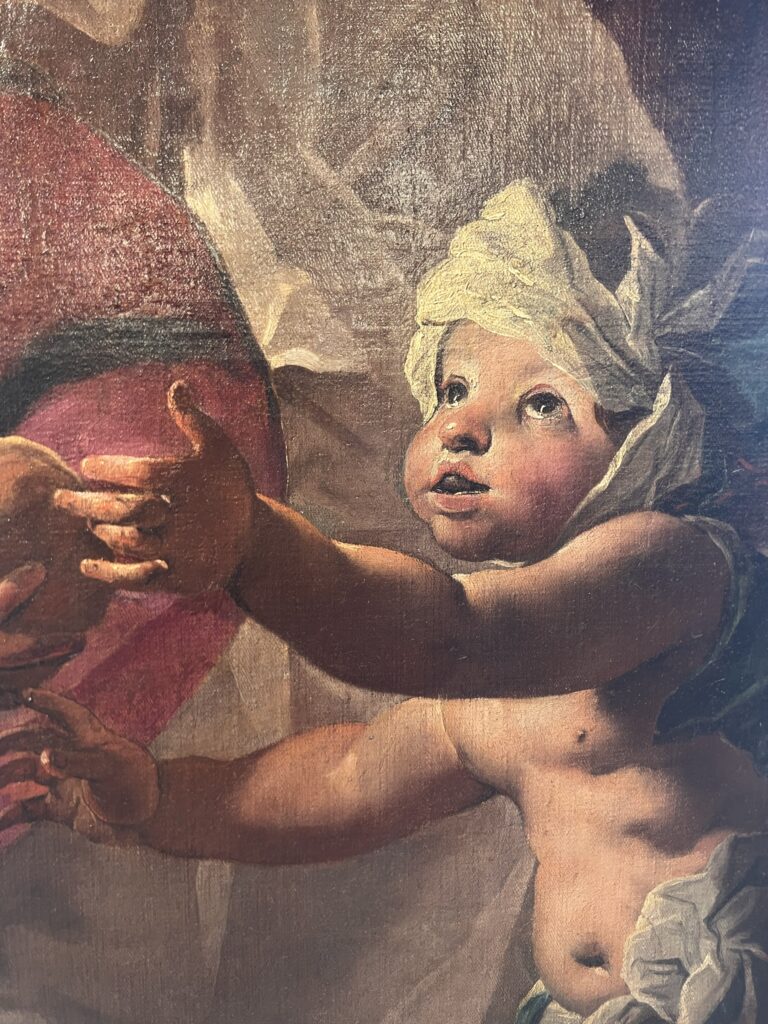
The arrival of an unreleased Pagani of the quality of the’Andromeda further strengthens the museum's centrality as an international reference for studies on Lombard Baroque during emigration.
Castello, a village to discover
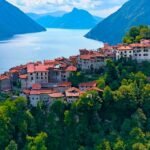
Castello is one of the eleven hamlets of the municipality of Valsolda and is perched on a rocky spur overlooking the Lake Ceresio. It can be reached by car along the narrow panoramic road that climbs from Oria to the parking lot below the town; the village itself is exclusively pedestrian. Once you arrive, the village reveals itself in all its tranquility: narrow alleys, open views of the lake and the mountains. A place that the mass tourism has not affected and which is best visited by walking slowly.
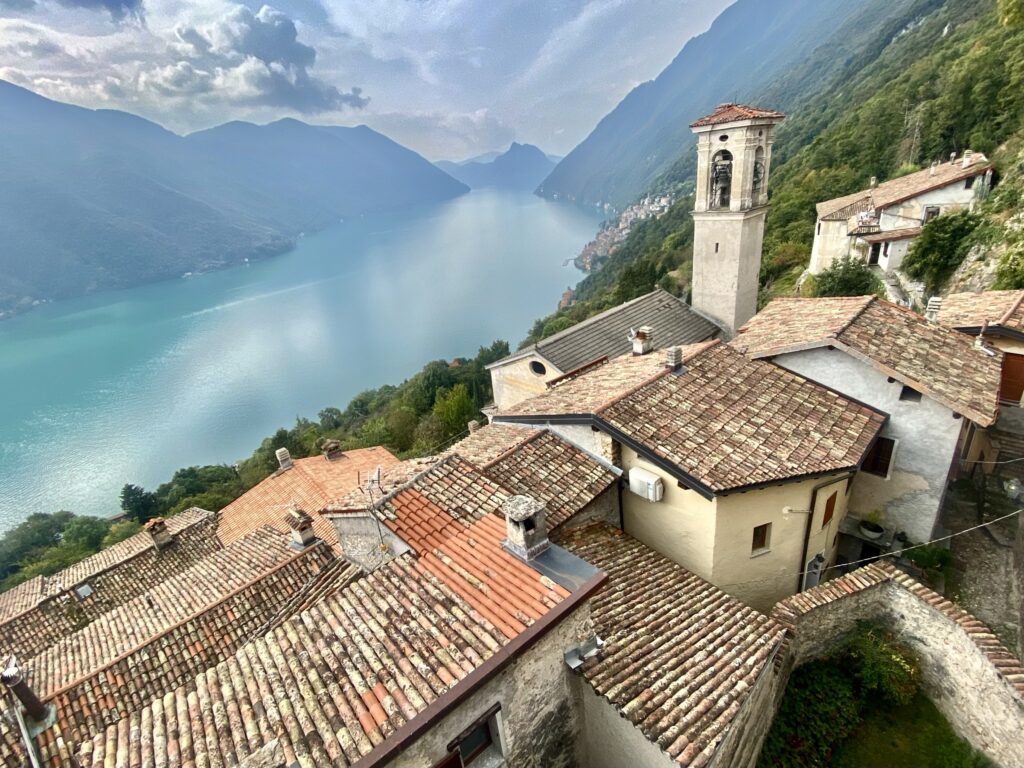
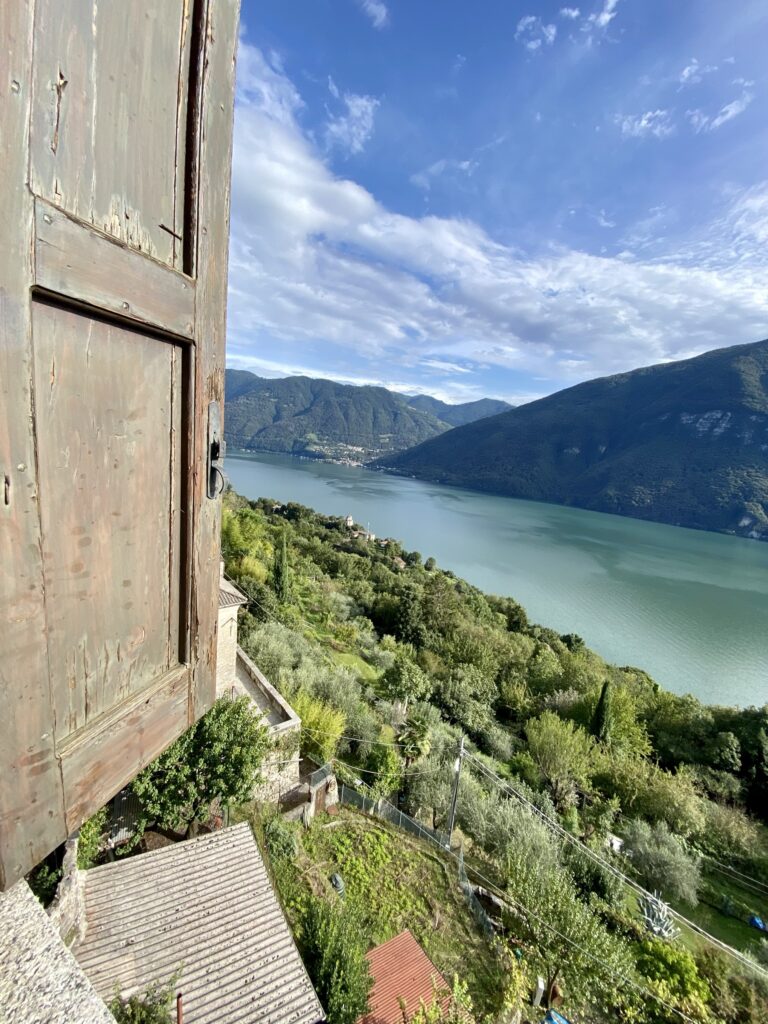
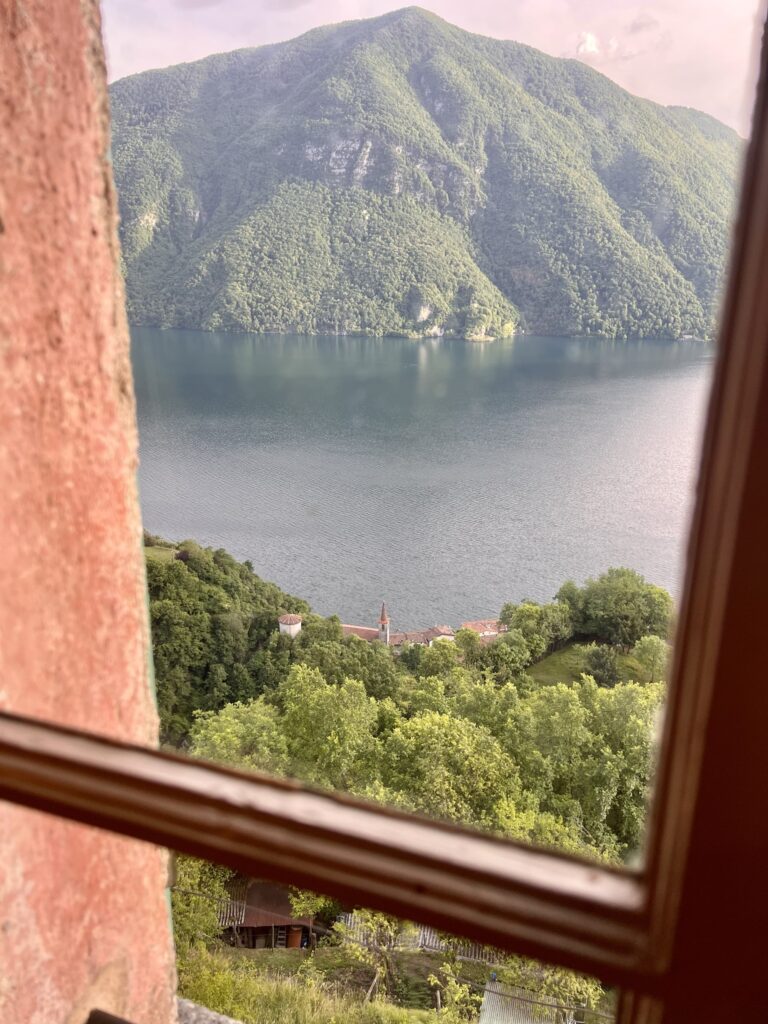
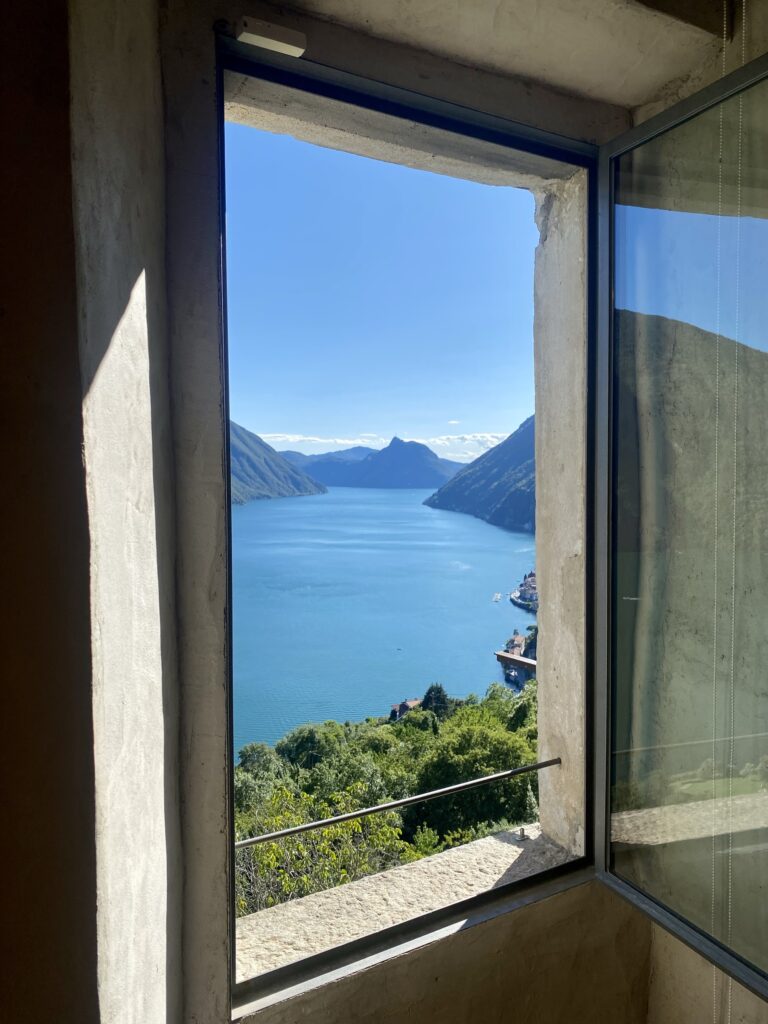
A visit to the Casa Pagani Museum thus becomes the key to a cultural microcosm. Half a day is enough to combine the new Andromeda, the frescoes of San Martino and a walk through the alleys of the village - the kind of slow experience that Valsolda can offer like few places in the world. Lake Ceresio.
Visiting the Casa Pagani Museum: practical information
The Pagani House Museum is open from March 21 to October 31, 2026, The Saturday and Sunday from 11:00 to 18:00. Entrance costs 3 euros per person, free for children under 18. For children under 18, free for children under 18. groups, in addition to the visit to the museum, a guided tour of the Church of San Martino and the village of Castello is also organised, at the cost of 5 euros per person. The visit is free for school groups.
- Address: Via C. Jamucci 8/10, Castello — Valsolda (CO)
- E-mail: direzione@museocasapagani.it
- Telephone: Municipality of Valsolda, 0344 68121
How to get there
From Menaggio: after passing the village of Albogasio along the SS 340, a road on the right leads to the village of Castello.
From the Swiss: after crossing the border of Gandria, the lakeside road leads after a few hundred metres to the entrance of the road to Castello.
In both cases, leave the car in the parking lot below the town and continue on foot along the road (Just over half an hour's climb) to the heart of the pedestrian-only village. You can also walk back along the ancient cobbled road that descends to San Mamete and continues along the lakeside to Oria (about an hour's walk).
Two opportunities to visit with a guide
For those who prefer to learn more with a local expert, two events on the 2026 events calendar include Castello and its artistic heritage among the stops.
Valsolda Tour — Sunday, May 17, 2026
A guided walk of approximately 5.3 kilometers between the fractions of Loggio, Puria, Castello and San Mamete, led by the tour guide Brian Subinaghi. The route touches four key churches in the valley, including the Saint Martin of Castello Frescoed by Pagani. Departure at 2:00 PM from the Scuole di Loggio, duration approximately four hours, elevation gain 300 meters. Prices range from €5 (children 12-17) to €15 (adults).
👉 Full details and booking: Valsolda Tour May 17, 2026
Strolling in the Little Ancient World — June 21 and August 30, 2026
An initiative curated by INSIEME TURISMO in collaboration with the FAI – Italian Environmental Fund, which starts from Villa Fogazzaro Roi of Oria and extends to the villages of Lower Albogasio and Castle, with a final visit to the Church of San Martino. At the end of the guided walk, Participants can visit the Casa Pagani Museum independently. Two dates are scheduled:
- Sunday, June 21, 2026 – The summer solstice: the longest day of the year, with the full light of the season on the lake. Details and booking
- Sunday, August 30, 2026 – The last light of summer: the season's farewell, before the first rustles of autumn.
Meeting point: Villa Fogazzaro Roi ticket office, 9:30 am. Maximum 15 participants; reservations required. Fees range from €20 (FAI members and Valsolda residents) to €35 (full price).
Frequently Asked Questions
Where is the Casa Pagani Museum located?
The museum is located at Via C. Jamucci 8/10, in the village of Castello, a hamlet in the municipality of Valsolda (CO), on Lake Ceresio. It is housed in the birthplace of painter Paolo Pagani.
When is the museum open?
The 2026 season runs from March 21 to October 31. The museum is open Saturdays and Sundays from 11:00 am to 6:00 pm.
How much is the ticket?
Full admission is €3 per person. Children under 18 and school groups are free. Groups can take an extended guided tour (museum + Church of San Martino + village) for €5 per person.
Who was Paolo Pagani?
Paolo Antonio Pagani (1655-1716) was one of the most important Lombard Baroque painters. He was born in Castello Valsolda, trained in Venice, and worked in Vienna, Moravia (Kroměříž, Velehrad), and Poland (Krakow) before settling between Castello and Milan, where he died in 1716. He is the author of the frescoes in the Church of San Martino in Castello, known as the "Lombard Sistine Chapel.".
How do you get to the village of Castello?
It can be reached by car from the SS 340 (either from Menaggio or from the Swiss border at Gandria), leaving your car in the parking lot below the village. The village is exclusively pedestrian: from the parking lot, you can walk up the road in about half an hour.
Meanwhile, the major international exhibitions continue on their way. But a canvas like the’Andromeda by Pagani—unknown until yesterday, resurfaced after restoration in the rooms where its author saw the light—is the kind of discovery that can only be made here. In Valsolda, in Castello, going up on foot.
Article by the Ceresio5Valli editorial team. Published on May 9, 2026.