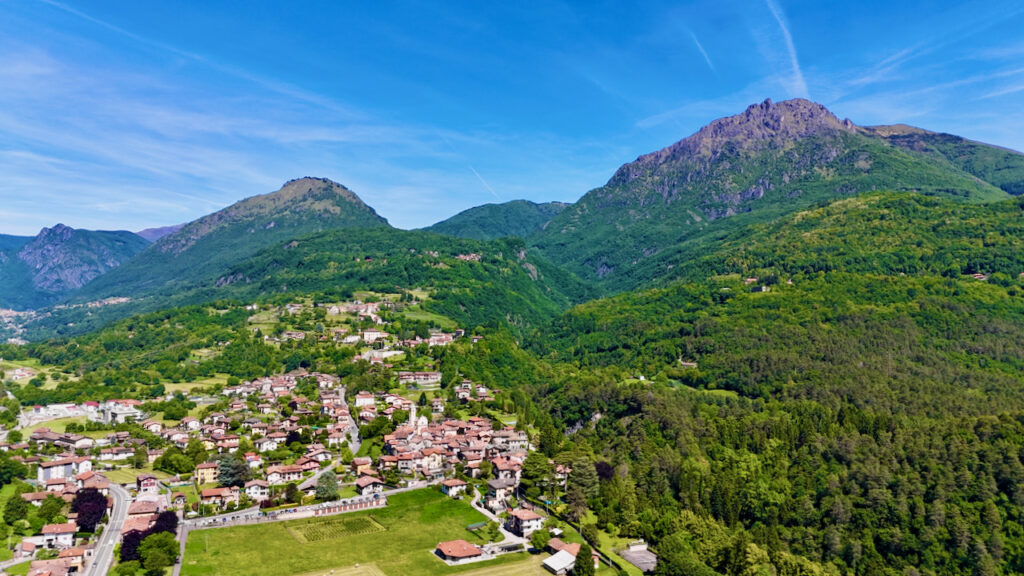
La Sanagra Valley It is a pre-Alpine valley in the province of Como, in Lombardy, crossed by the Sanagra River and located east of the Menaggio Valley, on the Larian foothills of the Lepontine Alps. The Ceresio5Valli portal represents the western hydrographic bank of the river — under the jurisdiction of the municipality of Grandola and United, formed by the six hamlets of Cardano, Codogna, Gonte, Grona, Naggio and Velzo, united in 1927 (together with Bene Lario, definitively separated in 1950) — which historically connects the slopes of the valley to the territory of the Lake Ceresio. The correct form of the name is "Sanagra", as attested by the naturalist Domenico Vandelli in the eighteenth century and by the geographer Carlo Amoretti in the first official maps of the territory: the variant "Senagra", sometimes found in administrative documents and tourist publications, is the result of an incorrect historical transcription.
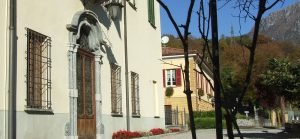
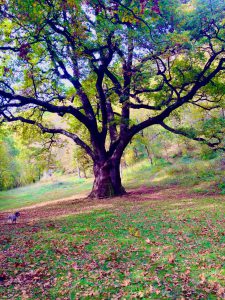
Since 2005, the valley has been protected by the Val Sanagra Supra-municipal Park (PLIS), which extends between 300 and 2,000 meters above sea level through chestnut, beech and fir forests, historic mountain pastures and ancient rural settlements. The cultural heart of the valley is the hamlet of Codogna, where the eighteenth-century Villa Camozzi houses the municipal seat of Grandola ed Uniti and the Val Sanagra Ethnographic and Naturalistic Museum (recognized as a Museum Collection in 2007), whose Paleontological Hall houses fossil plant remains over 310 million years old—among the oldest Paleozoic finds in Lombardy—along with sections dedicated to local fauna, rural traditions, and the historic Menaggio-Porlezza railway (1884-1939). Along the river, significant evidence of industrial archaeology remains: the Fornace Galli, an ancient brickworks now a venue for cultural events, and the Vecchia Chioderia, a former nail factory converted to a trout farm. The park also features the Rogolone, a 280-year-old oak tree standing 25 meters tall. It has been under ministerial protection since 1922 and is managed by the Italia Nostra association since 1987. It is considered one of the most significant monumental trees in Northern Italy.
The emigration of the valley dwellers to Chile
Starting from mid-19th century, dozens of families from Val Sanagra and the neighbouring municipality of Good Lario they emigrated to the Northern Chile, especially in the arid areas of the Atacama Desert and in the nascent ports of Valparaiso e Iquique. The reason was twofold: the post-unification agricultural crisis that hit the pre-Alpine valleys and the attraction of the Chilean saltpetre mines, which were in full production expansion. Numerous Sanagrini surnames — Camozzi, Bianchini, Beef —are found today in the registers of Antofagasta e Iquique, and the municipal archives of Grandola ed Uniti preserve the correspondence between the families who remained in the valley and their emigrated relatives, a precious testimony to a little-known migration in Lombardy's Alpine history. Some families returned in the early decades of the twentieth century, bringing with them riches and new cultural sensibilities; others remained permanently, founding Italian communities now in their fourth generation.
Antonio Stoppani and the deep geology of Sanagra
The Milanese geologist and abbot Antonio Stoppani (1824-1891), considered the father of Italian paleontology and author of the classic The Beautiful Country (1876), he repeatedly studied the fossil deposits of the Val Sanagra during his excursions in Lombardy, recognising already in 1857 the exceptional antiquity of the plant remains preserved there. The paleontological section of the Ethnographic and Naturalistic Museum of Codogna, housed in the eighteenth-century Villa Camozzi, today houses the remains of tree ferns, horsetails e lycopods of the Upper Carboniferous (about 310 million years ago), among the oldest Paleozoic finds in all of Lombardy. The valley's rocks also preserve traces of an ancient equatorial marshy environment that, before the Alpine tectonic movements, occupied the current latitude of the equator: a unique geological window onto continental drift.
The Rogolone — the patriarch oak protected since 1922
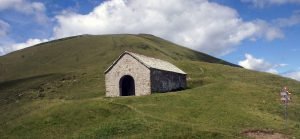
Inside the Val Sanagra Park, along the path that leads to the Buco mountain pasture, stands the Rogolone: one oak (Quercus petraea) of approximately 280 years high 25 meters, with a trunk circumference of over 7 meters. It is one of the most significant monumental trees in Northern Italy, located under ministerial protection since 1922 and managed by the association Our Italy from the Como section since 1987. The name derives from the Lombard rogol, "oak of great size." Generations of valley dwellers have gathered beneath its canopy for community assemblies, propitiatory rites, and periodic markets, and even today the oak is the destination of an annual folk procession. A wooden walkway surrounds it, preserving its roots: visiting it means coming into contact with a living being that has endured through Napoleon, the unification of Italy, and both world wars.