Description
Discovering secret places
Among the most elegant ancient buildings in Castello Valsolda is undoubtedly that of the painter Paolo Pagani, home to the Pagani House Museum, the most important in Europe for the number of paintings exhibited by this artist, considered one of the most important painters of 17th and 18th-century Lombardy. From ancient to contemporary art, the Pagani House Museum aims to be a documentation center on Valsolda's artistic emigration.
A must-see for art and culture lovers
A place of art, culture, and poetry in Castello Valsolda, it exhibits masterpieces by local painters such as Paolo Pagani and offers a virtual art tour of Italy, Spain, and the northern Alps, starting from Valsolda.
The Pagani House Museum in Castello Valsolda was founded as a documentation center on artistic emigration from Valsolda. It houses paintings by Paolo Pagani and other artists from Valsolda, which tell the story of their emigration to Italy and Europe.
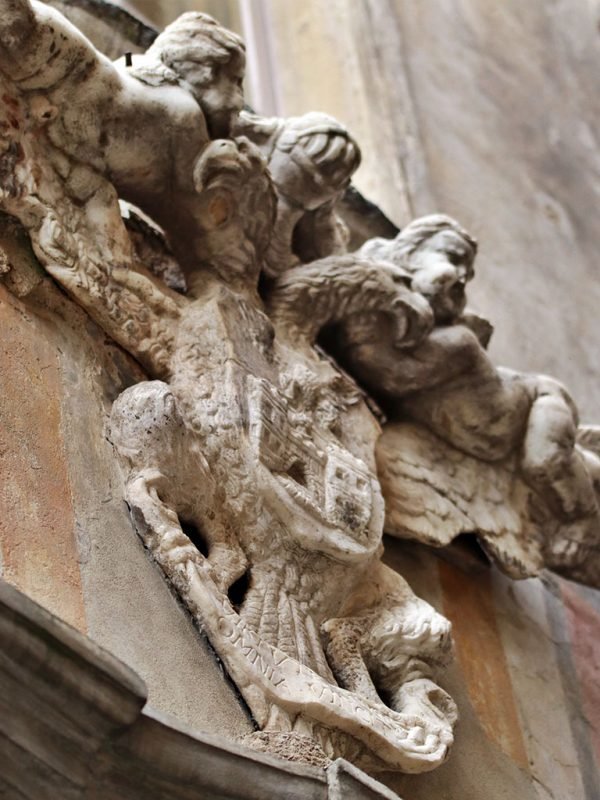
The museum is managed by the Friends of the Casa Pagani Museum Association on behalf of the Municipality of Valsolda. It is located in the center of Castello, along the main street. The building boasts a majestic façade decorated with half-length statues of Roman emperors, a testament to the noble lineage. Arranged over three floors are three rooms dedicated to Paolo Pagani, artistic emigration to Italy and Europe, and contemporary Valsolda artists. At the entrance, there is a portrait of Antonio Fogazzaro by the late 19th-century painter Battista Pedrazzini and a reproduction of the portrait of the architect and painter Pellegrino Tibaldi, both figures who, along with Paolo Pagani, brought greater prestige to Valsolda.
The First Floor — Paolo Pagani Hall
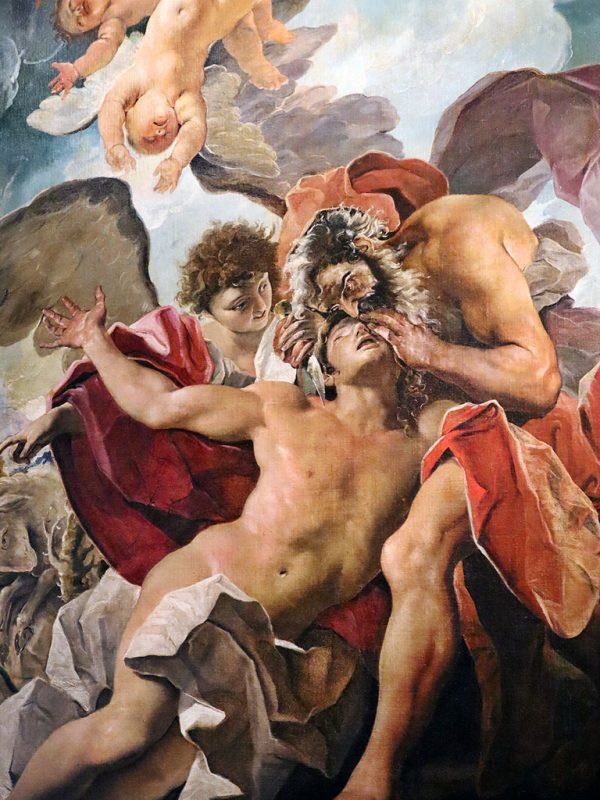
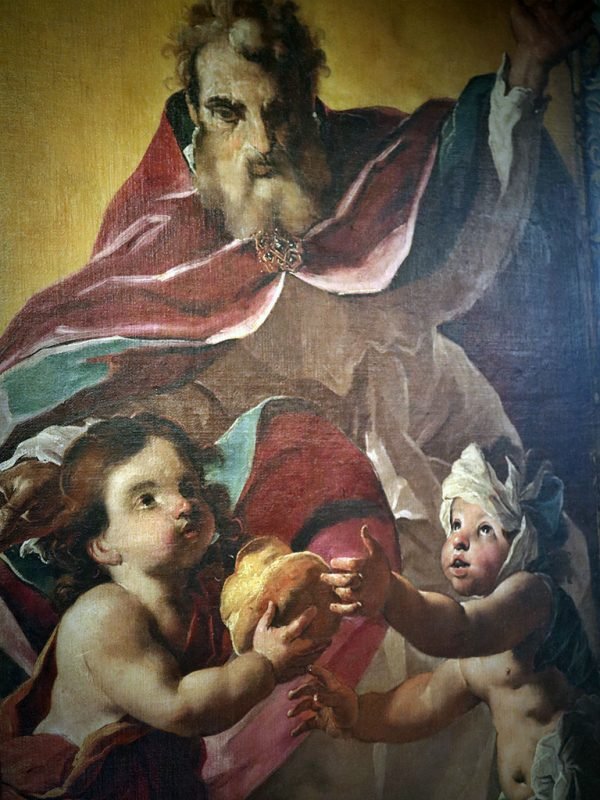
On the first floor we find the room dedicated to the painter Paolo Pagani, of which six paintings are exhibited: Christ's Descent into Hell, The Sacrifice of Isaac; God the Father between two cherubs, representation of Charity; a Nymph surprised by satyrs; Cimone and Pero representation of Roman Charity and Saint Joseph.
The Second Floor — Valsoldese Artistic Emigration
On the second floor, the room dedicated to the emigration of Valsolda artists.
Highlighted is the figure of the architect Isidoro Affaitati, a native of Albogasio (ca. 1622-1684), who was the first architect to the King of Poland and the designer of numerous churches and palaces in the Republic of the Two Nations, the Kingdom of Poland and the Grand Duchy of Lithuania. Also on display is a canvas from the second half of the 17th century depicting Carlo Ambrogio Affaitati, brother of Isidoro, Canon of Warmia (Poland) and confessor to Queen Maria Luigia Gonzaga de Nevers of Poland, wife of two successive kings: Władysław IV and John Casimir, of the Vasa dynasty. The high prelate was credited with introducing the two brothers to the Polish court. Also on display are several paintings from Carlo Ambrogio Affaitati's private oratory, designed by his brother in conjunction with the adjacent Palace of Lower Albogasio, later the Renaldi Hospital.
A portrait of Giovanni Lezzeni, attributed to Biagio Bellotti, testifies to the importance of the Lezzeni family of San Mamete, painters and sculptors from Valsoldi in Italy and abroad, also famous for the presence of high-ranking imperial army officers and prelates.
A recent oil painting by a contemporary Polish artist, donated by the Mayor of the town of Węgrów to the municipality of Valsolda, depicting the parish church, designed by Carlo Ceroni, pays homage to the architect from Valsolda, who was particularly active in the Polish town at the beginning of the eighteenth century.
The Third Floor — Contemporary Valsoldese Artists
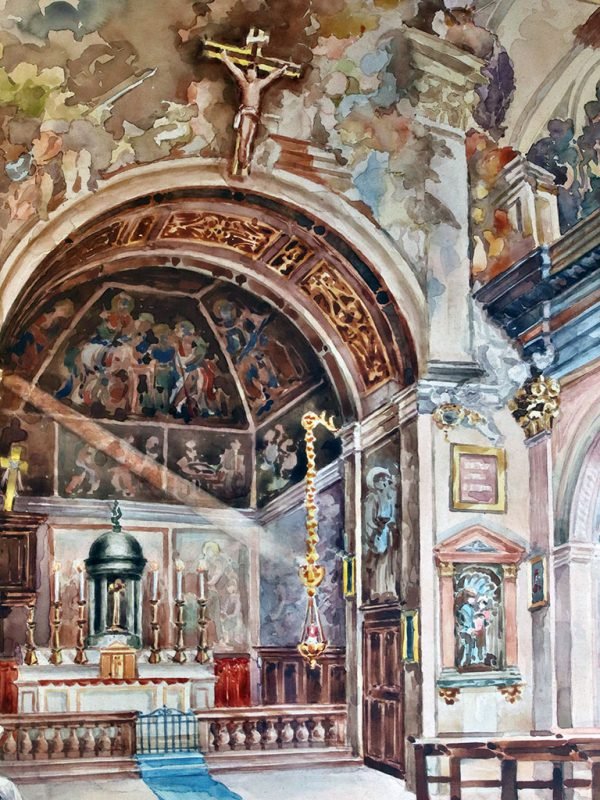
The third floor features works by contemporary Valsoldese artists, starting with a watercolor by Carlo Forni depicting the interior of the church of San Martino di Castello, as well as oil paintings, watercolors, and canvases by other artists.
The artistic emigration of Valsolda
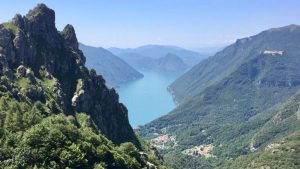
The artists of Valsolda are architects, sculptors, plasterers and painters who since the 16th century have worked in Italy, Spain and north of the Alps, from Sweden to Poland and Russia.
Nearby
- Church of San Martino — Nearby is the parish church of Castello, also frescoed by Pagani and considered Lombardy's little "Sistine Chapel." Its Baroque ceiling and late-16th-century pictorial ornamentation make it a small jewel of Lombard painting.
- Oria — The first hamlet, coming from Switzerland, extends along the lakeside where Villa Fogazzaro is located. Here, a very scenic dirt road leads to Albogasio, passing through the cemetery where, in Fogazzaro's poetic fiction, Ombretta is buried.
- Saint Mamete — The ferry that runs from Lugano to Porlezza and back stops near the pier in the main town of the valley.
Photo credits: Simone Corti
The Works


The Palace and the Rooms